Activity Based Costing Mastery
Volume Versus Activity Costing
When Simple Costing Falters
For a long time, allocating overhead was straightforward. Companies would calculate a single and apply it across all products based on a simple volume metric, like direct labor hours or machine hours. If the factory ran for 1,000 hours and had $100,000 in overhead, the rate was $100 per hour. Simple.
This works perfectly fine if a company produces a single product or a line of very similar products. But what happens when that's not the case? Imagine a furniture company that makes two products: a simple, mass-produced wooden stool and a highly customized, hand-finished executive desk. The stools are made in batches of 500, requiring little setup or special handling. The desks are made one at a time, demanding extensive design consultation, complex machine setups, and meticulous finishing.
If both products are costed using a single rate based on machine hours, the high-volume stools will absorb a massive amount of overhead, making them appear less profitable than they are. Meanwhile, the low-volume, high-maintenance desks will be assigned a relatively small slice of overhead, making them seem like a bargain. This is called cost distortion. The traditional system effectively has the high-volume products subsidizing the low-volume ones.
Cost distortion leads to poor business decisions. Managers might discontinue a profitable product line (the stools) or push a product that is actually losing money (the desks).
Thinking in Activities
Activity-Based Costing, or ABC, fixes this distortion. Instead of using one big cost pool for the entire factory, ABC identifies the individual activities that drive overhead costs. It recognizes that making a product involves more than just machine time. Activities might include setting up machines for a production run, ordering materials, performing quality inspections, or designing a custom product.
Once these activities are identified, the company pools the costs associated with each one. Then, it assigns those costs to products based on how much of each activity a product actually consumes. This link between an activity and the consumption of that activity is called a an amount of setups for a complex product, or the number of inspections for a high-precision item.
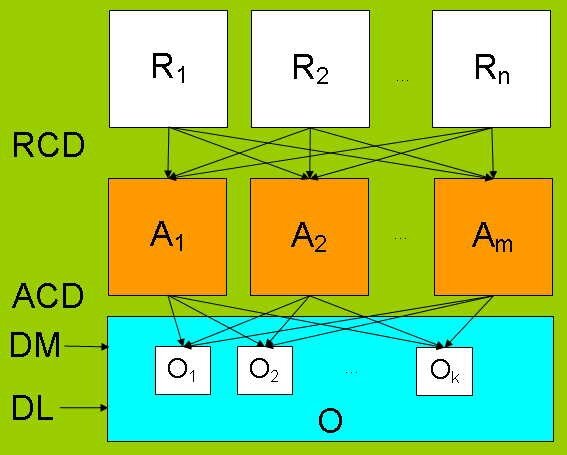
Let's go back to our furniture company. With ABC, the high cost of design consultations and numerous machine setups would be traced directly to the executive desks. The stools would be assigned very little of these costs. The final product costs would be far more accurate, reflecting the true resources consumed by each.
| Feature | Traditional Volume-Based Costing | Activity-Based Costing (ABC) |
|---|---|---|
| Cost Pools | Typically one or two large pools (plant-wide or departmental). | Multiple activity cost pools. |
| Allocation Base | Volume-based measures (e.g., labor hours, machine hours). | Activity-based measures (cost drivers) for each pool. |
| Accuracy | Low, especially with diverse products. Prone to distortion. | High. Provides a more accurate picture of product costs. |
| Complexity | Simple to implement and maintain. | Complex and costly to implement and maintain. |
Activity-based costing generally causes the least amount of cost distortion among products because indirect costs are allocated to the products based on 1) types of activities used by the product and 2) the extent to which the activities are used.
Is ABC Always Better?
While ABC provides superior accuracy, it's not a silver bullet. The main drawback is the cost and complexity of implementation. Identifying activities, creating cost pools, and tracking numerous cost drivers requires significant time, resources, and buy-in across the organization. For a company with simple operations and a homogenous product line, a traditional system might be perfectly adequate.
The decision to implement ABC involves a cost-benefit analysis. The benefits of more accurate product costs—better pricing, improved product mix decisions, and more effective cost control—must outweigh the significant implementation costs.
ABC is most beneficial when:
- Overhead costs are a significant portion of total costs.
- The company produces a diverse range of products.
- Products use different amounts of overhead resources.
- The competitive environment requires precise pricing.
Ultimately, the choice between volume-based costing and ABC depends on the complexity of the manufacturing environment and the strategic value of accurate cost information.
Now, let's test your understanding of these costing models.
What is the primary problem that can occur when a company producing a diverse range of products uses a single, traditional plant-wide overhead rate?
A company makes simple, high-volume widgets and complex, low-volume gadgets. If it uses a traditional overhead rate based on machine hours, which product's cost is likely to be overstated?
Understanding the trade-offs between these systems allows managers to choose the right tool for the job, ensuring that cost data is a valuable asset rather than a misleading liability.