Action-Packed Football Sports Photography
Action Camera Settings
Freeze the Gridiron
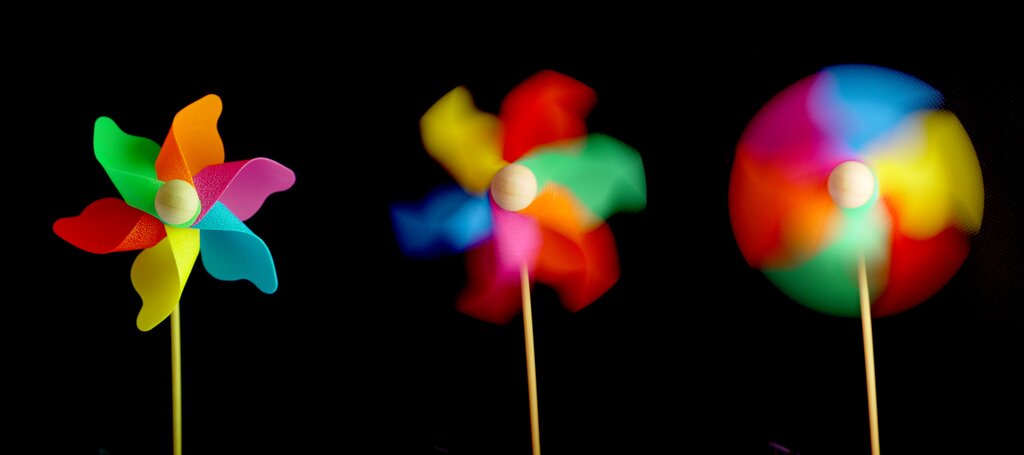
Photographing American football is a battle against motion blur. A running back breaking through the line, a quarterback's lightning-fast release, a receiver leaping for a catch—these moments happen in fractions of a second. To capture them with crisp, tack-sharp detail, your shutter speed needs to be your primary weapon.
A speed of 1/500s might be fine for general photography, but on the football field, it will render a thrown ball as a streak and a sprinting player as a soft blur. Your baseline shutter speed for football should be 1/1000s. This is the minimum to reliably freeze the motion of most players.
For peak action, like a quarterback's arm during a throw or a receiver at full sprint, you'll need to push it even higher. Speeds of 1/1600s, 1/2000s, or even 1/4000s are common. Think of it this way: the faster the action, the faster your shutter needs to be to stop it cold. Don't be afraid to increase your ISO to support these high speeds, especially under stadium lights or on overcast days. A little grain from a higher ISO is always better than a blurry, unusable shot.
Freezing the action is only half the battle. Now you need to ensure your point of focus is exactly where you want it, moment by moment, as a player moves across the field. This is where standard camera controls can hold you back.
Mastering Focus
In most cameras, pressing the shutter button halfway down activates the autofocus. This works for static subjects, but it's inefficient for sports. Every time you lift your finger to recompose, you have to reacquire focus. This constant dance between focusing and shooting costs you precious milliseconds.
The professional solution is back-button autofocus (BBF). By remapping the autofocus function from the shutter button to a button on the back of the camera (like AF-ON or AE-L/AF-L), you separate the act of focusing from the act of taking a picture. Your thumb handles continuous focusing, while your index finger is responsible only for firing the shutter. This lets you track a player continuously with your thumb, firing off shots at the perfect moment without ever losing focus lock.
To make BBF truly effective, you must pair it with a continuous autofocus mode. On Canon cameras, this is called AI Servo; on Nikon and Sony, it's AF-C. In these modes, as long as you hold down the back button, the camera will constantly adjust focus to track your moving subject. Whether it's a receiver running a route or a linebacker chasing a quarterback, the camera does the hard work of keeping them sharp, leaving you free to concentrate on composition and timing.
Isolate Your Subject
A great sports photo directs the viewer's eye. You want the star player to be the undeniable hero of the frame, not lost in a chaotic background of fans, officials, and the opposing team's bench. The key to this is managing your with a wide aperture.
Lenses with wide maximum apertures like f/2.8 or f/4 are the standard for professional sports photography. While they excel in low light, their primary creative function is to create a shallow depth of field. By shooting at these wide apertures, you can keep your subject perfectly in focus while beautifully blurring the distracting background. This separation makes your subject pop from the screen, creating a powerful, professional-looking image.
This technique is most effective with long telephoto lenses (200mm, 300mm, 400mm), as longer focal lengths naturally compress the background and enhance the shallow depth of field effect.
Using a wide aperture like f/2.8 not only helps in low light but also isolates your subject, turning a cluttered stadium into a soft, non-distracting backdrop.
So you have a fast shutter to freeze motion, back-button focus to track the action, and a wide aperture to isolate your subject. But what happens when the lighting changes mid-play, as clouds cover the sun? Adjusting all your settings manually is too slow.
Adapt to Changing Light
The final piece of the puzzle is an intelligent Auto-ISO strategy. Letting the camera choose the ISO might sound like relinquishing control, but you can set boundaries to make it work for you. Most modern cameras allow you to use Auto-ISO in Manual (M) mode while setting a minimum shutter speed.
Here’s how to set it up:
- Put your camera in Manual (M) mode.
- Set your desired shutter speed—your motion-freezing speed, like 1/1600s.
- Set your aperture—your subject-isolating aperture, like f/2.8.
- Set your ISO to Auto, but go into your camera’s menu and configure the Auto-ISO settings. Specify a minimum shutter speed that matches what you set in step 2 (e.g., 1/1600s). You can also set a maximum ISO (e.g., 6400 or 12800) to prevent the camera from producing overly noisy images.
With this configuration, you've locked in the two most important creative controls: shutter speed for motion and aperture for depth of field. The camera will now automatically adjust the ISO on the fly to maintain a correct exposure as the light shifts, ensuring you never miss a shot because of a passing cloud or a shadow falling across the field.
The movement of your camera should match the pace of the sport – smoother, slower movements for steady-paced action, and quicker, more reactive movements for high-intensity moments.
Mastering these settings will give you a reliable foundation for capturing incredible football photos. They allow you to react to the game's speed and unpredictability, transforming you from a spectator into a true action photographer.
What is the recommended minimum shutter speed for reliably freezing the motion of most players in football photography?
What is the primary advantage of using back-button autofocus (BBF) for sports photography?