Acoustic Guitar Construction
Introduction to Acoustic Guitar Construction
More Than Just Wood and Strings
An acoustic guitar might seem simple, but it's a carefully designed instrument where every piece has a purpose. Understanding how it's built helps you appreciate the sound it creates. Think of it in three main sections: the body, the neck, and the headstock. Each plays a crucial role in turning a simple string pluck into music.
The Body: The Sound Engine
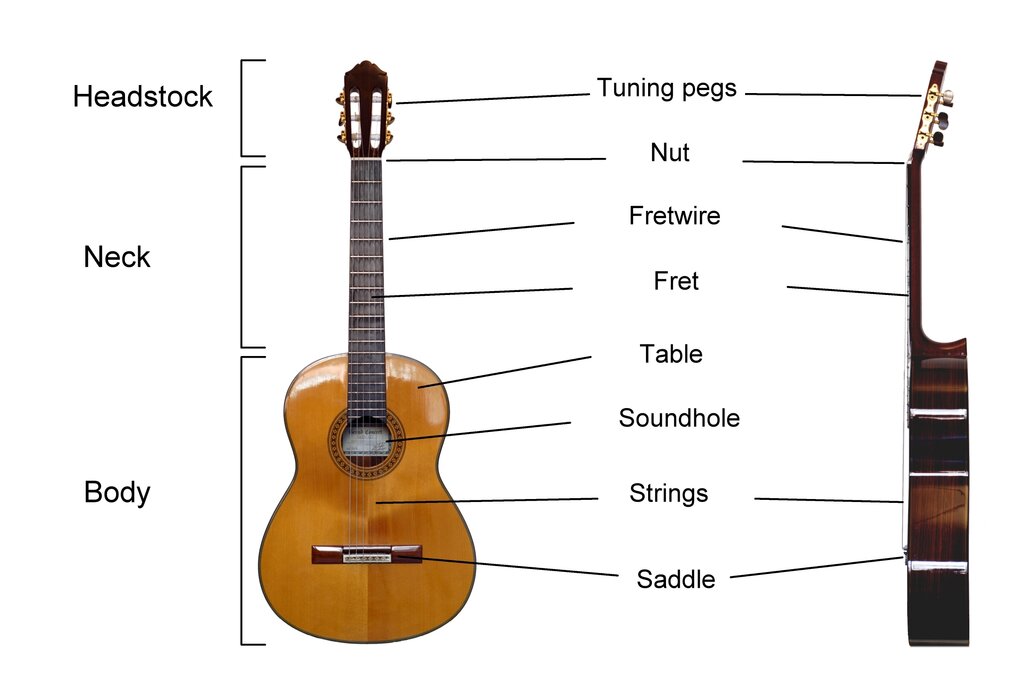
The guitar's body is its sound engine. It acts as a resonance chamber, taking the quiet vibration of a string and amplifying it into a full, rich tone. The large, hollow shape is what gives the acoustic guitar its volume.
The thin, flat piece of wood on the front is called the top or soundboard. This is the most critical part for sound quality. When you pluck a string, its vibration travels through a small piece called the saddle, into a larger block of wood called the bridge, which is glued to the soundboard. The soundboard then vibrates, moving air inside and outside the guitar body to create the sound we hear.

The back and sides of the body form the rest of the chamber, reflecting the sound waves and adding to the instrument's tonal character. The hole in the middle of the soundboard, aptly named the soundhole, helps project the sound out of the body.
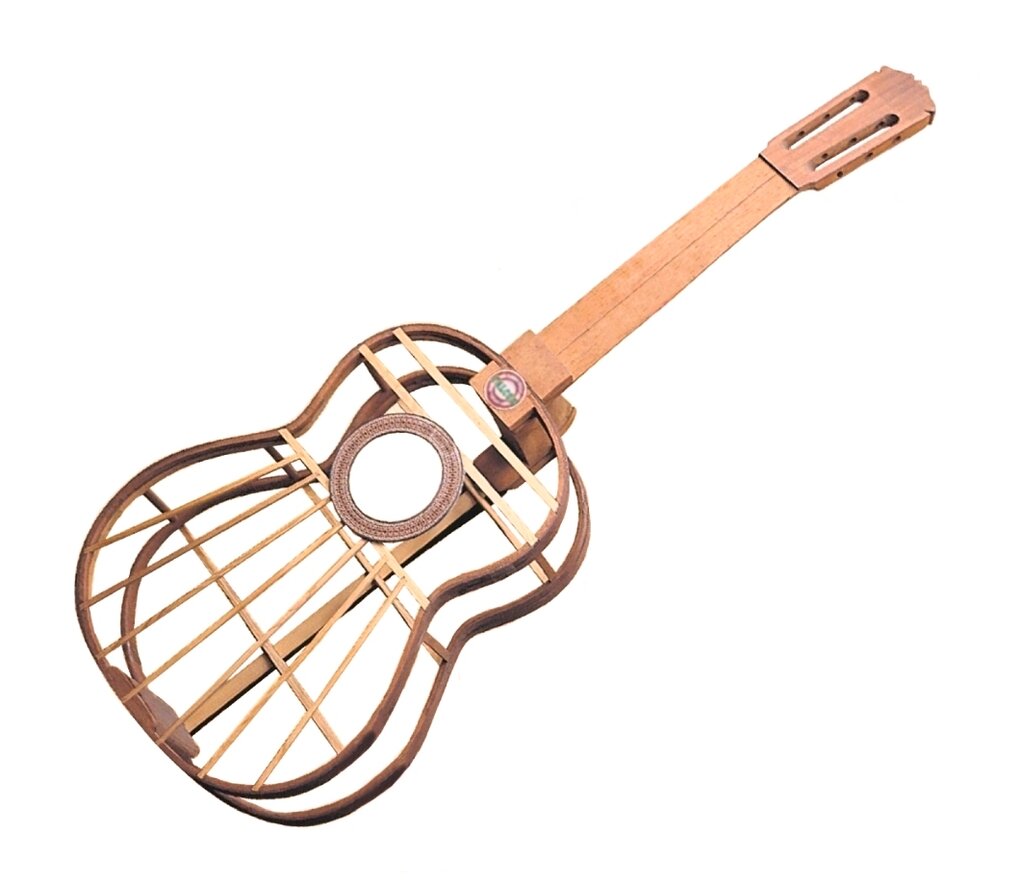
But what keeps the thin soundboard from collapsing under the tension of the strings? A hidden network of wooden struts called bracing is glued to its underside. This bracing adds strength, but it also does something magical: it shapes the guitar's voice. The luthier, or guitar maker, carefully carves and places these braces to control how the top vibrates, emphasizing certain frequencies to create a balanced and pleasing tone.
The Neck and Headstock
If the body is the engine, the neck is the steering wheel. This long piece of wood is where you, the player, do most of the work. Glued to the top of the neck is the fingerboard, or fretboard, which is a flat slab of wood embedded with thin metal strips called frets.
Pressing a string down against a fret effectively shortens the vibrating length of that string. A shorter string vibrates faster, producing a higher pitch. This is how you play different notes. At the junction between the neck and the headstock is the nut, a small grooved piece that guides the strings onto the fingerboard and sets their spacing.

Finally, the headstock holds the tuning pegs, also known as tuners or machine heads. Each string passes through the nut and wraps around a post on a tuner. Turning the knob on a tuner winds or unwinds the string, increasing or decreasing its tension. Higher tension makes the pitch go up; lower tension makes it go down. This is how you get the guitar in tune.
Putting It All Together
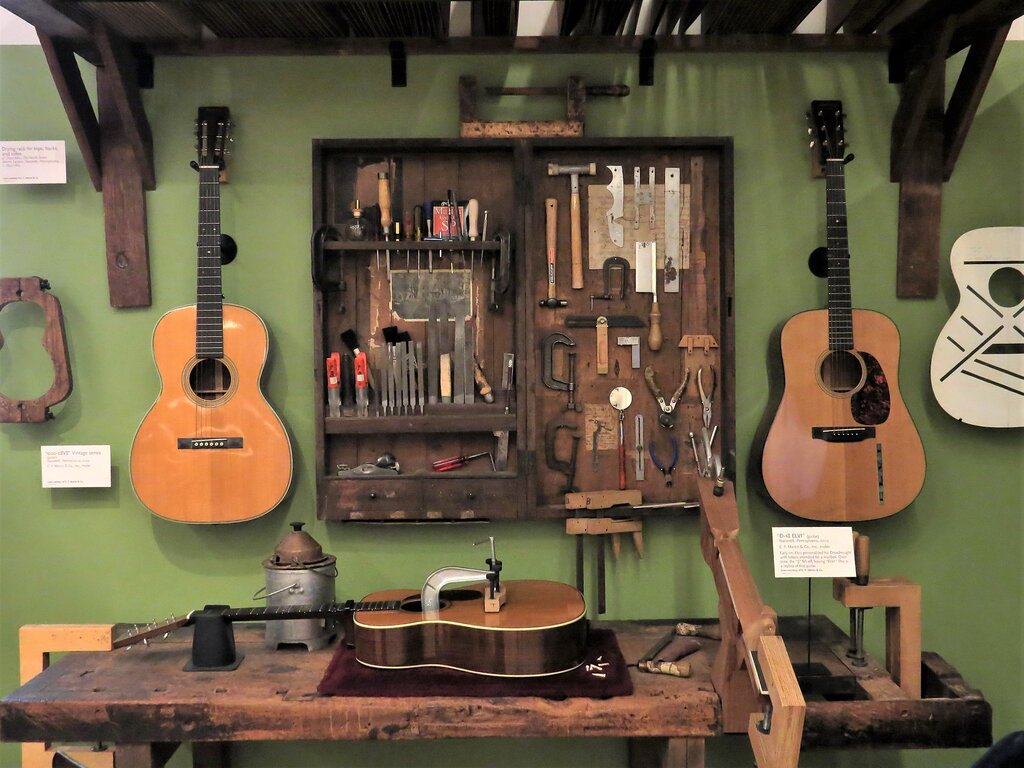
Building a guitar is a delicate process. A luthier starts with the body, carefully bending thin strips of wood to create the sides. Then, the braced top and back are glued on, forming the hollow resonance chamber. The neck, which is carved separately along with the headstock, is then precisely joined to the body.
Once the main structure is complete, the final components are added. The bridge is glued to the top, the fingerboard is attached to the neck, and the tuners are installed in the headstock. After a lot of sanding and finishing, the nut and saddle are put in place, and the instrument is finally strung up. Every step requires precision, as even small changes can have a big impact on the final sound and playability of the instrument.
Now that you know the basic anatomy, let's review the key parts and their functions.
What is the primary function of the acoustic guitar's large, hollow body?
Which component is most critical for the guitar's sound quality and is responsible for vibrating to create sound waves?
Understanding these components is the first step in appreciating the craftsmanship behind an acoustic guitar and how it produces its unique sound.