Acids Bases and Salts Explained
Introduction to Acids and Bases
What Makes Something an Acid or a Base?
You’ve probably tasted both acids and bases without even thinking about it. The sour tang of a lemon comes from citric acid. The slightly bitter taste of baking soda in water is because it's a base. These two categories, acids and bases, describe a huge number of chemical compounds and how they behave, especially in water.
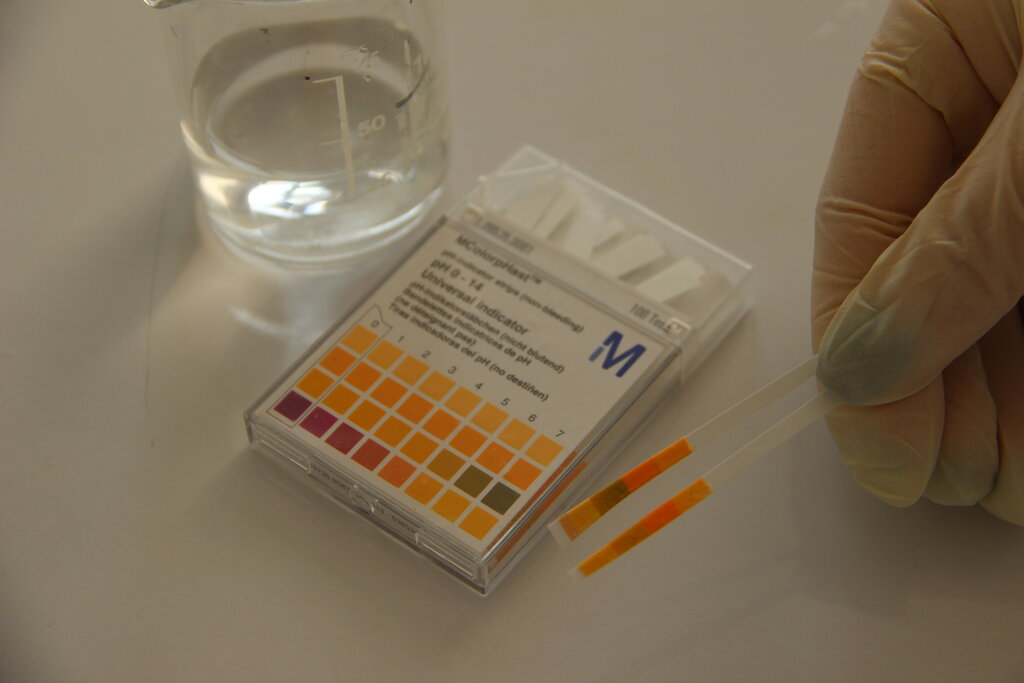
At a simple level, acids and bases are opposites. A common way to measure their strength is the pH scale, where acids have a pH less than 7 and bases have a pH greater than 7. A pH of exactly 7 is considered neutral, like pure water. While these properties are useful, chemists have developed more precise definitions to explain what's happening on a molecular level.
Three Ways to Define Them
As our understanding of chemistry grew, so did our definitions of acids and bases. There are three major theories, each expanding on the last.
The Arrhenius Theory This is the oldest and most straightforward definition. It focuses on what happens when a substance dissolves in water.
An Arrhenius acid is a substance that increases the concentration of hydrogen ions () when added to water. For example, when hydrogen chloride () gas dissolves in water, it forms hydrochloric acid by releasing hydrogen ions.
An Arrhenius base is a substance that increases the concentration of hydroxide ions () in water. A classic example is sodium hydroxide (), a common ingredient in drain cleaners.
This theory is useful, but it's limited. It only applies to substances in water and doesn't explain why some compounds, like ammonia (), act as bases without having an group.
The Brønsted-Lowry Theory This definition is more general. It defines acids and bases based on what they do with protons ( ions).
A Brønsted-Lowry acid is a proton donor. A Brønsted-Lowry base is a proton acceptor.
Let's look at hydrochloric acid and water again. This time, we see the water molecule playing an active role.
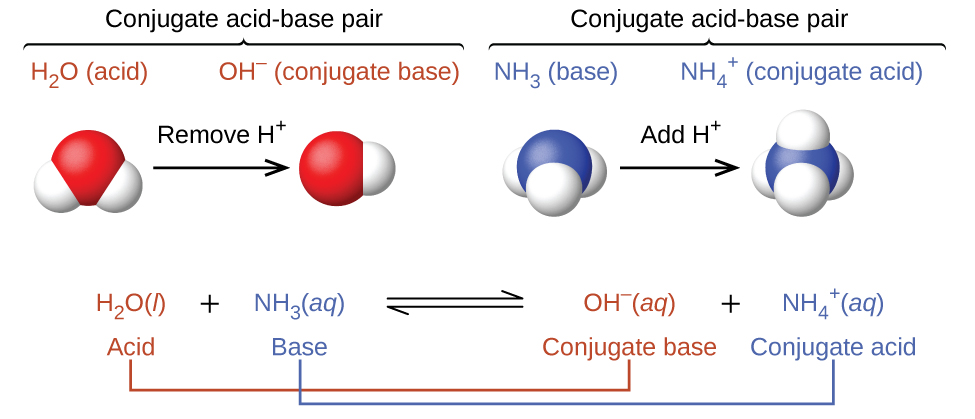
In this reaction, donates a proton to . So, is the acid and acts as the base. This brings up an important idea: conjugate pairs. After an acid donates its proton, what's left is its conjugate base. After a base accepts a proton, it becomes a conjugate acid.
conjugate acid-base pair
noun
Two substances that differ only by the presence of a single proton (H+).
The Lewis Theory This is the most inclusive theory. It shifts the focus from protons to electron pairs.
A Lewis acid is an electron-pair acceptor. A Lewis base is an electron-pair donor.
This definition explains the acidity of molecules that don't even contain hydrogen, like boron trifluoride (). Ammonia () has a lone pair of electrons it can donate, making it a Lewis base. can accept this pair, making it a Lewis acid.
Properties and Examples
Beyond their chemical definitions, acids and bases have distinct physical and chemical properties that you can often observe.
| Property | Acids | Bases |
|---|---|---|
| Taste | Sour (e.g., vinegar, lemon juice) | Bitter (e.g., baking soda, soap) |
| Feel | Can cause a stinging sensation | Slippery or soapy |
| Litmus Test | Turns blue litmus paper red | Turns red litmus paper blue |
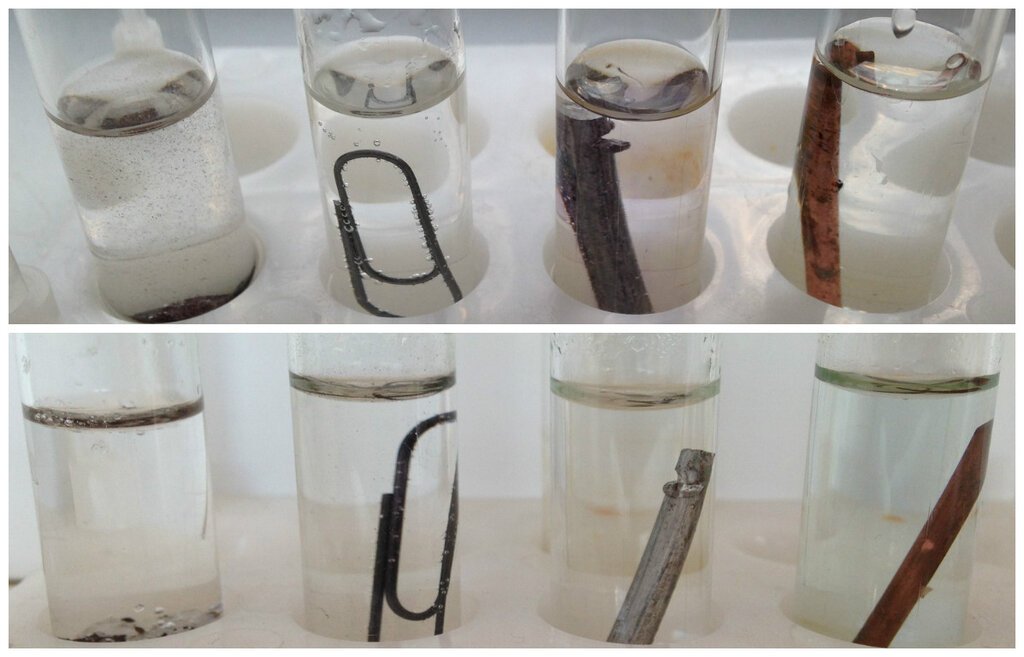
Chemically, acids are known for their vigorous reactions with certain other substances. For example, many acids react with active metals like magnesium to produce hydrogen gas.
Acids also react with carbonate compounds, like chalk or limestone (), to produce carbon dioxide gas. This is the reaction behind the classic volcano science experiment using vinegar (acetic acid) and baking soda (sodium bicarbonate).
Here are some common examples you might encounter:
Common Acids:
- Acetic acid (): The main component of vinegar.
- Carbonic acid (): Found in carbonated drinks.
- Hydrochloric acid (): Stomach acid.
- Sulfuric acid (): Used in car batteries.
Common Bases:
- Ammonia (): Found in many household cleaners.
- Sodium bicarbonate (): Baking soda.
- Sodium hydroxide (): Used in soap making and as a drain cleaner.
Understanding these fundamental definitions and properties is the first step in exploring the world of acid-base chemistry.
According to the pH scale, a substance with a pH of 2 is considered...
Which of the following household items is a common base?