Acids and Bases Explained
Acid and Base Properties
Acids and Bases 101
You encounter acids and bases every day, whether you're squeezing a lemon into your water or washing your hands with soap. These two classes of chemical compounds have distinct, and often opposite, properties that make them essential in our kitchens, our bodies, and in industry. Let's explore what makes an acid an acid, and a base a base.
A Matter of Taste and Touch
One of the oldest ways to identify acids and bases was through their physical properties. Acids, for instance, are known for their sour taste. Think of the sharp tang of a lemon, which comes from citric acid, or the distinct flavor of vinegar, which is acetic acid.
Bases, on the other hand, typically taste bitter. A tiny bit of baking soda (a base) on your tongue has a bitter, salty flavor. They also have a characteristic slippery or soapy feel. This is because bases react with the fatty acids in your skin to form soap, which is why your hands feel slick when you wash them.
Safety first! Never taste or touch an unknown chemical to identify it. Many acids and bases are highly corrosive and can cause severe burns.
Telltale Chemical Reactions
Beyond physical feel, acids and bases show their true colors through chemical reactions. Acids are particularly reactive with certain substances.
When an acid comes into contact with an active metal, like zinc or magnesium, it produces hydrogen gas. You can see this as fizzing or bubbling. The general reaction looks like this:
Acid + Metal Salt + Hydrogen Gas
Acids also have a dramatic reaction with carbonates and bicarbonates, such as limestone or baking soda. This reaction releases carbon dioxide gas, creating a lot of fizz. It's the same reaction that powers the classic homemade volcano experiment.
Acid + Carbonate Salt + Water + Carbon Dioxide Gas

Bases are generally less reactive with metals than acids are. Their most important chemical property is their ability to react with and neutralize acids, a process that produces salt and water. This is why antacids, which are bases, can help calm an acidic stomach.
Color-Changing Clues
Since we can't safely taste or touch most chemicals, we need a better way to tell acids and bases apart. Chemists use substances called indicators. An indicator is a special dye that changes color when it comes into contact with an acid or a base.
The most famous indicator is litmus, which usually comes on small strips of paper. Litmus paper provides a quick and easy test:
- Acids turn blue litmus paper red.
- Bases turn red litmus paper blue.
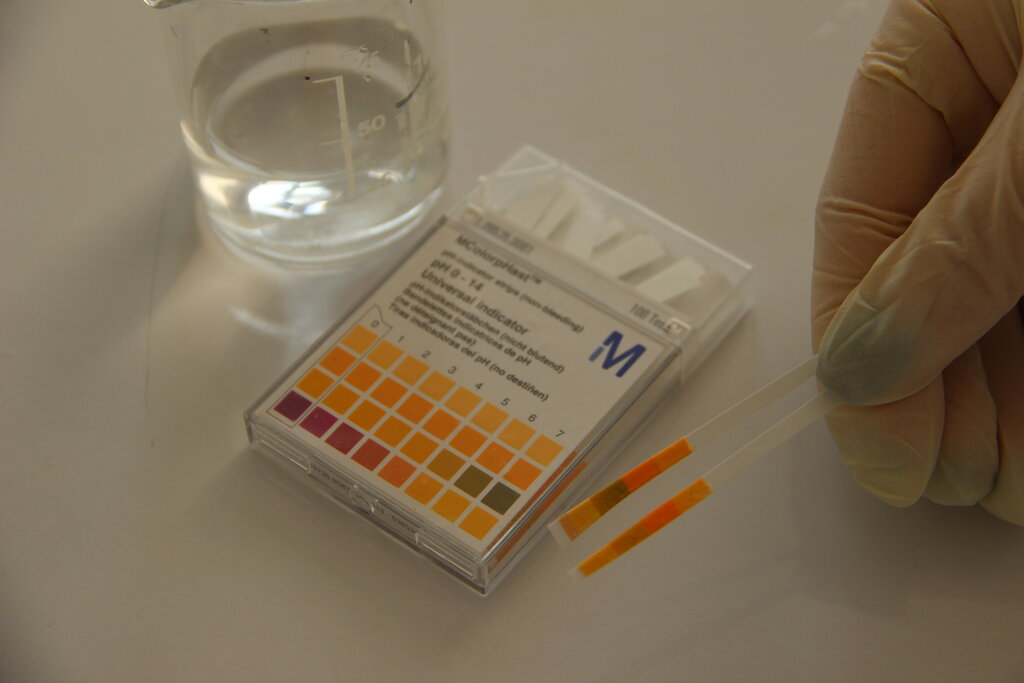
| Indicator | Color in Acid | Color in Base |
|---|---|---|
| Blue Litmus Paper | Red | Blue (no change) |
| Red Litmus Paper | Red (no change) | Blue |
Remembering the color changes is simple. Think "Base" and "Blue"—bases turn litmus paper blue. Acids do the opposite.
Everyday Examples
Acids and bases are all around us. Here are some common examples you might recognize.
| Common Acids | Common Bases |
|---|---|
| Acetic acid (in vinegar) | Sodium bicarbonate (baking soda) |
| Citric acid (in lemons, oranges) | Ammonia (in household cleaners) |
| Carbonic acid (in soft drinks) | Sodium hydroxide (in drain cleaner) |
| Hydrochloric acid (stomach acid) | Magnesium hydroxide (in antacids) |
| Lactic acid (in yogurt) | Calcium carbonate (in chalk, eggshells) |
Let's review these key properties before we move on.
Ready to check your understanding? Let's see what you've learned.
Which of the following describes a characteristic property of bases?
If you add vinegar (an acid) to baking soda (a carbonate), what is the primary cause of the fizzing you observe?
Understanding these fundamental properties is the first step in mastering the chemistry of acids and bases. By recognizing their taste, feel, and chemical reactivity, you can begin to predict how they'll behave in different situations.