Achieving Extreme Financial Independence
Understanding Business Models
What's a Business Model?
A business model is the blueprint for how a company makes money. It's a simple story explaining who your customers are, what you offer them, and how you get paid for it. Think of it as the fundamental logic of your business.
Every business, from a local coffee shop to a global software company, has one. It answers the essential questions: How do we create value for people? How do we deliver that value? And how do we capture some of that value back as revenue?
At its heart, a business model is about turning an idea into a system that generates income. You don't need a complex 50-page document to start. A simple sketch on a napkin can be enough to outline your core strategy.
Selling Ideas and Knowledge
One of the most powerful business models for individuals with limited capital is creating and selling digital products. These are intangible goods that exist in a digital format. Think of ebooks, online courses, software plugins, photo filters, or even spreadsheet templates.
The primary advantage is leverage. You do the work to create the product once, and you can sell it an infinite number of times with minimal extra effort or cost. Your store never runs out of stock, and it can be open 24/7.
The magic of digital products is the principle of "create once, sell often." This breaks the link between your time and your income.
For example, a fitness coach could spend 40 hours creating a comprehensive video course on strength training for beginners. Once that course is finished and uploaded, they can sell it to hundreds or thousands of customers around the world without having to create it again. Each sale adds to their revenue, but not to their workload.
Trading Skills for Cash
A service-based business is perhaps the most straightforward model to understand and start. It involves selling your skills and time to perform a task for a client. This includes freelancers like writers, graphic designers, consultants, and virtual assistants.
The barrier to entry is incredibly low. If you have a marketable skill and a way to find clients, you can start earning money almost immediately. You don't need inventory, a factory, or significant upfront investment. However, there's a catch: your income is directly tied to the hours you can work. If you don't work, you don't get paid.
| Feature | Service Business | Digital Product |
|---|---|---|
| Startup Cost | Very Low | Low to Medium |
| Time to First Sale | Fast | Slower |
| Income Potential | Capped by your time | Highly Scalable |
| Effort per Sale | High (you do the work) | Near Zero |
Many entrepreneurs start with a service to generate cash and validate their expertise. Then, they package that expertise into a digital product to scale their income beyond the hours in a day.
Building for Growth
Scalable online ventures are designed for growth from the outset. Scalability means a business can handle a massive increase in customers or sales without a proportional increase in costs. Digital products are a great example of a scalable asset, but the concept is broader.
Other examples include:
-
Software as a Service (SaaS): Customers pay a recurring subscription fee for access to software, like project management tools or email marketing platforms. The cost to serve the 10,000th customer is not much different from the cost to serve the 100th.
-
Platform Models: These businesses create a network that connects two or more groups and takes a small cut of the transactions. Think of marketplaces like Etsy (connecting craftspeople and buyers) or app stores (connecting developers and users).
-
Membership Communities: A business can create a private community around a specific topic or goal, charging a monthly or annual fee for access to exclusive content, discussions, and networking opportunities.
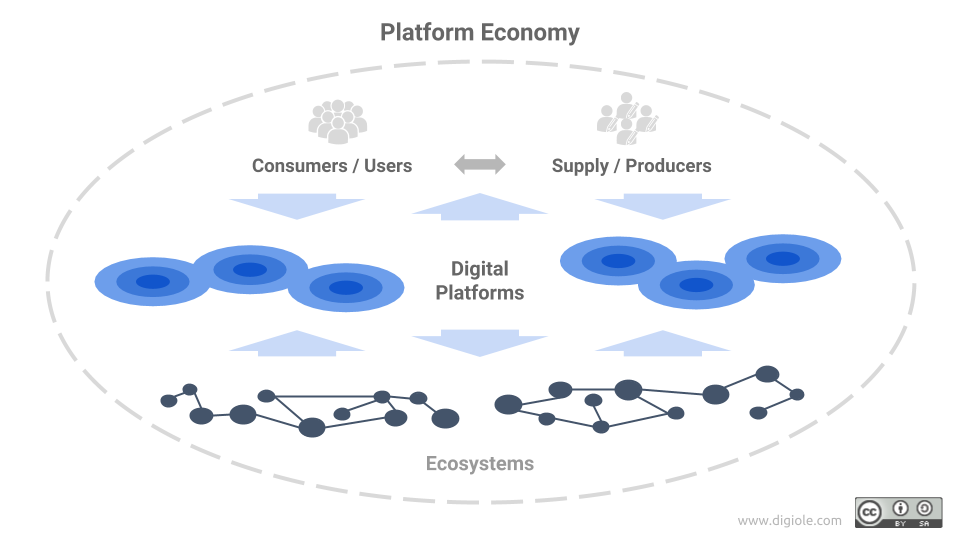
These models require more initial investment in technology and marketing, but their potential for growth is enormous. They succeed by building a system that works for them, rather than relying solely on their own time and effort for every dollar earned.
The strongest models go beyond basic projections and clearly link revenue to market opportunity, tie costs to real acquisition strategies, and map capital needs to measurable milestones.
Now, let's test your understanding of these different business models.
What is the primary purpose of a business model?
What is the key advantage of a digital product business model, such as selling an online course?
Choosing the right business model depends on your skills, resources, and goals. Whether you're selling a service, a product, or a platform, the core idea is the same: create something of value that people are willing to pay for.