Achieve a Perfect Handstand
Handstand Fundamentals
Finding Your Balance Point
A handstand is simply an act of balancing, but upside down. Your goal is to stack your joints and align your body's center of gravity directly over your hands. Think of balancing a broomstick on your palm. You don't just hold it still; you make constant, tiny adjustments to keep it upright. In a handstand, your hands and wrists do the same thing.
Your hands become your feet. By spreading your fingers wide, you create a larger, more stable base of support. To control your balance, you shift your weight subtly across your palms and fingers. If you feel yourself falling over towards your back, press your fingertips firmly into the ground. If you feel yourself falling back down to your feet, push through the heels of your palms.
This constant feedback loop between your body and your hands is the key to holding a steady handstand. It takes time to develop this sensitivity, so be patient.
The Straight Line Secret
The most efficient and stable handstand is a perfectly straight line from your hands to your feet. Any bend or arch in your body forces some muscles to work overtime while making you less stable. Achieving this straight line requires specific body positioning.
First, place your hands shoulder-width apart. As you kick up, focus on pushing your shoulders up toward your ears in a motion called elevation. This creates a strong, stable shoulder girdle. Think of making your arms as long as possible.
Next, engage your core. Pull your lower ribs in and slightly tuck your tailbone, as if you're trying to flatten your lower back. This posterior pelvic tilt counteracts the natural tendency to arch, which is one of the most common handstand mistakes. Finally, squeeze your legs together and point your toes. This creates full-body tension, turning your body into a single, rigid plank that is much easier to balance than a loose, floppy one.
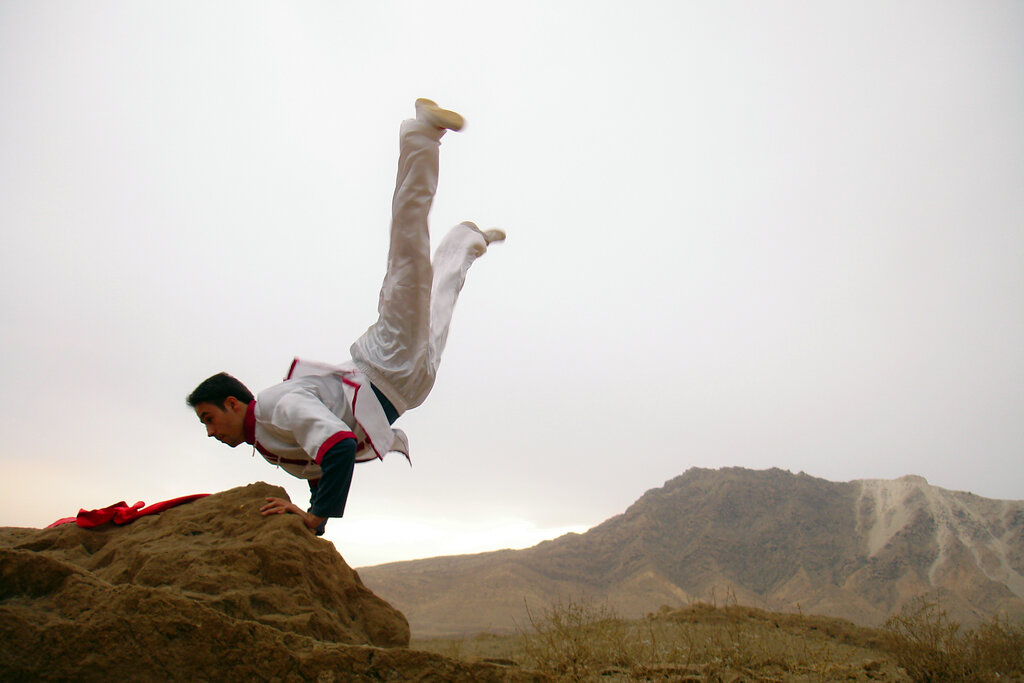
Proper technique in foundational movements builds a strong base and prevents injury.
Strength and Misconceptions
Many people believe handstands are all about arm strength. While arm strength helps, shoulder and core strength are far more critical. Your shoulders are the foundation supporting your entire body weight, and your core holds your body in that crucial straight line. Without a strong core, your lower back will arch, throwing off your balance.
Another common misconception is that you need perfect balance from day one. In reality, balance is a skill you build. Nobody starts by holding a perfect 30-second handstand. You start by practicing against a wall, doing drills to build strength, and getting used to being upside down. It's about progress, not perfection.
Don't fixate on getting your feet away from the wall immediately. Instead, focus on building the foundational strength and mastering the straight-body alignment. When those pieces are in place, balance will come much more easily.
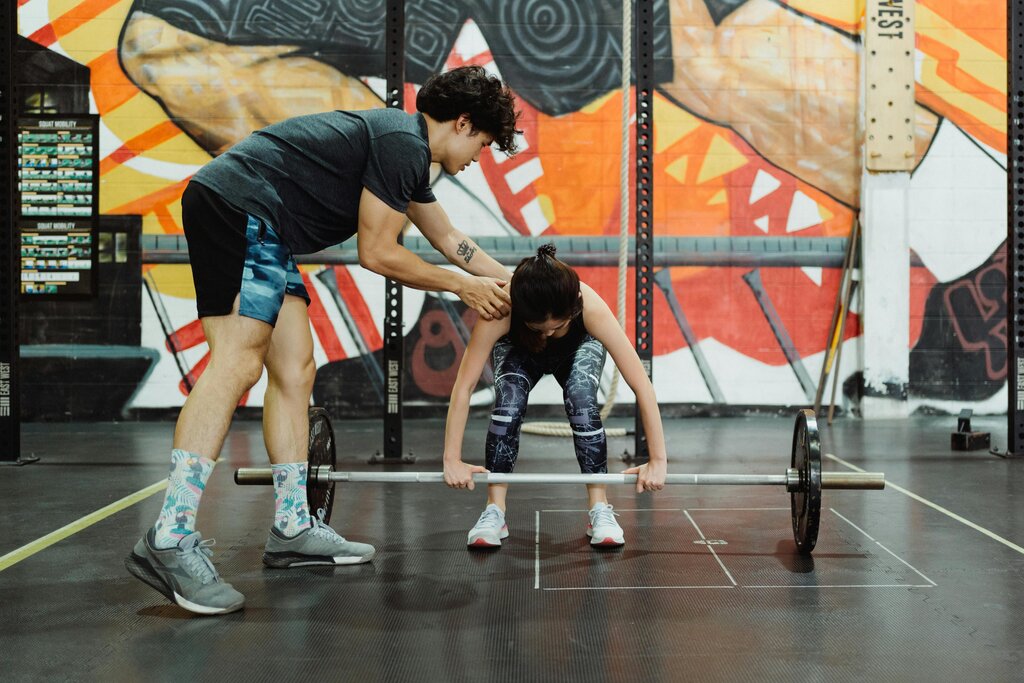
Ready to test what you've learned about the fundamentals?
What is the primary role of the hands and fingers in maintaining balance during a handstand?
If you are in a handstand and feel yourself falling back towards your feet, what is the correct hand adjustment to make?
With these principles in mind, you have a solid foundation for starting your handstand journey safely and effectively. Focus on alignment and strength, and balance will follow.