Achieve 10k Monthly Online
Understanding Online Business Models
Find Your Online Business Model
Starting an online business doesn't require a huge investment. The key is choosing a business model that fits a small budget but has high potential. The right model minimizes your upfront costs and risks, letting you focus on growth. We'll explore four popular and effective models that can be started with less than $200: dropshipping, print-on-demand, affiliate marketing, and selling digital products.
Start with minimal investment by identifying skills and interests you can monetize.
Dropshipping
Dropshipping is like running a retail store without a stockroom. You create an online storefront and list products for sale, but you don't actually own any inventory. When a customer places an order, you purchase the item from a third-party supplier, who then ships the product directly to the customer. Your profit is the difference between what the customer paid and what you paid the supplier.
The main advantage is the low startup cost. You don't need to invest thousands in inventory that might not sell. This frees up your capital for marketing and building your brand. However, your profit margins can be slim, and you're dependent on your supplier's stock and shipping quality. Finding a reliable supplier is crucial.
Key takeaway: In dropshipping, your main job is marketing and customer service, not managing inventory.
Print-on-Demand
Print-on-demand (POD) is a specialized type of dropshipping perfect for creative entrepreneurs. Instead of selling existing products, you create your own designs for items like t-shirts, mugs, phone cases, and posters. You upload these designs to a POD service.
Just like dropshipping, you don't handle any physical products. When a customer orders one of your designs, the POD company prints it onto the chosen product, packages it, and ships it. You set the retail price, and your profit is the sale price minus the POD company's base cost for the product and printing.
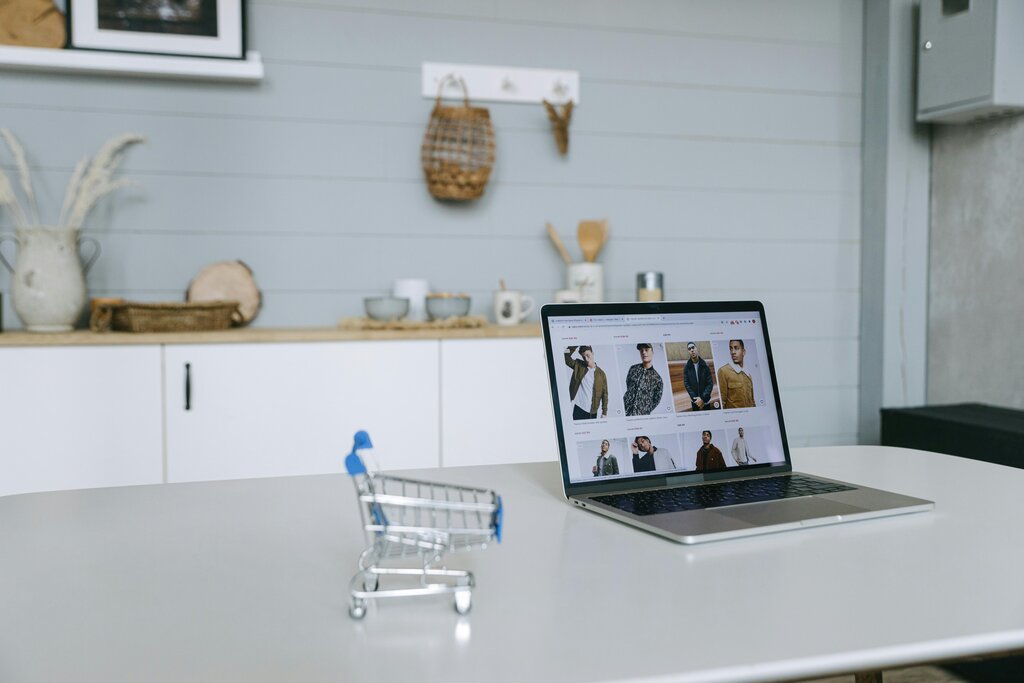
This model is ideal for artists, designers, and anyone looking to build a brand around a specific niche or community. There's no cost for inventory, and you can offer a huge variety of designs and products without risk. The trade-off is that product costs are higher than traditional bulk printing, which means lower profit margins per item.
Affiliate Marketing
Affiliate marketing is a performance-based model where you earn a commission for promoting another company's products or services. You sign up for an affiliate program, receive a unique tracking link, and then share that link on your blog, social media, or email newsletter.
When someone clicks your link and makes a purchase, you earn a percentage of the sale. It's essentially a referral system. Your job is to be a trusted source, connecting your audience with products that can genuinely help them.
Focus on recommending products you actually use and believe in. Authenticity builds trust, and trust drives sales.
The startup costs are extremely low. If you already have a blog or social media following, you can start right away. The challenge is building an engaged audience that trusts your recommendations. It's not a get-rich-quick scheme; it requires building a relationship with your audience over time.
Selling Digital Products
A digital product is any intangible asset or piece of media that can be sold and distributed repeatedly online without needing to replenish inventory. This includes ebooks, online courses, software, music, design templates, and stock photography.
Create products once and sell them repeatedly without additional production work, allowing your business to generate revenue while you sleep.
The beauty of digital products is the profit margin. Once you create the product, the cost to deliver it to a customer is virtually zero. You create it once and can sell it an infinite number of times. This makes the business model highly scalable. Your initial investment is your time and expertise in creating a high-quality product.
The biggest hurdle is creating something valuable that people are willing to pay for. It requires expertise in a specific area and the ability to package that knowledge into a format that is easy for customers to consume and use.
| Business Model | Best For | Pros | Cons |
|---|---|---|---|
| Dropshipping | Entrepreneurs who want to sell a wide variety of physical goods. | Low startup cost, no inventory management. | Lower margins, reliance on suppliers. |
| Print-on-Demand | Creatives, designers, and niche marketers. | No inventory, full creative control. | Higher product costs, lower margins per item. |
| Affiliate Marketing | Content creators, bloggers, and influencers. | Very low cost, no product creation or support. | Requires an engaged audience, income can be inconsistent. |
| Digital Products | Experts, educators, and artists. | High profit margins, highly scalable. | Requires significant upfront time investment. |
Each of these models offers a viable path to building a profitable online business with a small initial investment. The best choice depends on your skills, interests, and the kind of business you want to build.
What is the primary advantage shared by business models like dropshipping, print-on-demand, affiliate marketing, and selling digital products?
In the affiliate marketing model, how does the marketer earn money?