Ace Your Virtual Interview
Understanding Virtual Interviews
The Rise of the Virtual Interview
A virtual interview is a job interview conducted remotely using video conferencing technology. Instead of meeting face-to-face in an office, you and the interviewer connect from your own locations through a computer or mobile device.
Companies increasingly use virtual interviews because they are efficient. They save time and money on travel for both the candidate and the employer. This format also allows companies to consider a wider pool of applicants from different geographic locations.
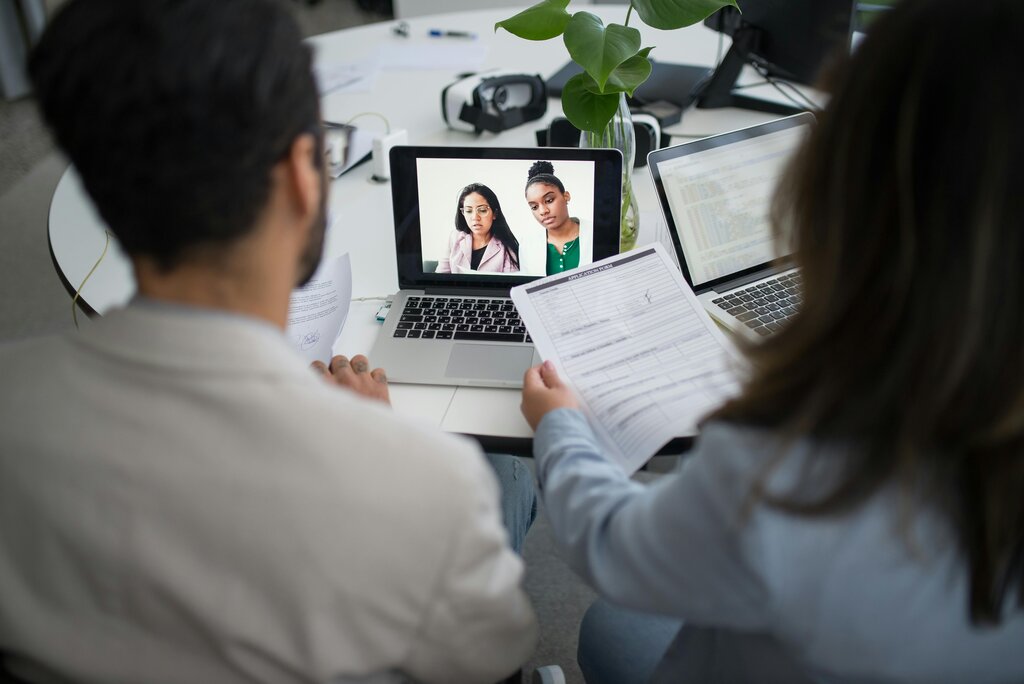
Virtual interviews are likely to stay post-pandemic as well as it is convenient for employers, ease scheduling conflicts, and can broaden the candidate pool.
Virtual vs. In-Person
While the goal is the same—to see if you're a good fit for the role—the experience of a virtual interview is different from an in-person one. You need to pay attention to factors that don't exist in a traditional setting, like your tech setup and on-screen presence. At the same time, you lose some of the natural rapport-building elements of meeting face-to-face.
| Feature | In-Person Interview | Virtual Interview |
|---|---|---|
| Location | Company office or physical location | Anywhere with an internet connection |
| Body Language | Full-body cues are visible | Limited to what the camera shows (usually shoulders up) |
| Environment | Controlled by the employer | Controlled by you (the candidate) |
| Technology | None required | Requires a device, camera, microphone, and stable internet |
| Initial Connection | Handshake, small talk while walking | Immediate on-screen interaction |
One of the biggest differences is the communication channel. In person, you can read the room and pick up on subtle non-verbal cues. On video, it's harder to gauge reactions or build a personal connection. This means you have to be more deliberate with your communication, speaking clearly and showing engagement through your facial expressions and tone.
Platforms and Tech
Companies use a variety of platforms for virtual interviews. The most common are Zoom, Microsoft Teams, and Google Meet. Some larger companies might use specialized hiring software with built-in video capabilities. The recruiter will always tell you which platform they'll be using ahead of time, so you can download any necessary software and familiarize yourself with it.
No matter the platform, your basic technical needs are the same.
Here's the essential tech checklist:
- A Reliable Device: A laptop or desktop computer is ideal because it's more stable than a phone. Make sure it's fully charged or plugged in.
- A Stable Internet Connection: A poor connection can cause frustrating lags or drop the call entirely. If possible, use a wired Ethernet connection for the best stability.
- A Working Webcam: Your device's built-in camera is usually fine. Test it beforehand to check the video quality and angle.
- A Clear Microphone: Use a headset with a microphone or a quality external mic to ensure the interviewer can hear you clearly without background noise or echo.
Now, let's test your understanding of the basics of virtual interviews.
What is the primary definition of a virtual interview?
According to the text, what is a primary reason companies have adopted virtual interviews?
Understanding these fundamentals sets the stage for a successful virtual interview experience. Next, we'll dive into how to prepare.