Ace Your Virtual Interview
Understanding Virtual Interviews
The Rise of Virtual Interviews
A virtual interview is simply a job interview that uses technology to connect you with a recruiter or hiring manager, rather than meeting in the same room. Think of it as a video call with a purpose. For many internships and entry-level jobs, this has become the standard first step, and sometimes it's the only interview you'll have.
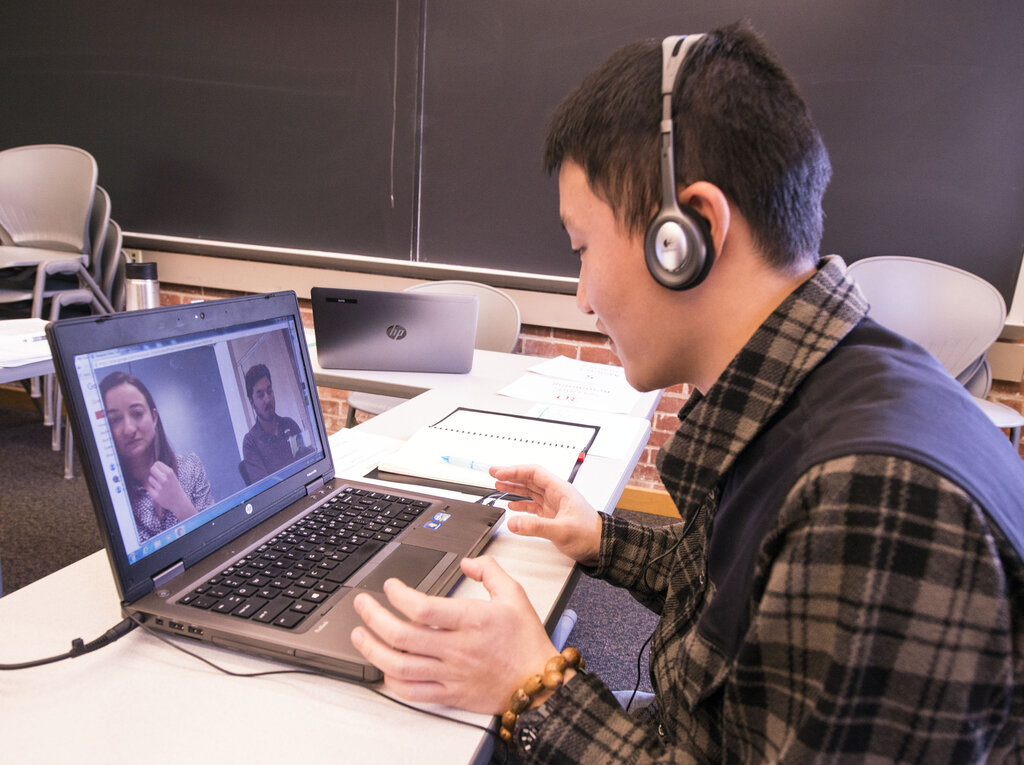
Why the shift? It started as a matter of convenience and cost-saving. Companies can screen more candidates from a wider geographic area without anyone needing to travel. This trend accelerated massively, becoming a common practice for many industries.
Virtual interviews are likely to stay post-pandemic as well as it is convenient for employers, ease scheduling conflicts, and can broaden the candidate pool.
Types of Virtual Interviews
Not all virtual interviews are the same. They generally fall into two categories.
Live Video Interviews This is the most common format. It’s a real-time, face-to-face conversation with one or more interviewers, just like an in-person interview, but conducted over a video platform. You'll answer questions and have a discussion on the spot.
One-Way (Pre-recorded) Interviews In this format, you don't speak to anyone live. Instead, the company sends you a link with a set of questions. You then record your answers on video and submit them by a deadline. Companies often use these to screen a large number of applicants efficiently in the early stages of hiring.
Virtual vs. In-Person
While the goal is the same—to see if you're a good fit for the role—the experience of a virtual interview has some key differences.
Much of the preparation for virtual interviews is the same as for in-person interviews.
However, the virtual format introduces new elements to consider. Your environment is now part of your presentation. A messy room or a bad internet connection can be just as distracting as a wrinkled shirt. Non-verbal cues, like a handshake or confident posture, are harder to convey and interpret through a screen. You must rely more on your facial expressions and tone of voice to build rapport.
On the plus side, you can interview from the comfort of your own home. This saves travel time and can feel less intimidating. You also have a unique advantage.
An advantage of virtual interviews is that you can have your notes and questions handy on your computer screen during your conversation.
You can keep your resume, key talking points, or questions for the interviewer just out of the camera’s view. This isn't a crutch to read from, but a great tool for jogging your memory on important details.
Common platforms for these interviews include Zoom, Google Meet, Microsoft Teams, and specialized hiring software like HireVue or Spark Hire. Always test the software beforehand.
Let's review what we've covered.
What is the primary reason companies have increasingly adopted virtual interviews?
In a one-way virtual interview, you are expected to...
Understanding the format is the first step. By treating a virtual interview with the same professionalism as an in-person meeting, you set yourself up for success.