Ace Your Virtual Interview
Understanding Virtual Interviews
What is a Virtual Interview?
A virtual interview is a job interview that uses technology to connect a candidate with a hiring manager remotely, rather than in person. It’s a standard part of the hiring process for many companies, especially for internships and first-round conversations.
There are two main types you'll encounter:
Live Video Interview: This is the most common format. You'll connect with one or more interviewers in real-time using a video conferencing platform like Zoom, Google Meet, or Microsoft Teams. It feels a lot like a traditional interview, just through a screen.
One-Way Interview: Some companies use pre-recorded interviews, especially for initial screenings. You'll be sent a link with a set of questions and asked to record your answers on video. There's no live interviewer, and you usually get a specific amount of time to record each response.
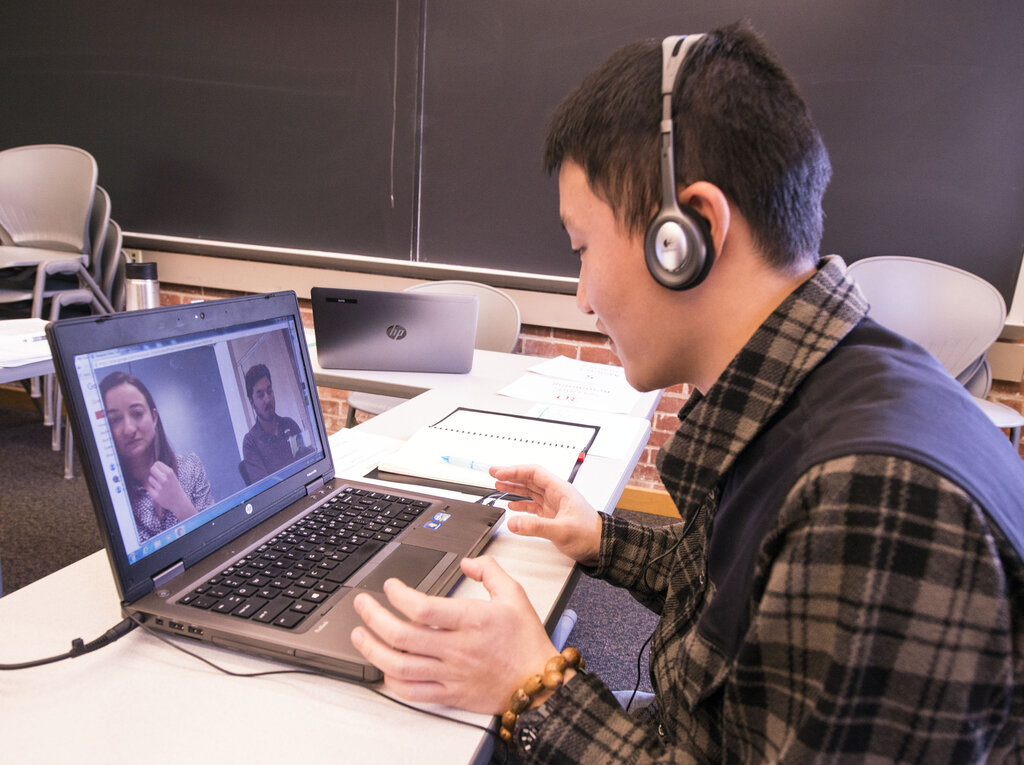
The New Normal
Virtual interviews aren't just a temporary trend. Companies have embraced them because they're efficient. They save time and money on travel, make scheduling easier across different time zones, and allow employers to consider candidates from anywhere in the world.
For you, this means you can interview for a dream internship in another state without ever leaving your room. It opens up a much wider range of opportunities.
Virtual interviews are likely to stay post-pandemic as well as it is convenient for employers, ease scheduling conflicts, and can broaden the candidate pool.
Virtual vs. In-Person
While the goal is the same—to see if you're a good fit for the role—the experience of a virtual interview is quite different from an in-person one. The main distinction comes down to the environment and your reliance on technology.
| Aspect | In-Person Interview | Virtual Interview |
|---|---|---|
| Environment | Takes place at the company's office. | Conducted from a location of your choice (e.g., your home). |
| Communication | Body language and non-verbal cues are easy to read. | Non-verbal cues can be harder to interpret through a screen. |
| First Impressions | Based on your arrival, handshake, and presence in the room. | Relies on your background, lighting, and camera presence. |
| Technology | No tech required, aside from getting there. | Completely dependent on a stable internet connection, camera, and microphone. |
In a virtual setting, you have complete control over your environment. This is both a big advantage and a potential pitfall. A clean, quiet, and well-lit space shows professionalism, while a messy or loud background can be a major distraction.
Advantages and Challenges
Virtual interviews come with their own unique set of pros and cons.
One of the biggest advantages is convenience. You don't have to worry about commuting or navigating an unfamiliar office building. You can also have your resume, notes, and a list of questions for the interviewer discreetly available on your screen for reference.
An advantage of virtual interviews is that you can have your notes and questions handy on your computer screen during your conversation.
The main challenge is technology. A dropped call, poor audio, or a frozen screen can disrupt the flow of the conversation and create a stressful situation. It can also be more difficult to build a natural rapport with the interviewer without the nuances of in-person interaction.
Your job is to maximize the advantages by preparing your space and notes, while minimizing the challenges by testing your tech beforehand.

Now, let's review what you've learned about the world of virtual interviews.
What is the primary function of a virtual interview?
Which of the following is a key advantage of virtual interviews for a job candidate?
Understanding these basics sets you up for success. By treating a virtual interview with the same professionalism as an in-person one, you can effectively showcase your skills and personality.