Ace Your Data Engineering Interview
Data Engineering Fundamentals
The Foundation of Data
Before data can be analyzed, visualized, or used to train a machine learning model, someone has to build the systems that make it all possible. That's the world of data engineering. It’s the essential, behind-the-scenes work that turns raw, messy data into a reliable and valuable resource.
A data engineer is primarily responsible for designing, building, and maintaining the infrastructure that allows organizations to collect, store, and analyze data.
Think of a data engineer as the architect and construction manager for a city's water system. They don't necessarily decide how the water is used in each home, but they design the reservoirs, lay the pipes, and build the filtration plants to ensure clean, reliable water is always available. In the same way, data engineers build robust pipelines and systems to deliver clean, reliable data to data scientists, analysts, and other decision-makers.
Blueprints for Data
You can't build a reliable system without a plan. In data engineering, that plan is called a data model. Data modeling is the process of creating a blueprint for how data will be stored and organized. It defines the different pieces of data, what they mean, and how they relate to each other.
Imagine organizing a massive library. You wouldn't just toss books into a giant pile. You'd create a system: this section is for fiction, that one for history. You'd use a cataloging system to track each book. A data model does the same thing for information, ensuring everything has a logical place and can be found easily and efficiently.
This planning stage is crucial. A good data model ensures data is consistent and predictable, which makes it much easier for a data analyst to query or a data scientist to build a model from.
The Data Assembly Line
Once you have a blueprint, you need a process to move data from its source to its final destination. One of the most common processes is called ETL, which stands for Extract, Transform, and Load.
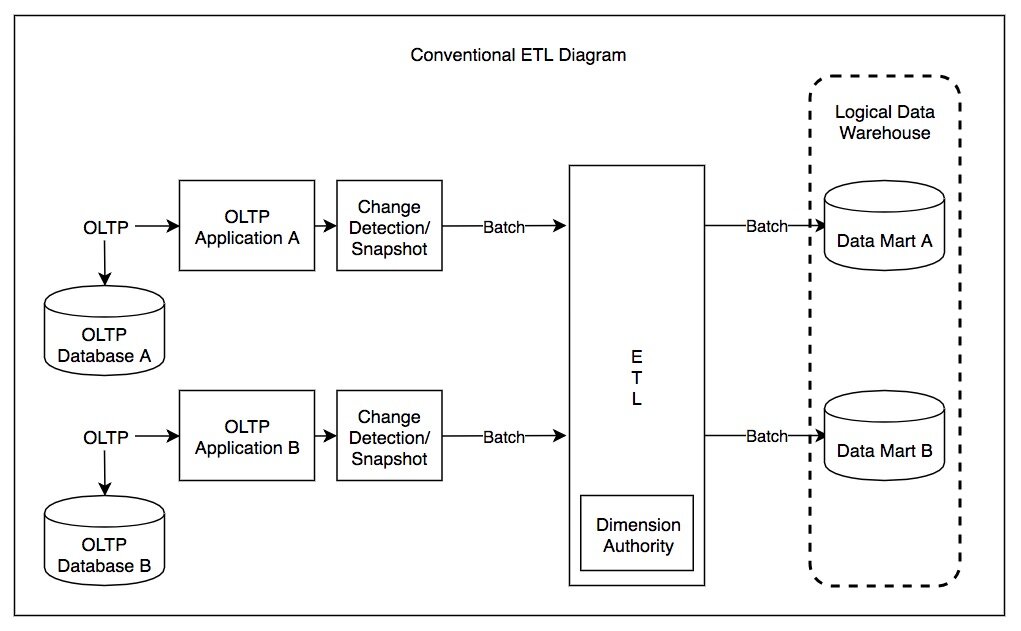
Let's break it down:
-
Extract: Data is messy and often lives in many different places. A company might have customer information in a sales system, website clicks on a web server, and inventory data in a separate database. The first step, Extract, is to pull all this raw data from its various sources.
-
Transform: This is where the real magic happens. Raw data is rarely usable in its original state. The Transform step cleans, validates, and restructures the data. This might involve converting all dates to a standard format, removing duplicate entries, correcting typos, or combining a first name and last name into a single "full name" field. This is the most critical part of the process.
-
Load: After the data has been cleaned and reshaped, it's loaded into a central storage system where it can be easily accessed for analysis. This final destination is often a data warehouse.
Without the Transform step, you'd just be moving messy data from one place to another. This is the core of data engineering: adding structure and quality to raw information.
The Central Library for Data
A data warehouse is a large, centralized repository for an organization's historical data. Unlike a regular database designed for day-to-day transactions (like processing a sale), a data warehouse is optimized for analysis and reporting. It's designed to answer big-picture questions about business trends over time.
Think of it as the company's official library. All the important, cleaned, and cataloged information from across the organization is stored there, ready for people to check out and use for their projects. By having one "single source of truth," everyone in the company works from the same consistent and reliable data.
Time to review what we've covered about these fundamental concepts.
Let's test your understanding of these core ideas.
Which analogy best describes the primary role of a data engineer?
What is the main purpose of data modeling?
These fundamentals—the role of the data engineer, modeling, ETL, and warehousing—form the bedrock of the entire data field. Building a solid understanding of them is the first step toward working with data at any serious scale.