Accounting Fundamentals
Accounting Fundamentals
The Language of Business
Accounting is often called the language of business. It’s the system companies use to measure their activities, process that information into reports, and communicate the results to decision-makers. Think of it as a detailed story of a company's financial life, told in numbers.
Its main purpose is to provide clear, organized financial information so that people inside and outside the company can make smart decisions. Managers need it to steer the ship, investors need it to decide where to put their money, and banks need it to evaluate loan applications. Without accounting, a business would be flying blind.
The accounting equation, basic financial statements, and the role of accounting in business decision-making.
At the heart of all accounting is one simple, powerful idea that keeps everything in balance. This is the accounting equation.
The Accounting Equation
Every transaction a business makes, from selling a product to paying a bill, can be understood through the accounting equation. It's the foundation of modern bookkeeping and shows the relationship between what a company owns and what it owes.
The equation has three parts:
Asset
noun
A resource with economic value that a company owns or controls with the expectation that it will provide a future benefit.
Assets are the things the company has. This includes cash in the bank, inventory waiting to be sold, equipment in the factory, and buildings it owns.
Liability
noun
A company's financial debt or obligations that arise during the course of its business operations.
Liabilities are what the company owes to others. This could be a loan from a bank, money owed to suppliers for materials, or salaries that need to be paid to employees.
Equity
noun
The value attributable to the owners of a business. It represents the amount of money that would be returned to a company's shareholders if all assets were liquidated and all of the company's debt was paid off.
Equity is the owner's stake in the company. It's what's left over for the owners after all the liabilities have been paid off. It's the residual claim on the assets.
Imagine you buy a 💲250,000 house (an asset). You pay 💲50,000 in cash and take out a 💲200,000 mortgage (a liability). Your equity, or your personal stake in the house, is 💲50,000.
These three pieces fit together perfectly in the accounting equation.
This equation must always be in balance. For every transaction, something on one side of the equation must be matched by a change on the other side, or by an equal and opposite change on the same side. If a company takes out a loan, its assets (cash) increase, but its liabilities (loans payable) also increase by the same amount, keeping the equation balanced.
Telling the Story with Statements
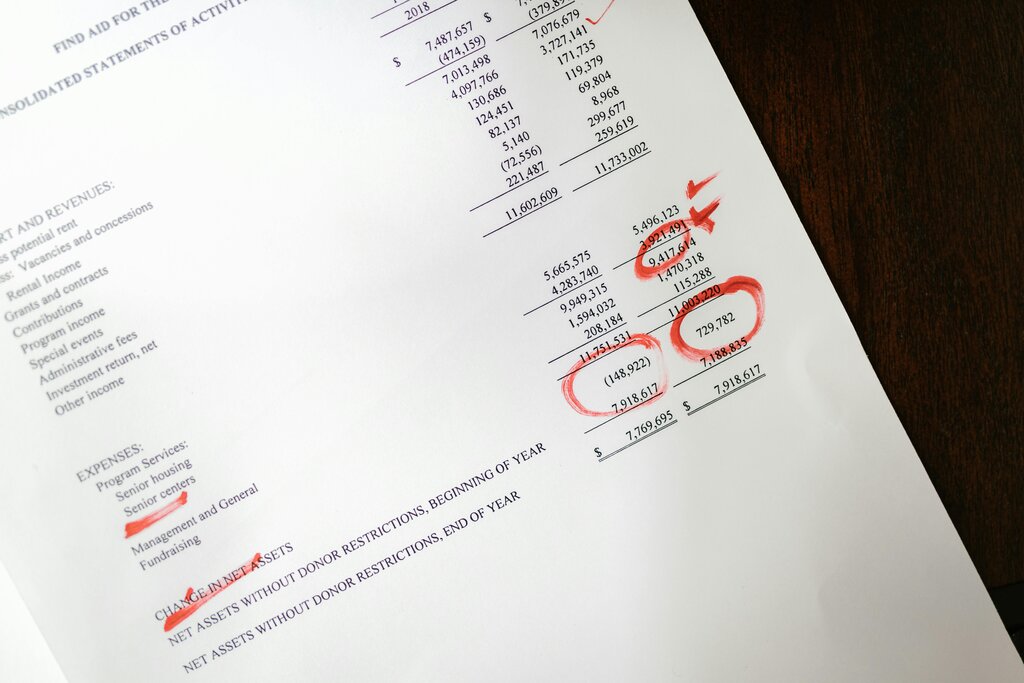
The accounting equation provides the structure, but the story of a business is told through its financial statements. These are formal reports that summarize a company's financial activities over a period of time. There are three main types.
-
The Balance Sheet: This is a snapshot of the company at a single point in time. It lists all of the company's assets, liabilities, and equity, directly reflecting the accounting equation. It shows what the company owns and owes on a specific day.
-
The Income Statement: This statement shows how profitable a company was over a period of time, like a quarter or a year. It subtracts expenses from revenues to find the company's net income, or 'bottom line'.
-
The Cash Flow Statement: This report tracks all the cash that comes into and goes out of the company. It's broken down into cash from operations, investing, and financing. This helps users see where a company's cash is coming from and how it's being spent.
Together, these three statements provide a comprehensive view of a company's financial health, performance, and cash position.
Understanding these core concepts—the purpose of accounting, the fundamental equation, and the role of financial statements—is the first step to making sense of business finance.
Let's review what we've covered.
What is the primary purpose of accounting?
The fundamental accounting equation is Assets = Liabilities + ____.
By grasping these basics, you have a framework for understanding how businesses track their activities and measure success.