Accelerated Learning Techniques
Cognitive Learning Foundations
The Brain's Filing System
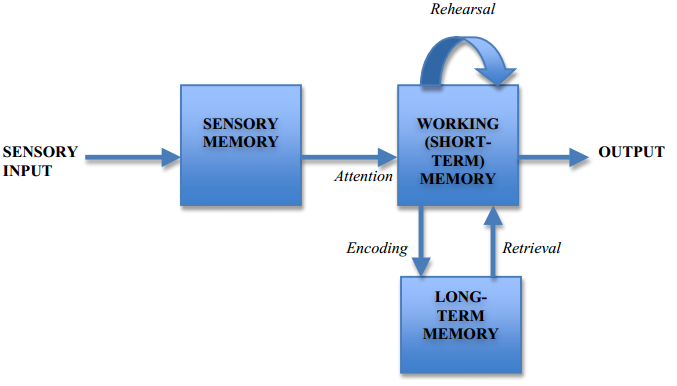
Your brain isn't a single, vast library where memories are stored alphabetically. It's more like a dynamic office with a specific workflow for handling information. Understanding this workflow is the first step to learning more effectively. The process generally moves through three stages.
First, there's Sensory Memory. It's an ultra-short buffer that takes in everything from your senses, like the sight of these words or the feeling of the chair you're sitting on. Most of this information vanishes in a second or two, unless you pay attention to it.
Attention acts as a gateway. When you focus on something, that information moves into Working Memory. This is your mental workbench, the conscious part of your mind where you actively process information. It’s where you solve a math problem, piece together a sentence, or decide what to make for dinner. Critically, your working memory is small. It can only hold a few pieces of information at once, typically for less than a minute.
The final destination is Long-Term Memory. This is your brain's vast archive, where knowledge, skills, and experiences are stored for later use. The process of moving information from your working memory to your long-term memory is called encoding. When you recall a fact or a memory, you are retrieving it from long-term storage back into your working memory to be used.
Learning is the process of successfully encoding information into long-term memory.
Your Brain's Bandwidth
Because working memory is so limited, it's easy to overwhelm it. The total mental effort being used by your working memory at any given moment is called cognitive load. Think of it like your computer's RAM. If you open too many demanding applications at once, the system slows down and can even crash. Your brain works the same way.
cognitive load
noun
The amount of mental effort being used in the working memory.
Cognitive load comes from a few different sources:
-
Intrinsic Load: This is the inherent difficulty of the topic itself. Some subjects, like calculus, naturally require more mental effort to understand than others, like simple addition. You can't change this, but you can manage it by building foundational knowledge first.
-
Extraneous Load: This is the mental effort wasted on things that aren't actually helping you learn. A poorly designed textbook, a distracting environment, or unclear instructions all add extraneous load. This is the “bad” kind of load that gets in the way of learning.
-
Germane Load: This is the “good” kind of load. It's the effort you spend actively making sense of the material, connecting new ideas to what you already know, and building mental models (schemas). This is the work that leads to true understanding.
The goal of effective learning is to minimize extraneous load so you can dedicate your limited working memory to managing the intrinsic load and engaging in germane load. When your mental bandwidth is taken up by confusing language or a noisy room, you have less capacity available for the deep processing that builds lasting memories.
The Spotlight of Attention
You're constantly bombarded with information. Sights, sounds, thoughts, and feelings all compete for your mental resources. As we saw earlier, attention is the mechanism that selects which information gets to pass from the fleeting sensory buffer into your working memory.
Think of attention as a spotlight. You can only shine it on one or two things at a time. While you're reading this, you are likely filtering out the hum of your computer or the sound of traffic outside. You've chosen to direct your attentional spotlight here.
This filtering is essential for learning. If you tried to process every single piece of sensory data at once, your working memory would be instantly overwhelmed. Attention protects your limited cognitive bandwidth for the task at hand.
However, this spotlight can be fickle. It's easily pulled away by distractions, both external (like a phone notification) and internal (like a stray thought or worry). Every time your attention shifts, you disrupt the flow of information into your working memory, making the process of encoding new knowledge less efficient. Managing your attention is fundamental to managing your cognitive load and, ultimately, to successful learning.
Time to see what you've learned.
What is the correct sequence for how memory is processed?
Which statement best describes the capacity of Working Memory?
These core concepts—memory structures, cognitive load, and attention—form the bedrock of how we learn. By understanding these mechanisms, you can begin to see why some study methods work better than others.