Accelerated Learning and Memory Mastery
Understanding Memory Mechanisms
The Architecture of Memory
Memory isn't a single entity. It's a complex system with distinct stages, each handling information differently. Think of it as an information processing pipeline, starting with a fleeting awareness of the world around you.
First is sensory memory, which lasts for only a few seconds. It’s the brief echo of a sound you just heard or the faint afterimage of something you saw. It captures a huge amount of raw data from your senses, but most of it vanishes almost instantly.
If you pay attention to a piece of sensory information, it moves into short-term memory, also called working memory. This is your mental scratchpad, holding about 5-9 items for roughly 20-30 seconds. It’s what you use to remember a phone number just long enough to dial it or to hold the beginning of a sentence in mind as you read to the end. It's an active workspace where you manipulate information.
For information to stick around, it must be transferred to long-term memory. This is the vast, durable storage system for your knowledge, skills, and experiences. Unlike the other stages, its capacity is virtually limitless, and memories can last a lifetime.
This flow depends on three fundamental processes that govern how memories are formed and used.
Remembering episodes involves three processes: encoding information (learning it, by perceiving it and relating it to past knowledge), storing it (maintaining it over time), and then retrieving it (accessing the information when needed).
From Experience to Knowledge
Encoding is the process of converting sensory input into a form that can be stored in the brain. It's not like recording a video; it’s an active process of interpretation. The brain organizes and labels information, often connecting it to existing knowledge. The more deeply you process information—by thinking about its meaning, relating it to personal experiences, or organizing it—the stronger the encoded memory will be.
Once encoded, a memory enters storage. This involves maintaining the information over time. The biological basis for this is a process called memory consolidation, where fragile, short-term memories are converted into stable, long-term ones. This happens through structural and chemical changes at the level of neurons.
Consolidation isn't instant. It involves strengthening the connections between neurons, a phenomenon known as long-term potentiation (LTP). When neurons fire together repeatedly as you learn something new, their synaptic connection gets stronger, making it easier for them to communicate in the future. Think of it as carving a path in a forest. The first time is tough, but with each pass, the trail becomes clearer and easier to travel. This process happens largely during sleep, which is why a good night's rest is critical for learning.
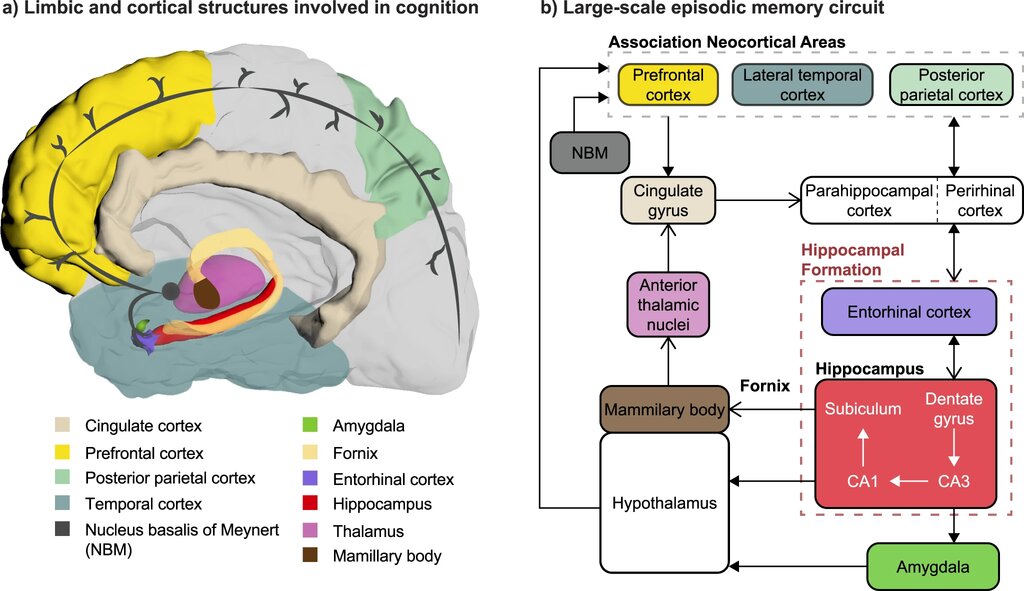
Finally, retrieval is the act of accessing stored information. Sometimes this is effortless, but other times it requires deliberate searching. Retrieval is heavily dependent on cues, which are bits of information that help you locate the memory you're looking for. The context in which you encoded the memory can serve as a powerful retrieval cue. For example, you might find it easier to remember an old classmate's name if you revisit your old school.
What Shapes Our Memory
Memory isn't perfect. Several factors influence how well we retain and recall information.
Attention is the gatekeeper. You can't encode what you don't pay attention to. In a world full of distractions, divided attention during learning is a primary reason for forgetting.
Emotion plays a major role. Highly emotional events, whether positive or negative, are typically remembered more vividly and for longer periods. The hormonal and neurochemical surge during these events strengthens memory consolidation.
Context matters. As mentioned, the environment and your internal state (your mood, for example) during encoding can act as retrieval cues. This is known as context-dependent and state-dependent memory. Studying in the same room where you'll take an exam can improve recall.
Finally, the passage of time leads to forgetting. Memories can decay if they are not used, or they can be blocked by interference, where other memories get in the way of retrieval. Proactive interference is when old memories hinder the recall of new ones, while retroactive interference is when new information makes it harder to recall old information.
Ready to test your knowledge of how memory works?
You glance at a phone number on a billboard and can recall it just long enough to key it into your phone. Which memory stage is primarily at play?
What is the process of converting sensory information into a form the brain can store?
Understanding these core mechanisms—the stages, processes, and influencing factors—provides a foundation for appreciating how we learn and remember.