Accelerated Dutch Language Learning
Essential Dutch Vocabulary
Your First Dutch Words
When you start learning a new language, it's easy to feel overwhelmed. How can you possibly memorize an entire dictionary? The good news is, you don't have to. A small number of words make up the vast majority of everyday conversations. By focusing on these high-frequency words first, you can start understanding and speaking basic Dutch much faster.
Did you know that just 1,000 words make up most of everyday conversations? Prioritize learning these high-frequency words and phrases first.
This approach is all about getting the most impact from your study time. Let's begin with the absolute essentials: the words you'll use every single day.
Greetings and Basic Phrases
Polite words are the key to any conversation. They show respect and open the door for friendly interaction. These are some of the first words you should master.
| English | Dutch | Pronunciation Tip |
|---|---|---|
| Hello | Hallo | ha-low |
| Good morning | Goedemorgen | khoo-duh-mor-khun |
| Yes | Ja | yah |
| No | Nee | nay |
| Please | Alstublieft | als-too-bleeft |
| Thank you | Dank je wel | dank-yeh-vel (informal) |
| Thank you | Dank u wel | dank-oo-vel (formal) |
You probably noticed two ways to say "thank you." Dutch makes a distinction between formal and informal ways of addressing someone. You use je (you) with friends, family, and people your age. You use u (you) with older people, strangers, or in professional settings. When in doubt, using the formal u is always a safe bet.
Building Simple Sentences
To form sentences, you need two things: someone or something to talk about (a pronoun) and an action (a verb). Let's start with the pronouns.
| English | Dutch Pronoun |
|---|---|
| I | Ik |
| You (informal) | Jij / Je |
| You (formal) | U |
| He | Hij |
| She | Zij / Ze |
| We | Wij / We |
| You (plural) | Jullie |
| They | Zij / Ze |
Now, let's give those pronouns something to do. These three verbs are among the most important in any language.
| English | Dutch (Infinitive) |
|---|---|
| to be | zijn |
| to have | hebben |
| to go | gaan |
Just like in English, these verbs change depending on who is doing the action. For example, Ik ben means "I am," while Hij is means "He is."
We also need words to connect ideas. These little words, or connectors, are the glue that holds sentences together.
| English | Dutch |
|---|---|
| and | en |
| but | maar |
| or | of |
| because | omdat |
Example: Ik ga, maar hij niet. (I am going, but he is not.)
Everyday Vocabulary
Finally, let's arm you with some practical words for daily life. We'll start with numbers one through ten.
| Number | Dutch |
|---|---|
| 1 | één |
| 2 | twee |
| 3 | drie |
| 4 | vier |
| 5 | vijf |
| 6 | zes |
| 7 | zeven |
| 8 | acht |
| 9 | negen |
| 10 | tien |
Knowing the days of the week is also incredibly useful for making plans.
| English | Dutch |
|---|---|
| Monday | Maandag |
| Tuesday | Dinsdag |
| Wednesday | Woensdag |
| Thursday | Donderdag |
| Friday | Vrijdag |
| Saturday | Zaterdag |
| Sunday | Zondag |
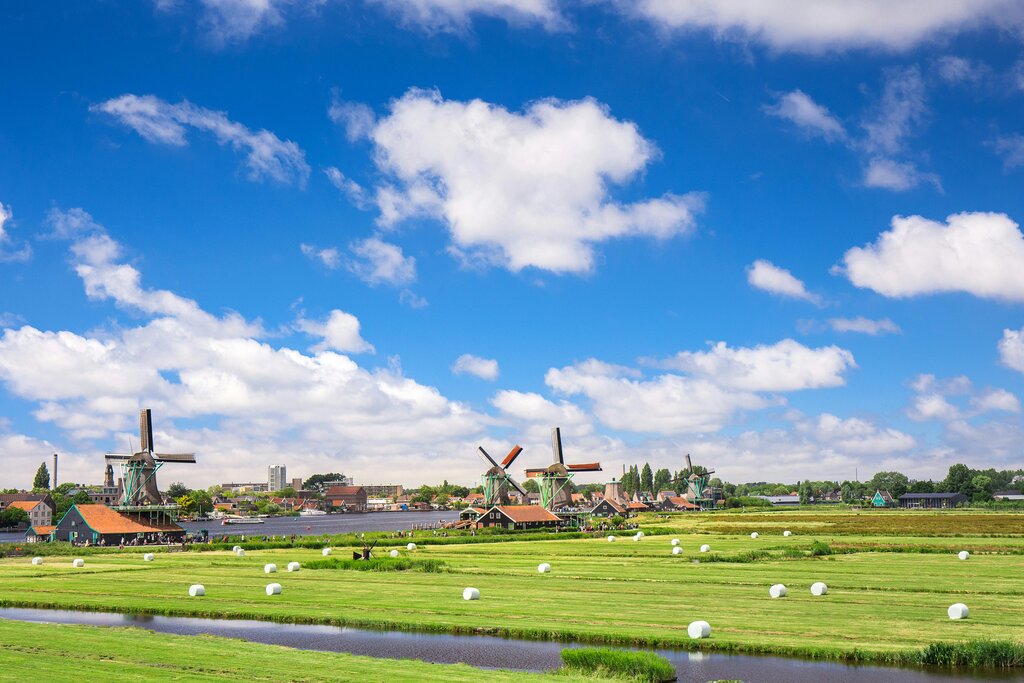
And of course, everyone talks about the weather.
| English | Dutch |
|---|---|
| the sun | de zon |
| the rain | de regen |
| the wind | de wind |
| it's warm | het is warm |
| it's cold | het is koud |
What about food? Here are a few words to get you started.
| English | Dutch |
|---|---|
| water | het water |
| bread | het brood |
| cheese | de kaas |
| coffee | de koffie |
| beer | het bier |
Let's check what you've learned.
You are meeting your new, older boss for the first time. How would you say "thank you" to them in the most appropriate way?
Fill in the blank: Ik ___ een student.
Building your vocabulary is a gradual process. By starting with these essential words, you've created a strong foundation for all your future learning.