Accelerate Your Learning and Memory Mastery
Understanding Memory Mechanisms
From Sensation to Storage
Your brain doesn't just record experiences like a camera. It actively processes and converts sensory information into a usable format, a process called encoding. Think of it as translating a foreign language into one your brain understands. This translation can happen in a few ways: acoustically (by sound), visually (by sight), or semantically (by meaning).
While all are useful, semantic encoding is the most powerful tool for creating durable memories. When you connect new information to existing knowledge or understand its meaning, you create a much richer, more interconnected memory trace. It's the difference between memorizing a random string of numbers and remembering a friend's phone number because you associate it with their birthday.
Deeper processing leads to stronger memories. Simply repeating a fact (shallow processing) is far less effective than thinking about its meaning and how it relates to what you already know (deep processing).
The Brain's Filing Cabinets
Once encoded, information enters your short-term or working memory. This is a temporary workspace with limited capacity, like a mental notepad. It holds information for a few seconds to a minute, just long enough for you to use it. To keep something for longer, it must be consolidated into long-term memory.
This consolidation process is managed by the hippocampus, a structure deep in your brain. The hippocampus acts like a librarian, taking in new information, organizing it, and then filing it away for permanent storage in various regions of the cerebral cortex. This is why damage to the hippocampus can prevent the formation of new long-term memories, even if short-term memory remains intact.
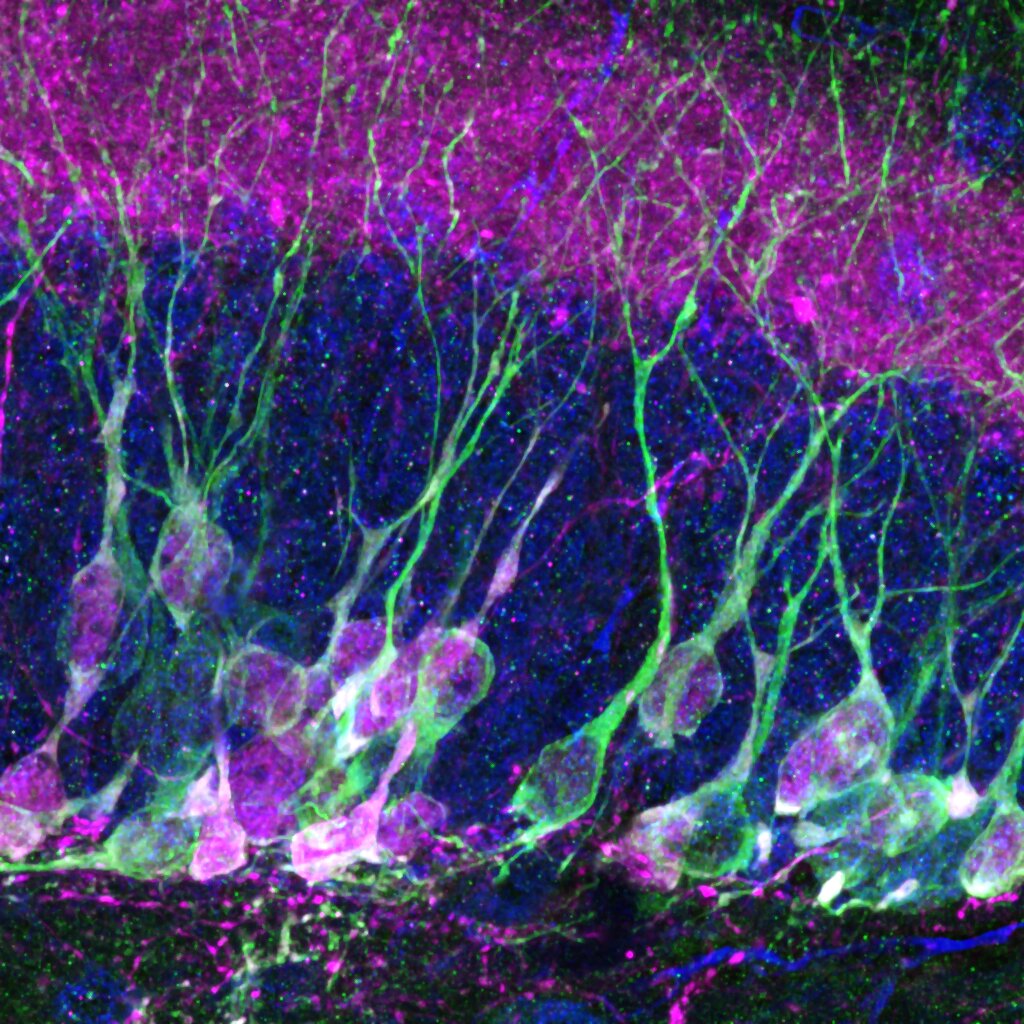
This transfer isn't instant. It happens over time, often strengthening during sleep. The brain replays the day's events, reinforcing the neural connections associated with important information and gradually making the memories independent of the hippocampus.
Carving Paths in the Brain
At the microscopic level, memory is all about connections. Your brain contains billions of neurons, and learning strengthens the links, or synapses, between them. This ability for synapses to change in strength is called synaptic plasticity.
The famous principle "neurons that fire together, wire together" describes a process called Long-Term Potentiation (LTP). When two neurons are activated at the same time, the synapse between them becomes more efficient. Future signals across that synapse will be stronger, making it easier for the signal to pass. LTP is the cellular basis of learning and memory formation.
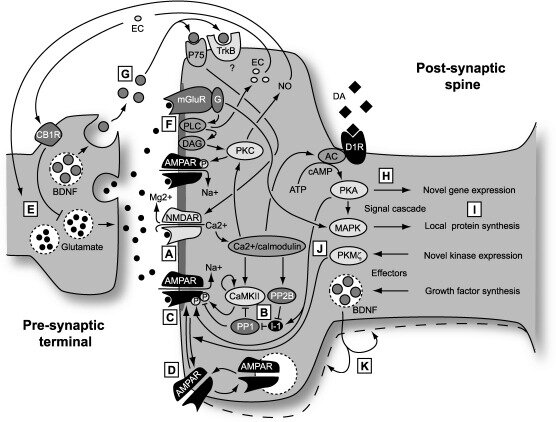
The opposite is also true. Synapses that are rarely used become weaker through a process called Long-Term Depression (LTD). This is just as important as LTP. It allows the brain to prune away irrelevant connections, making the important ones stand out more clearly and preventing our neural circuits from becoming over-saturated with information.
The Inevitable Fade
Forgetting isn't a failure of your memory system; it's a feature. The brain prioritizes information it thinks you'll need. Information you don't revisit is gradually marked as less important. This process was famously mapped by Hermann Ebbinghaus in the 19th century. He discovered what's now called the forgetting curve.
The curve shows that memory decay is exponential. We forget most of what we learn very quickly, often within the first 24 hours. The rate of forgetting then slows down over time. This happens for several reasons, including trace decay (memory traces fading over time) and interference (new memories overwriting or getting mixed up with old ones).
However, the curve also reveals a solution. By actively recalling or reviewing information at spaced intervals, you can flatten the curve dramatically. Each review session reinforces the neural pathways, signaling to your brain that this information is important and worth holding onto.
Which type of encoding is most effective for creating strong, long-lasting memories?
According to Hermann Ebbinghaus's forgetting curve, when are you most likely to forget the largest amount of new information you've learned?