AC Power Supply Fundamentals
Introduction to AC Power Supplies
The Language of Electricity
Think of a power supply as an electrical translator. The power that comes from a wall outlet speaks a different language than the power your phone or laptop understands. A power supply's job is to take the electricity from the source and convert it into the precise form an electronic device needs to work correctly.
Without the right power supply, most electronic devices would be instantly damaged by the high voltage from a standard wall outlet.
To understand this translation process, we first need to look at the two basic types of electricity: alternating current (AC) and direct current (DC).
AC vs. DC
Alternating current (AC) is the type of power delivered to our homes and offices. Its voltage isn't constant; it rapidly swings back and forth, alternating its direction in a smooth, wave-like pattern. This is great for transmitting power over long distances, which is why it's used for the electrical grid.
Direct current (DC), on the other hand, flows in one steady, consistent direction. Think of a battery. It provides a constant voltage that doesn't change. This stable, low-voltage power is exactly what the sensitive components inside most electronics, like microchips and processors, require to function.
Because the grid supplies AC but our devices need DC, we need a way to convert it. That's the primary role of an AC power supply.
The Conversion Process
Converting high-voltage AC into low-voltage DC is a multi-step process. Inside every power supply, four key components work together in sequence to perform this electrical translation.
Let's walk through what each stage does.
1. Transformer: The AC from the wall is at a very high voltage (like 120V or 240V). The transformer's job is to step this down to a much lower, safer voltage.
2. Rectifier: After the voltage is lowered, it's still AC. The rectifier, typically made of diodes, converts the alternating current into direct current. It essentially flips the negative half of the AC wave, so all the current flows in a single direction. However, the output at this stage is a bumpy, pulsating DC, not the smooth current our devices need.
3. Filter: The filter takes the pulsating DC from the rectifier and smooths it out. It acts like a reservoir, filling in the dips and valleys in the voltage to create a much more stable signal. This is usually done with a component called a capacitor.
4. Voltage Regulator: The final stage is the voltage regulator. It acts as a gatekeeper, ensuring the output voltage remains constant and precise, even if the incoming AC voltage fluctuates or the device's power needs change. It clips off any remaining ripples from the filter, delivering a clean, steady stream of DC power.
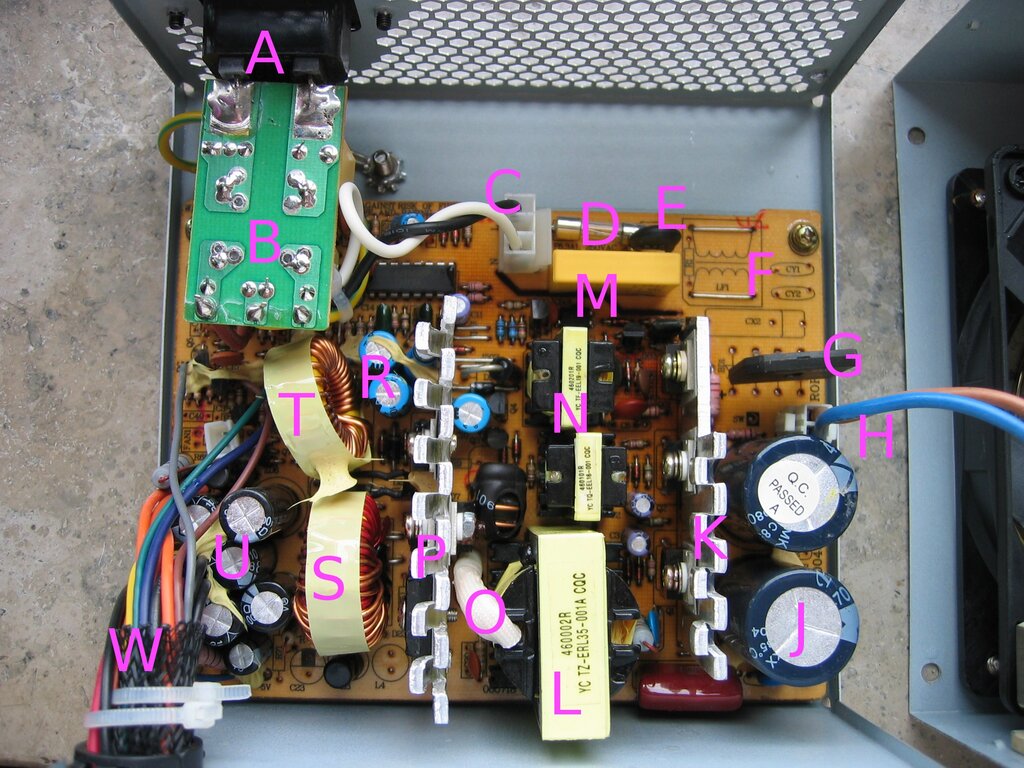
Together, these four components form the core of nearly every AC power supply, from the tiny charger for your phone to the large unit powering your desktop computer.
What is the primary function of a power supply for electronic devices like a laptop or phone?
A power supply's rectifier and filter work together. What is the state of the electricity after it passes through the rectifier, but BEFORE it is smoothed by the filter?
Now you know the fundamental purpose of a power supply and the key steps it takes to turn the AC from your wall into the DC your devices need.