Abstracts vs Headlines Health News
Understanding Scientific Abstracts
The Abstract in a Nutshell
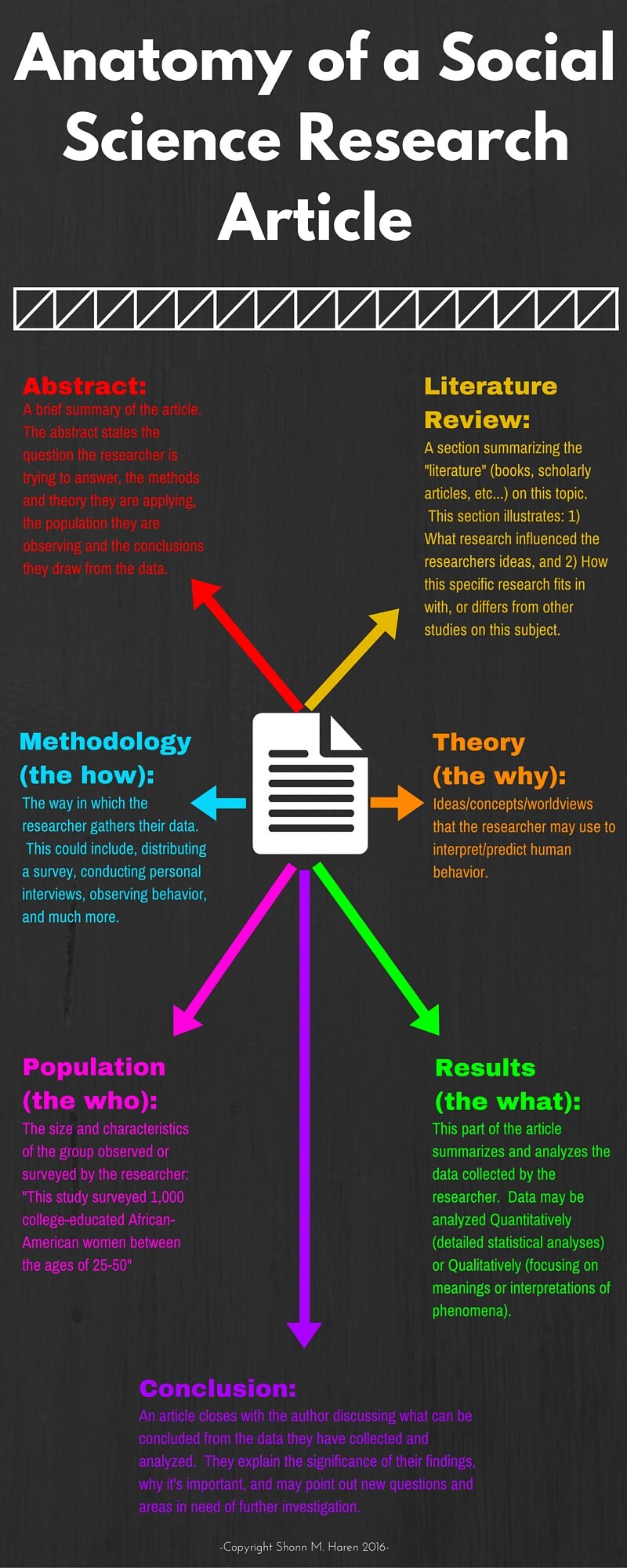
Think of a scientific abstract as a movie trailer for a research paper. It’s a short, powerful summary right at the beginning that gives you the main plot points without all the details. Its job is to help you quickly decide if the full paper is worth your time.
Researchers and students are busy people. They sift through dozens of articles to find the ones that are truly relevant to their work. The abstract provides a high-level overview, covering the study’s purpose, methods, key findings, and conclusion, all in about 250 words. It’s the ultimate time-saver.
Not All Abstracts Are Alike
Just as movie trailers can be vague teasers or detailed summaries, abstracts come in a few different flavors. Most fall into one of three categories.
Informative: This is the most common type you'll encounter. It’s a dense summary of the entire article, including the research question, the methods used, the main results, and the authors' conclusions. It's a mini-version of the paper.
Indicative (or Descriptive): This type is more of a description than a summary. It outlines what the paper is about but doesn't give away the key findings or conclusions. You’ll see what topics are covered, but you'll have to read the full paper to learn what the researchers discovered. These are more common in the humanities or for review articles.
Evaluative: This is the rarest bird. An evaluative abstract does everything an informative one does, but it also adds a layer of judgment or commentary on the study's validity, importance, or quality. It’s a summary plus a mini-review.
| Type | Purpose | What It Contains |
|---|---|---|
| Informative | To summarize the entire study | Objectives, Methods, Results, Conclusion |
| Indicative | To describe the paper's scope | General topics and focus areas only |
| Evaluative | To summarize and critique | Full summary plus a judgment on the study's value |
For the rest of this article, we’ll focus on the informative abstract, as it's the standard for most scientific research.
Decoding the Abstract
A good informative abstract follows a predictable structure, usually mirroring the full paper. You can almost always find four key pieces of information, often in this order:
- Objectives/Purpose: Why did the researchers do this study? This section sets the scene, stating the problem or the question they wanted to answer.
- Methods: How did they do it? This briefly describes the experiment or study design, the participants, and what was measured.
- Results: What did they find? This is the heart of the abstract, presenting the key data and most significant findings.
- Conclusions: What does it mean? Here, the authors interpret their results and explain the study's implications or importance.
When you're trying to compare a news headline to the actual science, breaking down the abstract into these four parts is your first step. It helps you see exactly what the study did and found, separate from any hype.
A Framework for Analysis: PICOM
To dig even deeper and analyze an abstract with precision, you can use a handy framework called PICOM. It’s a systematic way to pull out the most critical details of a study, especially in health and medical research.
PICOM
other
A framework for analyzing clinical research that stands for Population, Intervention, Comparison, Outcome, and Method.
Here's what each letter stands for:
| Element | Question It Answers |
|---|---|
| Population | Who (or what) was studied? (e.g., adults with high blood pressure) |
| Intervention | What was the treatment or exposure being tested? (e.g., a new medication) |
| Comparison | What was the intervention compared to? (e.g., a placebo or an existing medication) |
| Outcome | What was the effect being measured? (e.g., a change in blood pressure) |
| Method | What type of study was it? (e.g., a randomized controlled trial) |
By actively looking for these five elements, you can cut through the jargon and get to the core of the research. It helps you understand exactly who was studied, what was done, and what was found. This structured approach is incredibly useful for spotting when a news headline might be oversimplifying or misrepresenting the science.