Absolute Beginner French
Alphabet and Sounds
Alphabet and Pronunciation
The French alphabet uses the same 26 letters as English, but their names and sounds are often different. Mastering these sounds is the first step to speaking French clearly. Let's start with how to say each letter's name.
| Letter | French Name | Pronunciation Guide |
|---|---|---|
| A | a | ah |
| B | bé | bay |
| C | cé | say |
| D | dé | day |
| E | e | uh |
| F | effe | ef |
| G | gé | zhay |
| H | hache | ash |
| I | i | ee |
| J | ji | zhee |
| K | ka | kah |
| L | elle | el |
| M | emme | em |
| N | enne | en |
| O | o | oh |
| P | pé | pay |
| Q | qu | koo |
| R | erre | air (with a rolled R) |
| S | esse | ess |
| T | té | tay |
| U | u | oo (with puckered lips) |
| V | vé | vay |
| W | double vé | DOO-bluh vay |
| X | ixe | eeks |
| Y | i grec | ee-GREK |
| Z | zède | zed |
The letter 'H' (hache) is always silent in French. Think of it as a placeholder. The name for 'Y', i grec, literally means "Greek i," which points to its origins.
Vowels and Accents
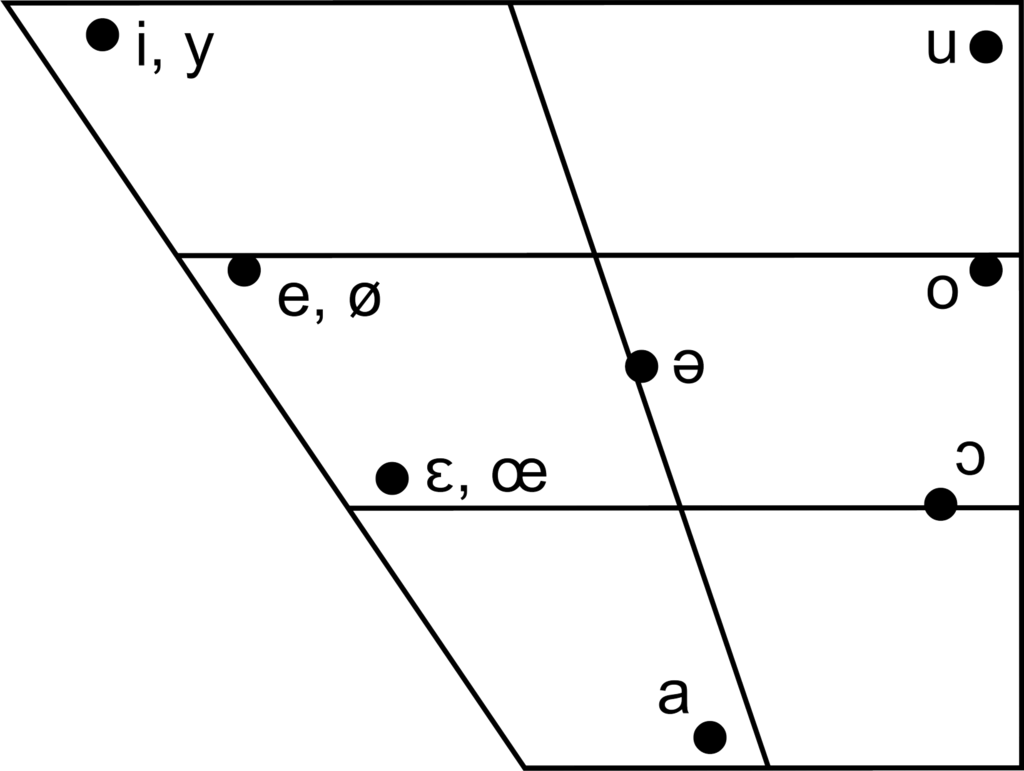
French vowels are pure and short. Unlike in English, they don't typically glide into another sound. Getting them right is key.
- a sounds like the 'a' in "father." Example: la (the).
- i sounds like the 'ee' in "see." Example: vie (life).
- o sounds like the 'o' in "boat." Example: vélo (bike).
Two vowels, 'e' and 'u', have sounds that don't exist in English.
The French 'u' is made by forming your lips to say "oo" (as in "blue") but trying to say "ee" (as in "see") instead. Your lips should be tightly rounded. Try it with the word tu (you).
The letter 'e' is flexible. Without an accent, it can be silent at the end of a word or make an "uh" sound, like the 'a' in "sofa." Example: le (the).
Accents change a letter's sound. They aren't for decoration.
Here are three basic accents:
- Accent Aigu (é): This accent only appears on the letter 'e'. It creates an "ay" sound, like in "say." Example: café (coffee).
- Accent Grave (è, à, ù): On an 'e', it creates an "eh" sound, like in "bet." Example: mère (mother). On 'a' or 'u', it doesn't change the sound but distinguishes words, like ou (or) versus où (where).
- Accent Circonflexe (â, ê, î, ô, û): This "hat" can appear over any vowel. It often indicates that an 's' used to follow the vowel in Old French. For 'ê', it sounds just like 'è' (eh). For 'â' and 'ô', it makes the vowel sound slightly longer. Example: forêt (forest).
Unique French Sounds
Beyond vowels, French has a few sounds that require practice for English speakers. These include nasal vowels and the famous French 'R'.
Nasal
adjective
A sound produced by pushing air through the nose instead of the mouth. In French, this happens when a vowel is followed by 'n' or 'm' in the same syllable.
To make a nasal sound, stop the air from leaving your mouth and redirect it through your nose. The 'n' or 'm' itself is not pronounced.
- on sounds like the 'on' in "song," but don't close your mouth at the end. Example: bon (good).
- an / en sound like the 'o' in "on," but more open. Example: enfant (child).
- in sounds like the 'a' in "sang," but again, don't close off the sound. Example: vin (wine).
The French 'R' is not rolled with the tongue. It's produced in the back of the throat, similar to the sound you make when gargling lightly. It's the 'ch' sound in the Scottish word "loch" or the Hebrew "Chutzpah." Listen for it in the word rouge (red).
Finally, a very common rule in French is that final consonants are usually silent. In words like petit (small), grand (big), and trop (too much), you don't pronounce the last letter. This is why a word's spelling can be misleading.
There are exceptions, which you'll learn over time. The letters C, R, F, and L are often pronounced at the end of a word. A helpful mnemonic is CaReFuL.
Ready to check your understanding?
Which statement about the letter 'H' (hache) in French is correct?
The French vowel 'i' sounds like the vowel in which English word?
With these fundamental sounds, you can now try to pronounce almost any French word. Listening and mimicking native speakers is the best way to improve from here.