Abdominal Definition Fast Track
Muscle Engagement Mastery
Beyond the Movement
You know how to do a crunch and hold a plank. But are you getting the most out of every repetition? The difference between simply going through the motions and sculpting a defined core lies in deliberate muscle engagement. It’s about creating maximum tension, and that starts with the mind-muscle connection.
Think of your nervous system as a dimmer switch for your muscles. You can perform an exercise with the switch turned low, recruiting just enough muscle fibers to get the job done. Or, you can turn it all the way up. This process, called motor unit recruitment, is the key to unlocking greater strength and definition. The more motor units you activate, the more muscle fibers contract, and the more intense the exercise becomes.
To start, let's refine your setup. For any floor-based ab exercise, focus on your lower back. Most people have a natural curve here. To engage your abs fully, you need to eliminate that space. This is done with a posterior pelvic tilt. Lie on your back with your knees bent. Actively press your lower back flat against the floor. You should feel your abs tighten immediately. This simple adjustment isolates your abdominal wall and prevents your hip flexors from taking over.
Breathing for Tension
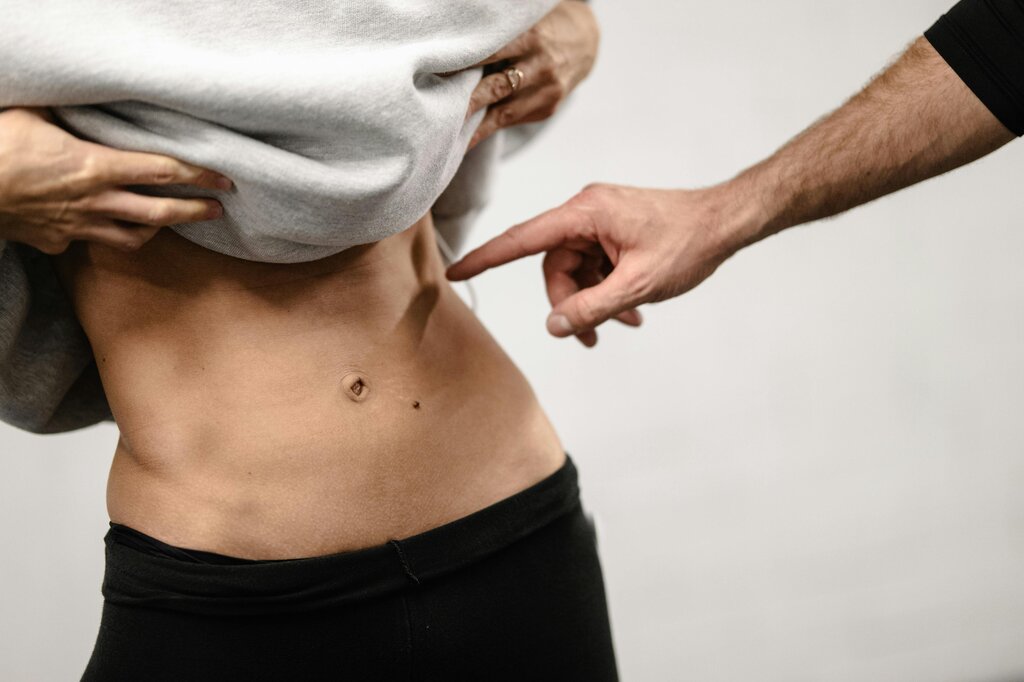
Now, let's add breathing. The way you breathe can dramatically increase core stability and engagement. The secret weapon is your transverse abdominis (TVA), the deepest layer of your abdominal muscles. Think of it as your body's natural weightlifting belt.
To activate it, use forced exhalation. As you begin the crunch or brace for the plank, exhale sharply and completely, as if you're trying to blow out a stubborn candle. As you push the air out, actively pull your navel in toward your spine. This is called the drawing-in maneuver. It cinches the TVA, creating a rigid cylinder of support around your midsection.
Recruiting and working the deep abdominal muscles - the transversus abdominis and internal obliques - is a key part of Pilates, but many people find it difficult to locate these muscles.
This technique is different from the Valsalva maneuver, where you hold your breath against a closed glottis (the space between your vocal cords). While the Valsalva maneuver creates immense intra-abdominal pressure and is useful for very heavy, short-duration lifts, it can also spike blood pressure. For core definition and endurance, the drawing-in maneuver with forced exhalation is superior. It increases muscle activation without the associated risks, allowing you to maintain tension for longer periods.
Applying the Pressure
Let's put it all together. Here’s how to upgrade a simple crunch:
- Lie down with your knees bent and feet flat on the floor.
- Tilt your pelvis back, pressing your lower back firmly into the ground. You should feel your lower abs engage.
- Initiate the crunch by exhaling forcefully. As you breathe out, imagine pulling your belly button down towards the floor.
- Lift your shoulders, focusing on contracting your abs to bring your rib cage closer to your pelvis. Don't pull with your neck.
- Hold at the top for a brief moment, maintaining maximum abdominal tension. Keep that navel drawn in.
- Lower slowly, still controlling the movement with your abs. Inhale only as you return to the starting position.
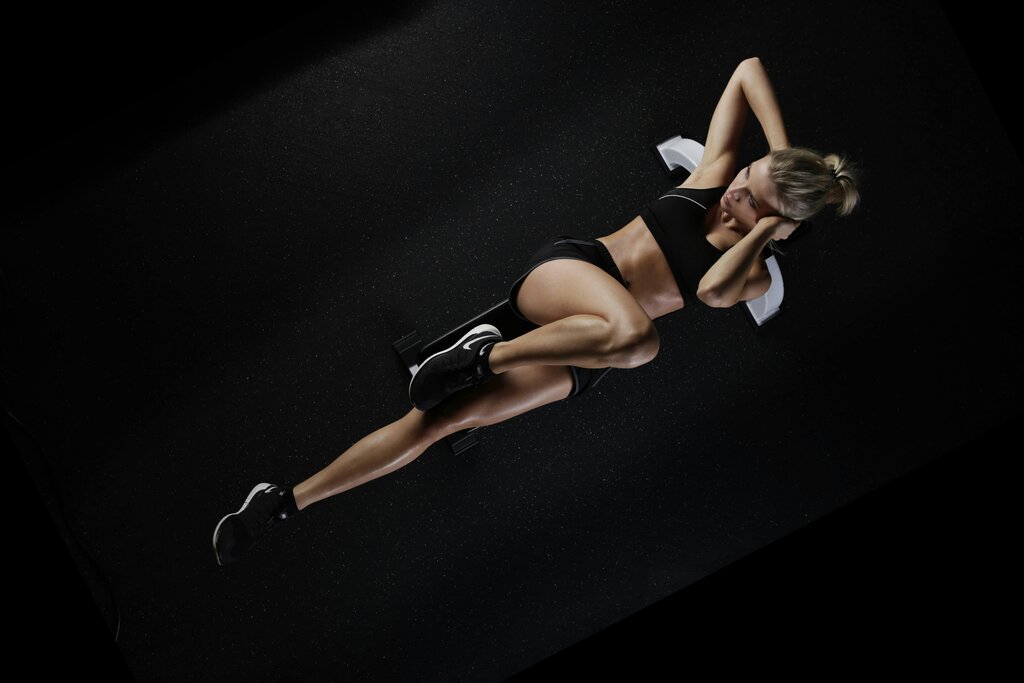
This same principle applies to isometric holds like a plank. Before you even lift into position, perform the drawing-in maneuver. Exhale, pull your navel to your spine, and set your posterior pelvic tilt. Then, lift up, keeping that internal pressure constant. You’ll find the plank is significantly harder and more effective when your deep core muscles are fully engaged from the start. You're no longer just holding a position; you're actively creating and maintaining to build stability from the inside out.
By focusing on these techniques—the posterior pelvic tilt and forced exhalation—you shift the goal from completing a number of reps to achieving peak muscular tension on every single one. This is the foundation for the high-intensity work to come.
What is the main purpose of performing a posterior pelvic tilt during floor-based ab exercises?
The 'drawing-in maneuver' is a technique that primarily targets which muscle?