Abaqus Contact Modeling
Introduction to Contact Mechanics
When Surfaces Meet
In the world of mechanics, 'contact' is more than just two things touching. It’s the study of how forces are transferred between objects when they press against each other. Imagine you push a book across a table. Your hand applies a force to the book, and the book pushes back on your hand. At the same time, the table pushes up on the book, supporting its weight, while also resisting its sliding motion. Every one of these interactions is a form of contact.
Contact mechanics helps us understand and predict what happens at the boundary where two separate bodies interact. It's fundamental to analyzing how real-world objects behave under load, from the gentle press of a button to the immense forces in a car crash.
Slick or Grippy
Contact interactions are generally broken down into two main types: frictionless and frictional.
Frictionless contact is an idealization, but a useful one. In this scenario, surfaces can slide past each other without any resistance. The only force that can be transmitted between the objects is perpendicular (or 'normal') to the surfaces at the point of contact. Think of an ice skate gliding on perfectly smooth ice; the blade can move freely forward and backward, but the ice still holds the skater up.
Frictional contact is what we experience in the real world. When two surfaces try to slide past each other, a resistance force called friction arises. This force always acts parallel to the surfaces, opposing the direction of motion or potential motion. Because of friction, you need to apply a certain amount of force just to get that book to start sliding across the table.
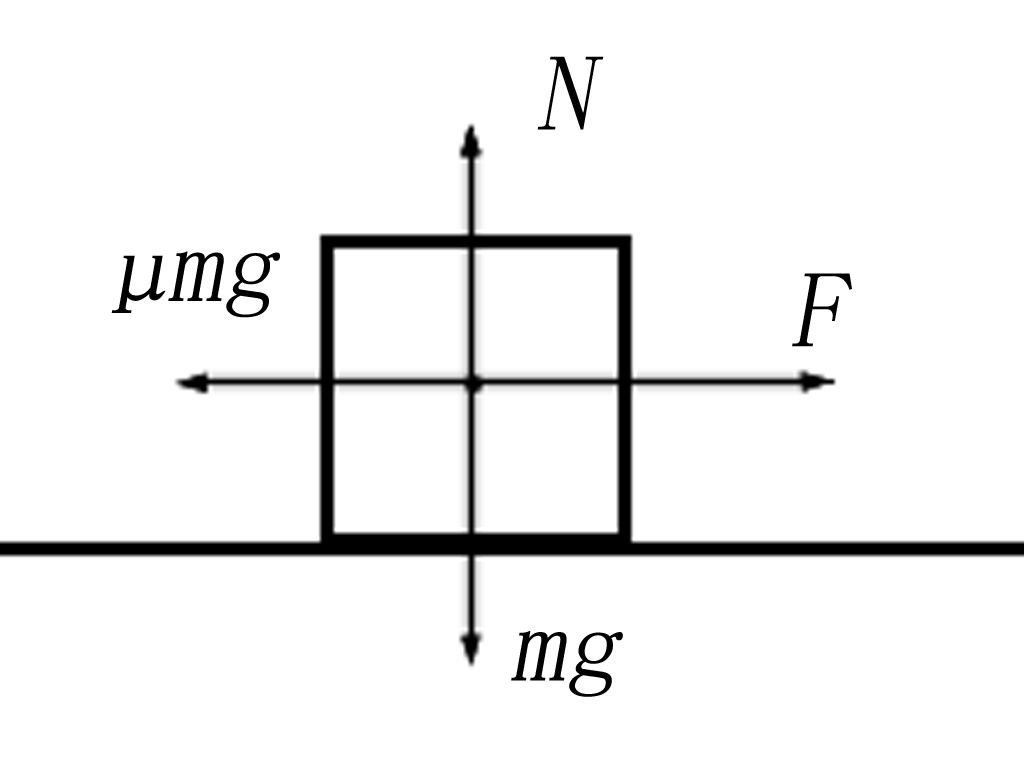
The normal force prevents the objects from passing through each other, while the frictional force prevents (or resists) them from sliding relative to one another.
Why Contact Analysis Is Crucial
Understanding contact is essential in almost every field of engineering. Without analyzing contact, it would be impossible to design reliable and safe products. Engineers use contact analysis to answer critical questions.
For example, will the teeth on a set of gears transfer power smoothly, or will they slip and wear down? How much force can a bolted joint withstand before the parts begin to slide apart? Will a new car tire provide enough grip to handle safely in the rain?
By analyzing the forces and stresses at contact points, engineers can predict wear and tear, identify potential failure points, and optimize designs for performance and longevity. From artificial hip joints to the screen of the phone you're holding, the principles of contact mechanics are everywhere.
Let's check your understanding of these core ideas.
What is the primary focus of contact mechanics?
When a book is sliding across a table, which force acts parallel to the table's surface to resist the motion?