ABA Training for Parents of Children with Developmental Delays
Introduction to ABA
What Is ABA?
Applied Behavior Analysis, or ABA, is a scientific approach to understanding why people act the way they do. It’s not a specific therapy, but rather a set of principles that can be used to help people learn helpful skills and reduce behaviors that are harmful or interfere with learning.
ABA operates on a simple but powerful idea: behavior that is followed by something pleasant is more likely to be repeated, while behavior followed by something unpleasant is less likely to be repeated. It’s a way of systematically observing behavior and then making changes to the environment to encourage positive changes.
Applied Behavior Analysis (ABA): A systematic process based on a series of observations for identifying the purpose of behaviors and their communicative intent.
Though its principles are used in many fields, from business management to animal training, ABA is most widely known as an effective approach for supporting individuals with developmental delays, including Autism Spectrum Disorder (ASD) and Attention-Deficit/Hyperactivity Disorder (ADHD).
The ABCs of Behavior
To understand any behavior, we first need to break down the situation surrounding it. Behavior doesn't happen in a vacuum. ABA uses a simple framework for this, known as the ABC model.
Let's look at an example:
- Antecedent: A parent tells a child, "It's time to turn off the TV and get ready for bed."
- Behavior: The child starts to cry and yell, "No!"
- Consequence: The parent, tired and wanting to avoid a bigger tantrum, says, "Okay, five more minutes."
By looking at this sequence, a behavior analyst can start to understand the function of the behavior. In this case, the child learned that crying and yelling (the behavior) results in getting more TV time (the consequence). The consequence makes the behavior more likely to happen again in the future.
Changing Behavior
The ABC model doesn't just help us understand behavior; it gives us a roadmap for changing it. By modifying either the antecedent or the consequence, we can influence the behavior. The two main tools for this are reinforcement and punishment.
reinforcement
noun
A consequence that follows a behavior and makes it more likely that the behavior will occur again in the future.
It’s important to know that in ABA, the terms "positive" and "negative" don't mean "good" and "bad."
- Positive means adding something.
- Negative means taking something away.
This gives us four basic ways to influence behavior.
| Principle | What it means | Goal | Example |
|---|---|---|---|
| Positive Reinforcement | Add something pleasant | Increase behavior | A child gets a sticker for cleaning their room. |
| Negative Reinforcement | Remove something unpleasant | Increase behavior | You buckle your seatbelt to stop the annoying beeping sound. |
| Positive Punishment | Add something unpleasant | Decrease behavior | A teenager gets extra chores for breaking curfew. |
| Negative Punishment | Remove something pleasant | Decrease behavior | A child loses screen time for hitting their sibling. |
While all four principles can change behavior, ABA strongly emphasizes the use of positive reinforcement. Building up desired behaviors with rewards is generally more effective and creates a more positive learning environment than using punishment to reduce unwanted behaviors.
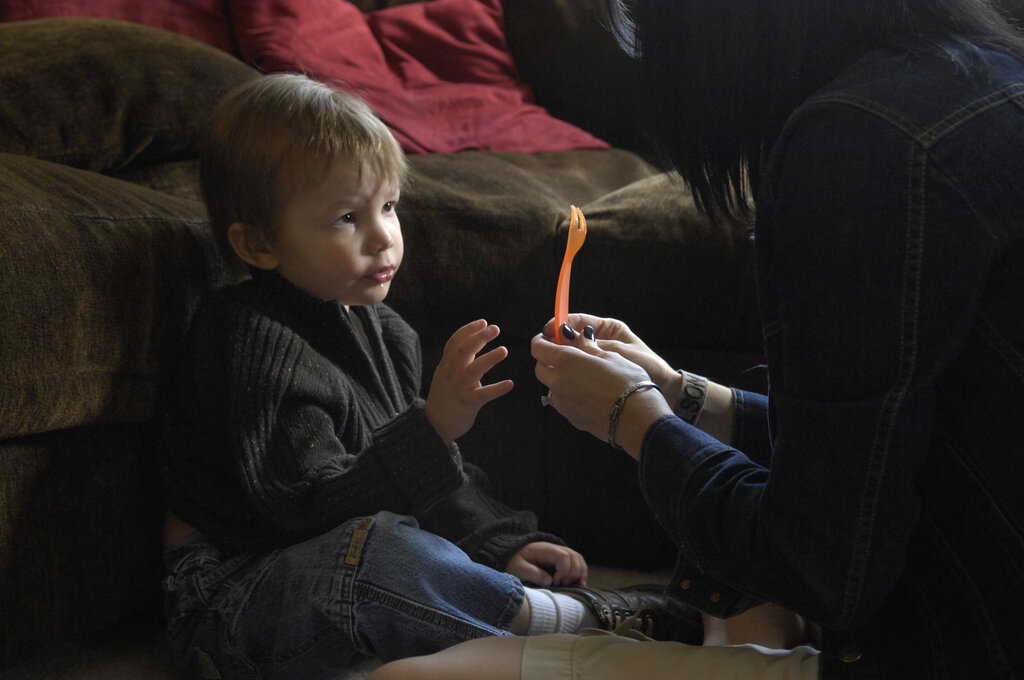
Understanding these core principles is the first step. By identifying the ABCs and strategically using reinforcement, we can systematically teach new skills and shape more helpful behaviors, which is especially powerful for children facing developmental challenges.
What is the fundamental principle of Applied Behavior Analysis (ABA)?
In the ABC model of behavior, the 'A' stands for:
These foundational ideas are the building blocks of ABA. They provide a clear, objective way to understand and improve behavior.