A/B Testing Mastery
Introduction to A/B Testing
What Is A/B Testing?
A/B testing, also known as split testing, is a straightforward way to compare two versions of something to see which one performs better. Imagine you have a webpage and you want more people to click a 'Sign Up' button. You suspect the button's color might make a difference.
You could show half of your visitors the original page with a blue button (Version A, the control). The other half would see the exact same page, but with a green button (Version B, the variation). You then measure which version gets more clicks. That's it. You're running an A/B test.
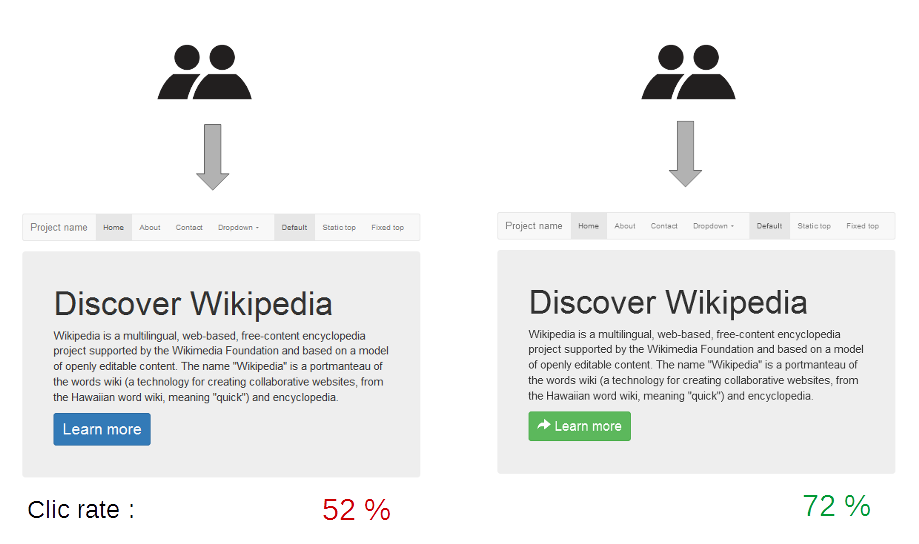
This method removes guesswork. Instead of arguing about which color is 'better,' you let user behavior give you the answer. The goal is to make data-driven decisions, not opinion-driven ones.
A/B testing is a method of comparing two variations of something in order to see which performs better according to some metric.
From Farms to Clicks
The core idea isn't new. A/B testing has its roots in classical statistics from the early 20th century. Agricultural scientists would run controlled experiments to test which fertilizers produced the best crop yields. They'd divide a field into plots, apply different treatments, and measure the results. This is the same fundamental principle.
In the digital age, this method was adapted for the web. Instead of plots of land, we have user groups. Instead of fertilizers, we have different webpage designs, headlines, or images. Companies like Google and Amazon began using large-scale online experiments in the early 2000s to optimize their user experience, turning A/B testing into a standard industry practice.
The Experimental Mindset
Running an A/B test is a form of experimental design. It follows a simple, structured process that helps ensure your results are reliable. The key is to change only one thing at a time. If you change both the button color and the headline, you won't know which change caused the increase in clicks.
Every good test starts with a hypothesis. This is just an educated guess about what you think will happen. For example: "Changing the 'Sign Up' button from blue to green will increase the click-through rate because green is more attention-grabbing."
Here’s the basic flow of an experiment:
The crucial part is randomly assigning users to each group. This ensures that the only systematic difference between the two groups is the change you made. Any difference in their behavior can then be attributed to your change, giving you confidence in the result. By understanding what users respond to, companies can steadily improve their products and increase key metrics like sales or engagement, a process known as conversion rate optimization (CRO).
Ready to check your understanding?
What is the primary goal of A/B testing?
In an A/B test comparing a red 'Buy Now' button to a blue one, the original blue button is referred to as the what?
By following this experimental approach, teams can move from debating opinions to making decisions based on real user data. It's a powerful tool for building better products.