A Sailor's Style
Early Naval Attire
From Rags to Regulation
For much of history, sailors dressed for survival, not for show. In ancient Rome and medieval Europe, the clothes worn at sea were the same rugged, practical garments worn by laborers on land. Tunics, loose-fitting trousers or breeches, and cloaks were common. The goal was simple: stay warm, stay dry, and wear something that could withstand the brutal conditions of life at sea. Wool was a favorite, as it insulates even when wet. There was no concept of a uniform; a ship's crew was a collection of individuals, and their clothing reflected that.
This focus on function over form continued for centuries. A sailor's attire was defined by his work. He needed freedom of movement to climb rigging and handle ropes. The clothes had to be durable enough to endure salt, sun, and endless friction. Often, sailors would waterproof their clothes with tar or grease, a messy but effective solution.
The First Uniforms
The idea of a standardized naval uniform didn't emerge until the 18th century. As navies grew more organized and professional, so did the need to visually represent that order. A uniform could instill discipline, foster a sense of shared identity, and make it easy to distinguish friend from foe in the chaos of battle. It also clearly marked the difference between an officer and an ordinary seaman.
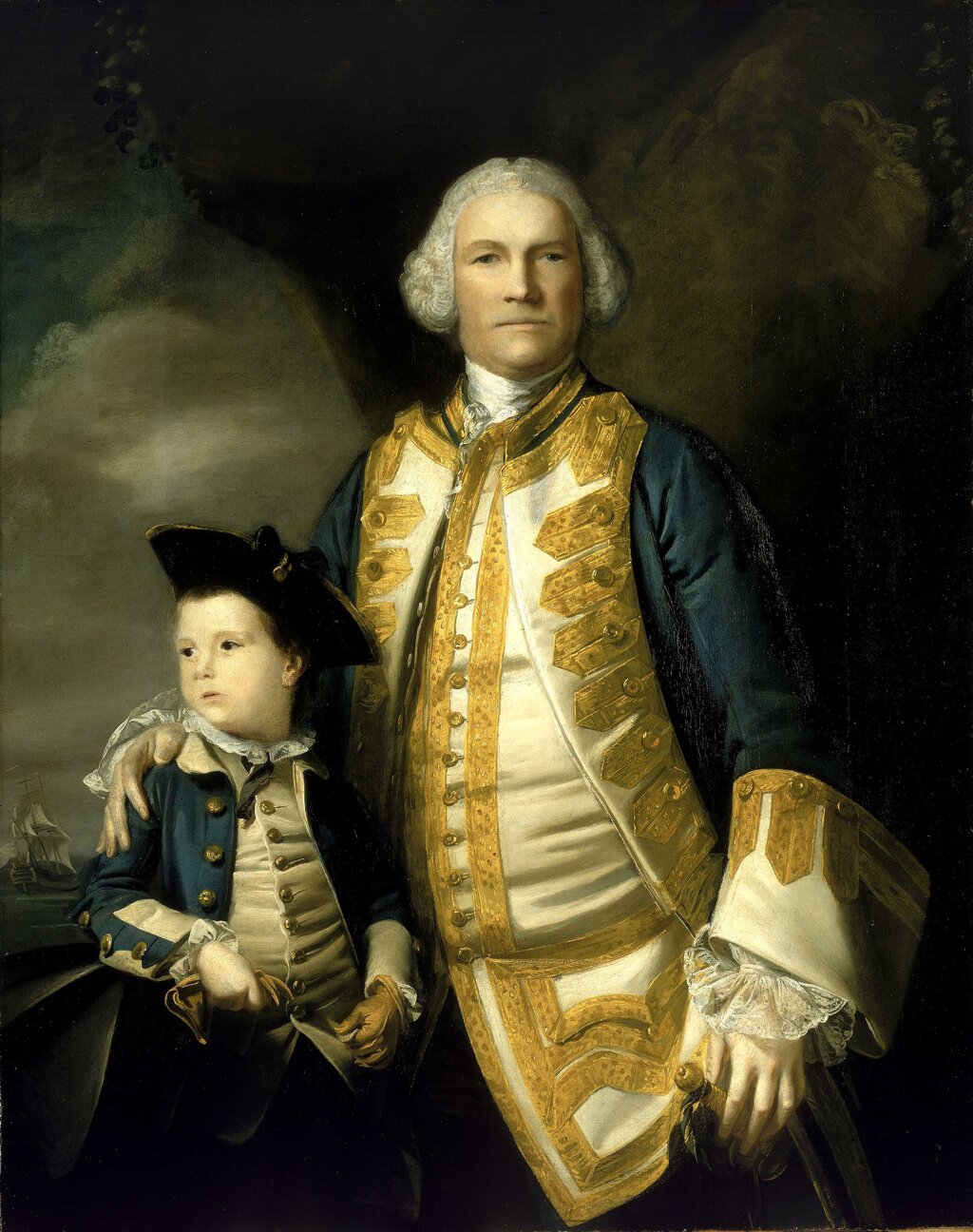
The British Royal Navy was a pioneer, officially introducing uniforms for its commissioned officers in 1748. These first regulations established a formal "best" uniform of blue and white, richly decorated with gold lace, and a simpler, more practical "undress" or working uniform for daily duties. The choice of blue and white set a standard that many other navies would eventually follow.
While officers received tailored uniforms, the common sailor's dress remained unregulated. Their clothing came from the ship's purser, who sold them ready-made items from a collection known as "slops."
Slops
noun
A term for cheap, ready-made clothing, provisions, and other personal items stored on a ship and sold to sailors. This system created a kind of unofficial uniform, as most men on a single vessel would end up buying and wearing similar items.
Typical slops included jackets, canvas trousers, shirts, and neckerchiefs. Though not an official uniform, this system resulted in a relatively consistent appearance among the lower decks. The famous bell-bottomed trousers, for example, were practical because they could be easily rolled up for swabbing the decks. Everything was designed for the hard work of sailing a massive warship.
| Feature | Officer's Uniform (c. 1750) | Enlisted Sailor's Attire (Slops) |
|---|---|---|
| Material | Fine wool, linen | Canvas, rough wool, linen |
| Color | Navy blue, white | Varied, often natural or dark colors |
| Decoration | Gold lace, brass buttons | Simple, unadorned |
| Source | Individually tailored | Purchased from ship's stores |
| Purpose | Display rank and authority | Practicality and durability |
The 18th century marked a critical turning point. It was the beginning of the end for the haphazard, individualistic clothing of earlier eras and the dawn of the uniformed, organized naval forces that would dominate the seas in the centuries to come.
Before the 18th century, what material was particularly favored by sailors for its ability to insulate even when wet?
The British Royal Navy introduced official uniforms for its officers in 1748 primarily to improve the sailors' comfort at sea.