A Journey Through Video Game History
Early Video Games
The First Sparks
The story of video games begins earlier than most people think, long before the first home console. In 1947, a patent was filed for a "cathode-ray tube amusement device." It was a missile simulator inspired by radar displays from World War II. Players would turn knobs to aim a dot of light at targets printed on a screen overlay. It was a clever idea, but the device was never manufactured.
A few years later, in 1950, a massive machine named 'Bertie the Brain' was built for the Canadian National Exhibition. Standing four meters tall, its sole purpose was to play tic-tac-toe against human opponents. Bertie was a novelty designed to show off the power of a new type of vacuum tube, not to launch an entertainment revolution. Like the CRT device, it was a technological demonstration, a hint of the interactive entertainment to come.
From Lab to Arcade
The first game that looked and felt like a modern video game emerged from a university lab. In 1962, a group of students at MIT created 'Spacewar!' on a PDP-1 computer, a machine the size of several refrigerators. The game featured two player-controlled spaceships locked in a dogfight around a central star, whose gravity pulled them inward. It was complex, strategic, and captivating.
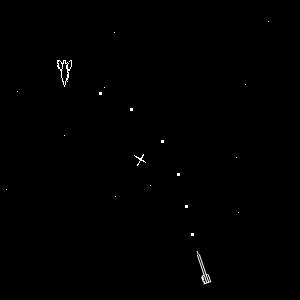
'Spacewar!' was never sold, but it spread to other universities and research labs with PDP-1 computers, becoming a hit within the small community of computer programmers. It showed that computers could be used for fun.
Nearly a decade later, in 1971, an attempt was made to bring this experience to the public. 'Computer Space' was the first commercially sold, coin-operated arcade video game. It was a single-player version of 'Spacewar!' housed in a sleek, futuristic fiberglass cabinet. The game, however, was too complicated for the bar patrons it was marketed to. It was a commercial failure, but a crucial first step.
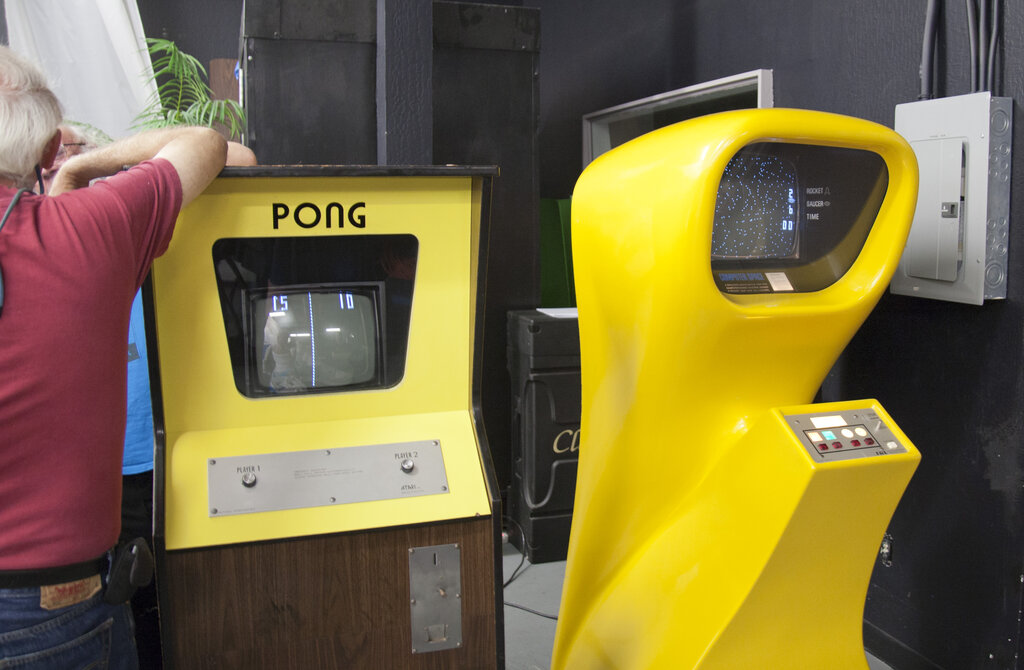
A Simple Game Changes Everything
The lesson from 'Computer Space' was clear: a game needed to be simple to succeed. The breakthrough came just one year later, in 1972, with 'Pong'. The concept couldn't have been easier: two paddles, one ball, and a digital game of table tennis. The instructions were printed right on the machine: "Avoid missing ball for high score."
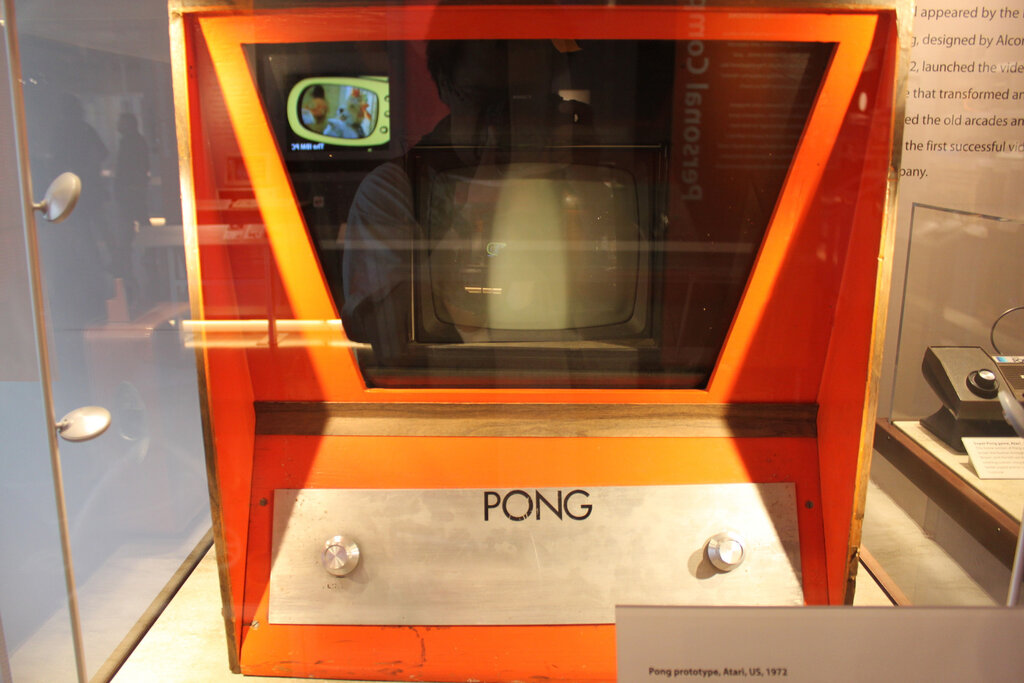
Its simplicity was its genius. Anyone could understand it instantly. The first 'Pong' machine, installed in a tavern in Sunnyvale, California, was so popular it broke down within days because its coin mechanism was jammed full of quarters. This immediate success was the spark that ignited the arcade industry.
While not the first commercially produced video game, Pong was the first to be successful and is often credited with being the starting point of the modern video game industry.
Unlike its predecessors, which were either academic projects or commercial flops, 'Pong' proved there was a massive, untapped market for electronic entertainment. It laid the foundation for everything that would follow.
What was the primary purpose of 'Bertie the Brain', the tic-tac-toe machine built in 1950?
The first commercially sold, coin-operated arcade game was 'Pong'.
From these humble beginnings, a new form of entertainment was born, one that would grow from simple dots on a screen to the complex, immersive worlds we know today.