A Journey Through Italian History
Ancient Rome
The Legend of the Seven Hills
Rome's story begins with a legend. Twin brothers, Romulus and Remus, were said to have been abandoned as infants, only to be rescued and suckled by a she-wolf. Romulus grew up to found a city on the Tiber River in 753 BCE, becoming its first king after a fatal quarrel with his brother.
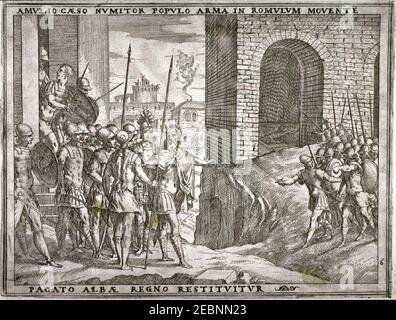
This dramatic tale marks the start of Rome's first political phase: the monarchy. For over two centuries, a series of kings ruled the fledgling city. This period laid the groundwork for Roman society, establishing religious customs, military traditions, and the earliest forms of political organization.
The Republic is Born
In 509 BCE, the Romans overthrew their last king, Lucius Tarquinius Superbus, whom they saw as a tyrant. Weary of absolute rule, they established a new form of government: a republic. The core idea was to prevent any single individual from holding too much power.
The guiding principle was Res Publica, a Latin phrase meaning "the public thing" or "the public affair." Power now belonged to the Roman citizens.
Instead of a king, the Republic was led by two elected officials called consuls, who served one-year terms. The Senate, an assembly of elder statesmen from Rome's leading families, advised the consuls and held significant influence over policy. This system of checks and balances was designed to ensure stability and promote civic virtue.
A Mediterranean Power
The Roman Republic was ambitious and constantly expanding. Its most significant challenge came from Carthage, a powerful city-state in modern-day Tunisia. The two powers clashed in a series of three major conflicts known as the Punic Wars, which spanned more than a century.
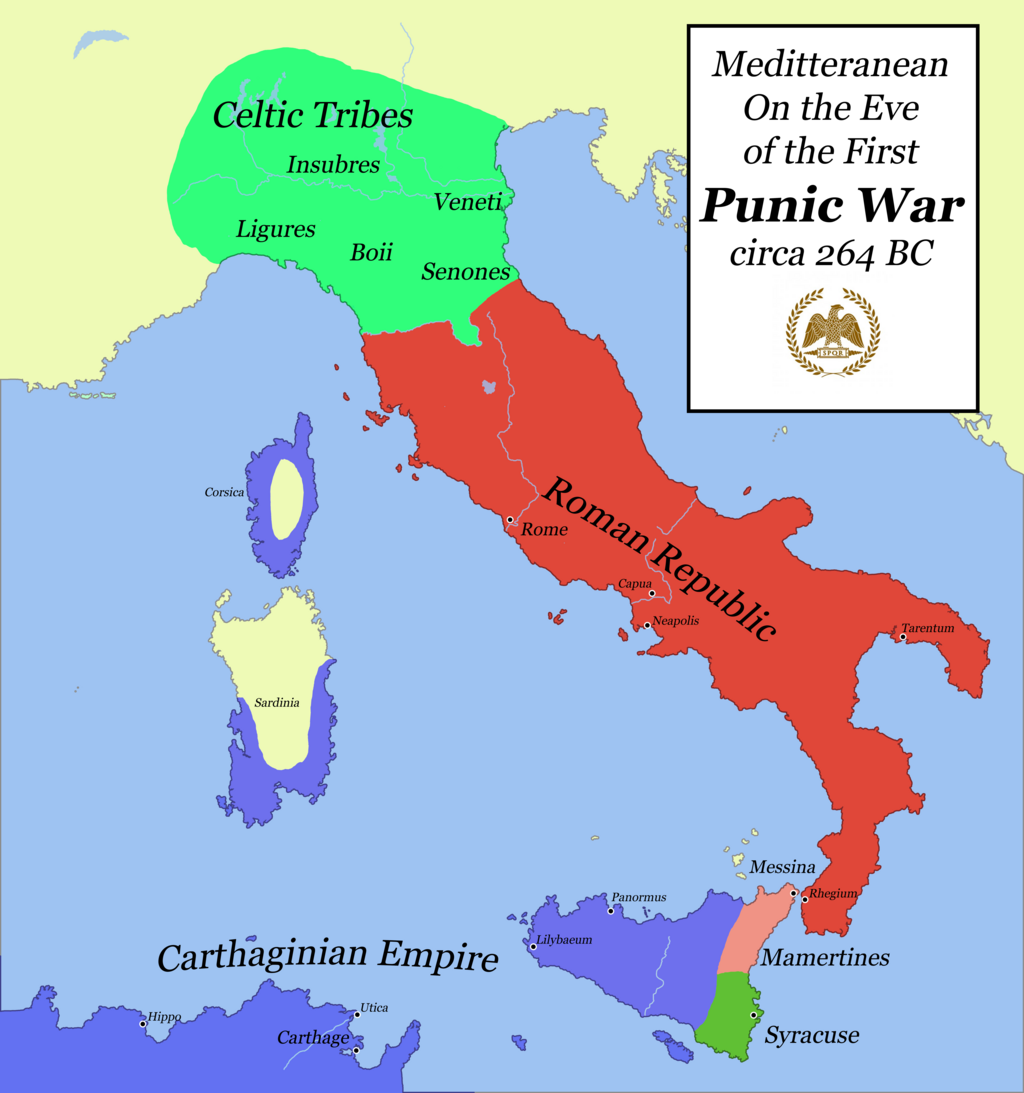
These wars were brutal and tested Rome to its limits. The Second Punic War is famous for the Carthaginian general Hannibal Barca, who marched his army, including elephants, across the Alps to attack Italy directly. Despite early victories, Hannibal was ultimately defeated.
By the end of the Third Punic War in 146 BCE, Carthage was destroyed, and Rome was the undisputed master of the Mediterranean. This expansion brought immense wealth, territory, and enslaved people to Rome, but it also created deep social and political tensions that the Republic struggled to manage.
Caesar and the End of an Era
As the Republic grew, powerful generals began to dominate politics. None was more brilliant or ambitious than Julius Caesar. He conquered Gaul (modern-day France) for Rome, earning him immense popularity with the people and the loyalty of his legions.
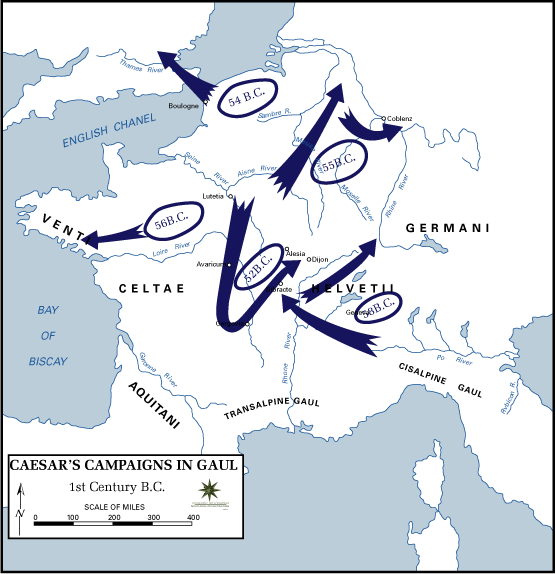
His success and power made many senators nervous. They feared he wanted to dismantle the Republic and declare himself king. After a period of civil war, Caesar became the undisputed ruler of Rome. But his reign was short-lived.
On the Ides of March (March 15), 44 BCE, a group of senators assassinated him in the Senate house, hoping to restore the Republic. Instead, they plunged Rome into another round of bloody civil wars.
Caesar’s death marked the end of the Roman Republic and the beginning of the Roman Empire.
The Age of Emperors
Out of the chaos emerged Caesar's adopted son and heir, Octavian. After defeating his rivals, Octavian skillfully consolidated power. In 27 BCE, the Senate granted him the title Augustus, marking the official start of the Roman Empire. While he maintained the appearance of the Republic, he was, in fact, Rome's first emperor.
Augustus's reign ushered in the Pax Romana, or "Roman Peace," a period of relative stability and prosperity that lasted for about 200 years. During this time, the empire reached its greatest territorial extent. Roman engineering flourished, producing incredible aqueducts, roads, and monuments. A unified legal system administered justice across diverse provinces.
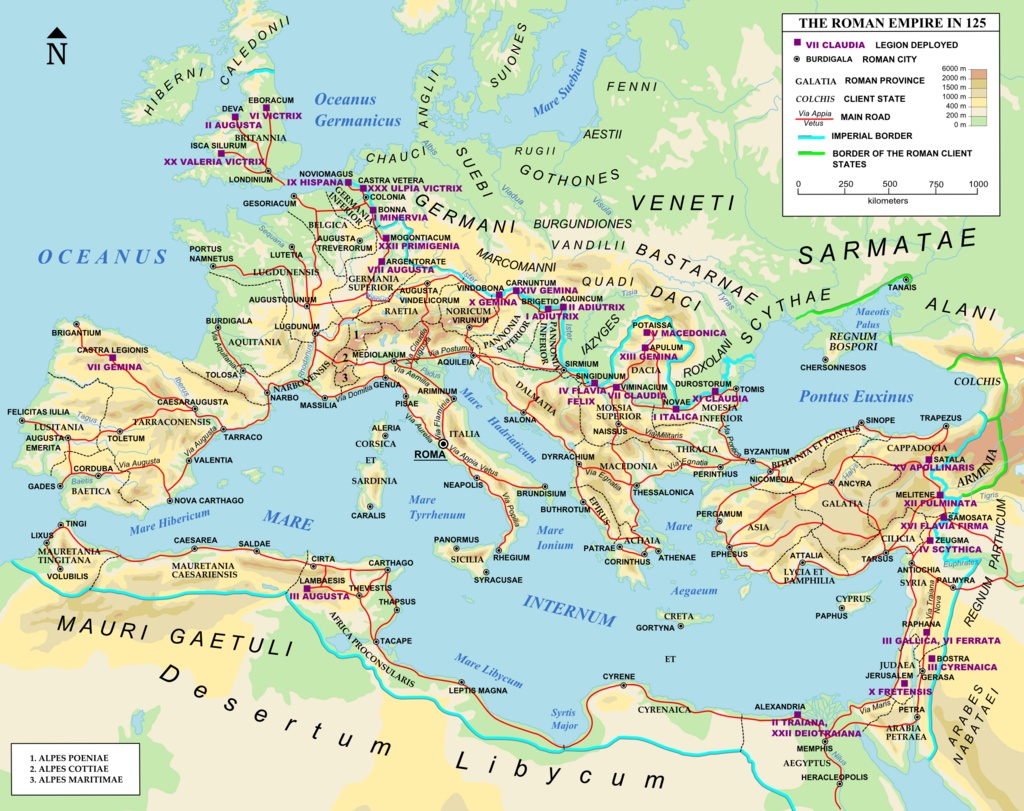
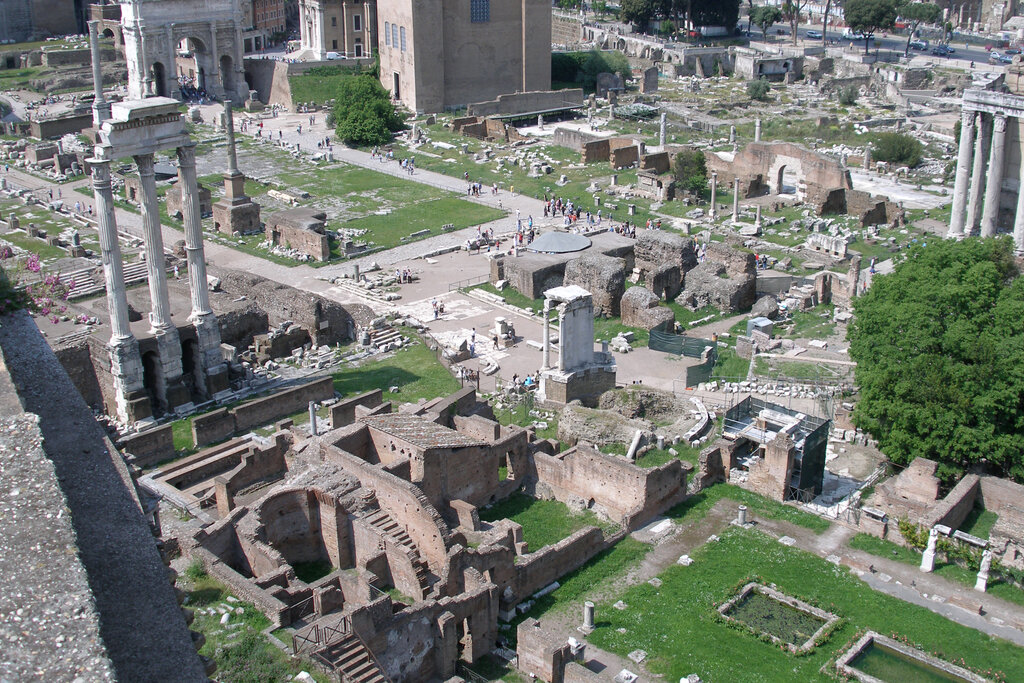
The heart of this vast empire was the city of Rome, a bustling metropolis of over a million people. The Roman Forum was its civic, religious, and commercial center.
The Empire Falters
By the 3rd century CE, the Pax Romana was over. The empire faced a cascade of problems: constant civil wars, economic collapse, and plagues. The immense territory became difficult to govern and defend.
To manage these challenges, the empire was eventually divided into an Eastern and a Western half, each with its own emperor. While the Eastern Roman Empire (later known as the Byzantine Empire) would survive for another thousand years, the Western Roman Empire continued to weaken. It faced relentless pressure from Germanic tribes migrating into its territories.
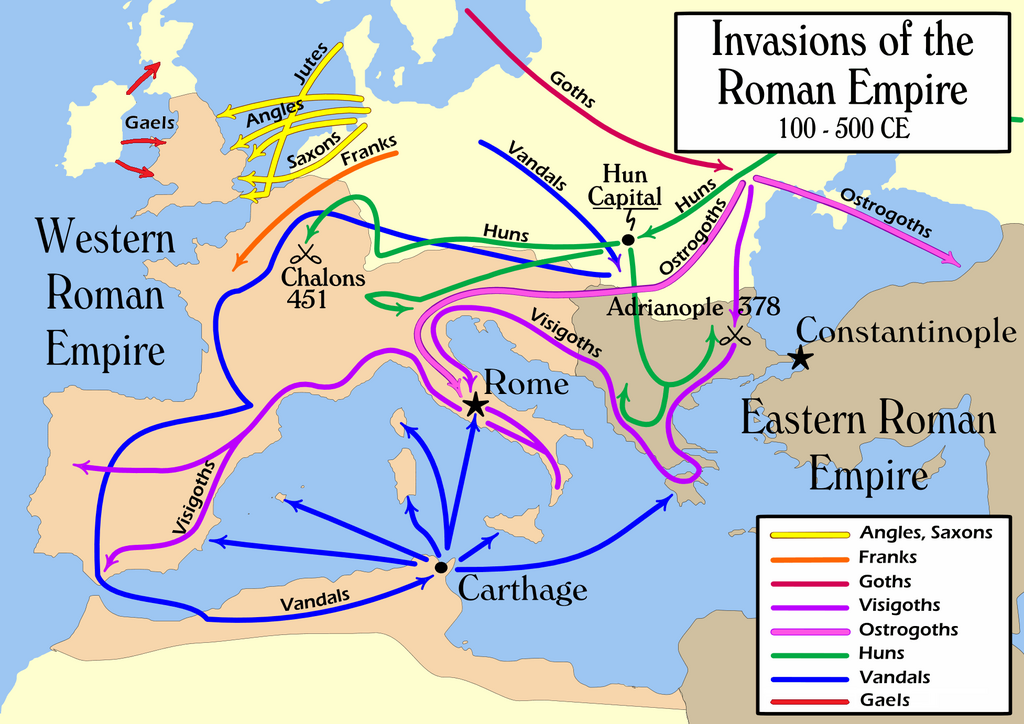
The final blow is traditionally dated to 476 CE, when the last Western Roman Emperor, a young boy named Romulus Augustulus, was deposed by the Germanic chieftain Odoacer. This event marked the end of ancient Rome in the West.
Let's see what you've learned about Rome's long history.
According to legend, who founded the city of Rome in 753 BCE after being raised by a she-wolf?
What major political change occurred in Rome in 509 BCE?
Though its empire in the West fell, Rome's legacy endured. Its language, laws, architecture, and engineering concepts became foundational elements of Western civilization, shaping the world we live in today.