A Journey Through German History
Ancient Germanic Tribes
Beyond the Roman Frontier
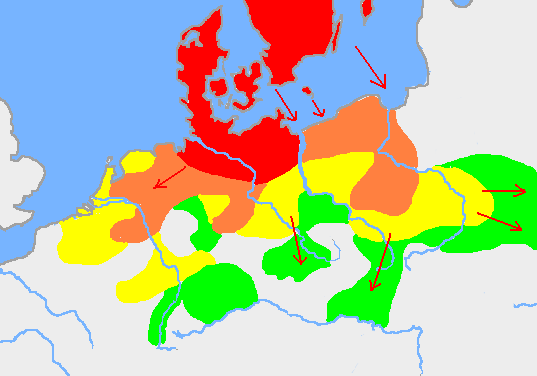
North of the Rhine and Danube rivers, beyond the well-patrolled borders of the Roman Empire, lived a diverse collection of peoples the Romans called the Germani. These groups were not a single nation but a patchwork of tribes with shared linguistic roots and cultural traits. Originating in Southern Scandinavia and the northern plains of Germany, they had been slowly migrating south for centuries, clearing forests and establishing small farming villages.
Germanic society was organized around kinship. Families and clans formed the core of a tribe, led by a chief chosen for his battlefield prowess and ability to win loyalty. These weren't kings in the Roman sense; their power depended on the consent of the tribe's free warriors. A council of warriors would assemble to make major decisions, from declaring war to settling disputes, often by shouting their approval or banging their spears on their shields.
Their life was deeply connected to the land. They were primarily farmers and herders, cultivating grains like barley and oats and raising cattle, which were a primary measure of wealth. Unlike the Romans with their sprawling cities, the Germani lived in small villages of wooden longhouses, often shared between a family and their livestock.
An Uneasy Neighborhood
The relationship between the Germanic tribes and the Roman Empire was complex. It was a mix of peaceful trade, cultural exchange, and brutal conflict. Roman goods like wine, pottery, and metalwork were highly prized in Germanic lands, traded for amber, furs, and enslaved people. Many Germanic warriors even served in the Roman army as auxiliaries, learning Roman tactics and earning citizenship for their service.
Interaction was a two-way street. The Romans saw the Germani as fierce but undisciplined barbarians, while many Germanic tribes viewed Rome as both a source of wealth and a looming threat.
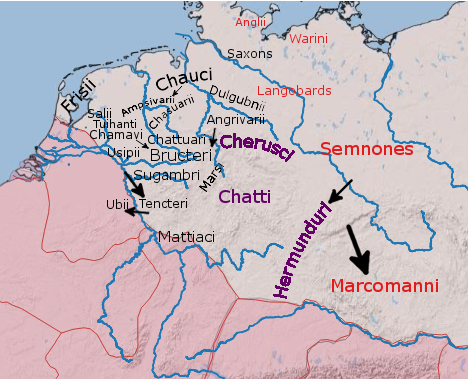
As Rome expanded, its legions pushed into Germanic territories. The Romans sought to establish a new province, Germania, stretching all the way to the Elbe River. This direct pressure forced many smaller, independent tribes to band together for mutual defense. These new, larger groups, like the Marcomanni and Alamanni, were not just temporary alliances but formidable tribal confederations capable of challenging Roman power directly.
Ambush in the Forest
Roman ambitions in Germania met a bloody end in 9 AD. The governor of the new province, Publius Quinctilius Varus, was leading three full legions—the 17th, 18th, and 19th—through the Teutoburg Forest. His guide and trusted advisor was a man named Arminius, a chieftain of the Cherusci tribe. What Varus didn't know was that Arminius, who had served in the Roman army and held Roman citizenship, was secretly plotting a massive rebellion.
Arminius used his intimate knowledge of Roman military procedure to lead Varus's legions into a perfectly laid trap.
He steered the Roman column into a narrow, muddy path between a dense forest and a swampy marsh. The path was miles long, stretching the legions out and making them vulnerable. Hidden Germanic warriors, from several allied tribes, waited for the signal.
The attack was devastating. Pinned on the narrow track and hampered by torrential rain, the Romans couldn't form their classic battle lines. For three days, the Germanic tribesmen harried the column, launching lightning raids from the woods. The disciplined legions were systematically cut to pieces. In the end, Varus and his officers took their own lives to avoid capture. All three legions, over 20,000 men, were annihilated.
The defeat at Teutoburg Forest was a catastrophic shock to Rome. The emperor Augustus was said to have wandered his palace for months, banging his head against walls and crying, "Quinctilius Varus, give me back my legions!"
The battle marked a turning point. Rome abandoned its plan to conquer Germania and pulled its frontier back to the Rhine River. This victory not only preserved the independence of the Germanic tribes but also ensured that their culture and languages would develop outside the direct control of the Roman Empire, shaping the future of Europe for centuries to come.