A Journey Through French History
Ancient Gaul
The World of the Gauls
Before there was France, there was Gaul. The region was a patchwork of territories inhabited by numerous Celtic tribes. We call them the Gauls, but they didn't see themselves as a single people. A person from the Aedui tribe in central Gaul would have felt very different from someone in the coastal Veneti tribe.
These tribes shared similar languages, religious beliefs centered on druids, and a knack for metalworking. Gallic society was highly stratified, with a warrior aristocracy at the top. They were farmers and fierce fighters, often warring amongst themselves. Their settlements, called oppida, were fortified towns that served as political and economic centers.
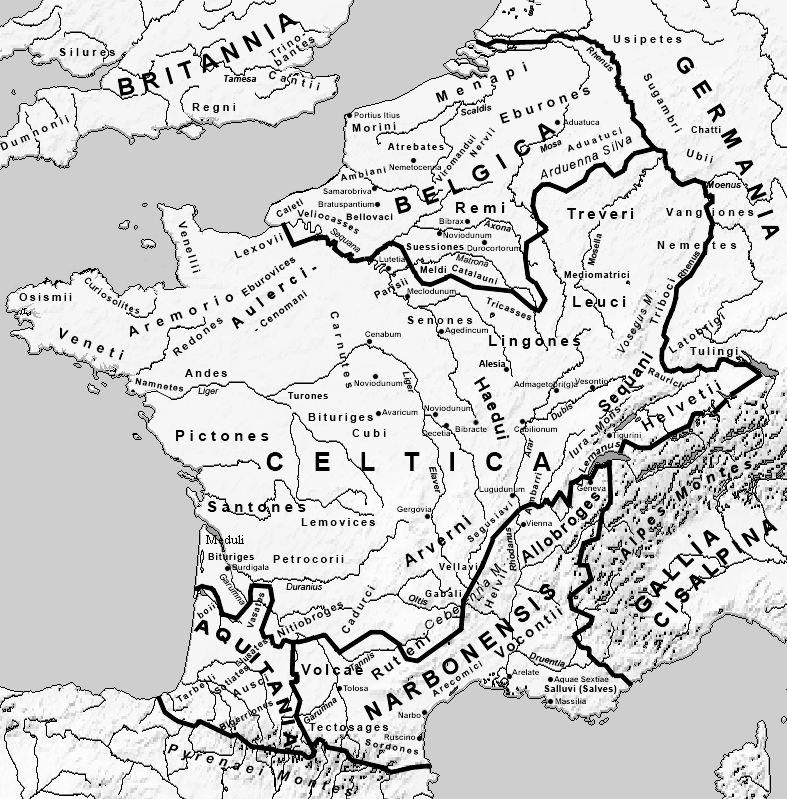
For centuries, the Gauls had a complicated relationship with their southern neighbor, the Roman Republic. They traded goods like wine and pottery but also clashed in violent conflicts. As Rome's power grew, its ambition to control the strategic and resource-rich lands of Gaul became inevitable.
Caesar's Conquest
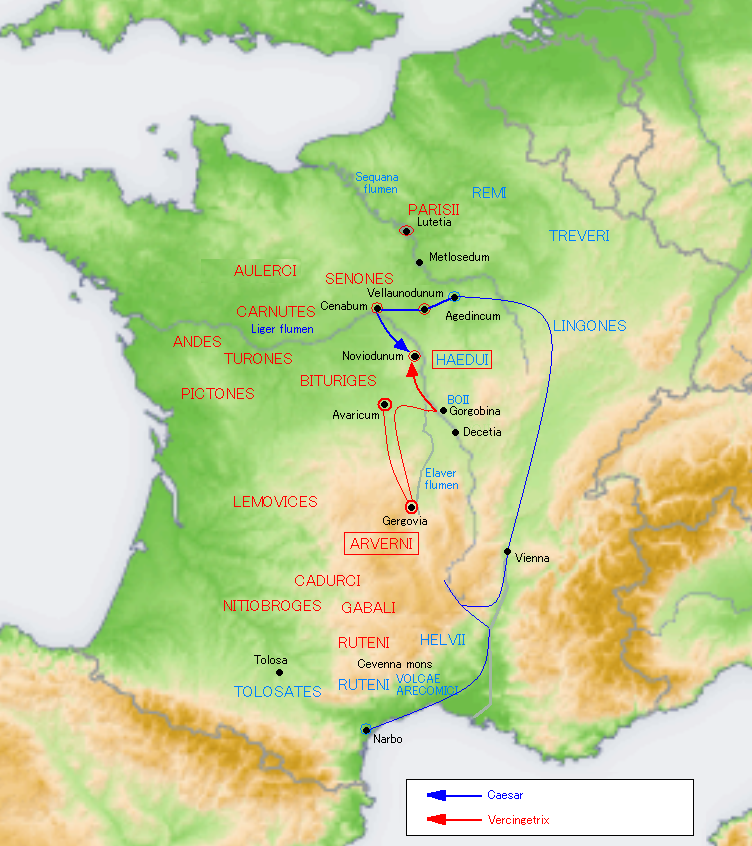
The turning point came with one of Rome's most famous figures: Julius Caesar. Appointed governor of a Roman province bordering Gaul, Caesar saw an opportunity for military glory, political power, and immense wealth. Using migrating tribes as a pretext, he launched a full-scale invasion in 58 BCE.
In 58 BC, Julius Caesar launched his campaign to conquer Gaul, integrating the region into the Roman Empire.
The Gallic Wars, which Caesar documented in his own writings, lasted nearly a decade. Roman legions, with their superior discipline and engineering, systematically defeated one tribe after another. The Gauls were skilled warriors, but their internal rivalries made it difficult to form a united front against the invaders.
That changed briefly under the leadership of a charismatic chieftain named Vercingetorix. He managed to rally several major tribes and wage a brilliant guerrilla campaign against the Romans. The final showdown came at the fortified town of Alesia in 52 BCE. Caesar's forces built an incredible set of fortifications, besieging Vercingetorix inside while also defending against a massive Gallic relief army. In the end, the Romans prevailed, and Vercingetorix was forced to surrender, effectively ending organized Gallic resistance.
Roman Gaul
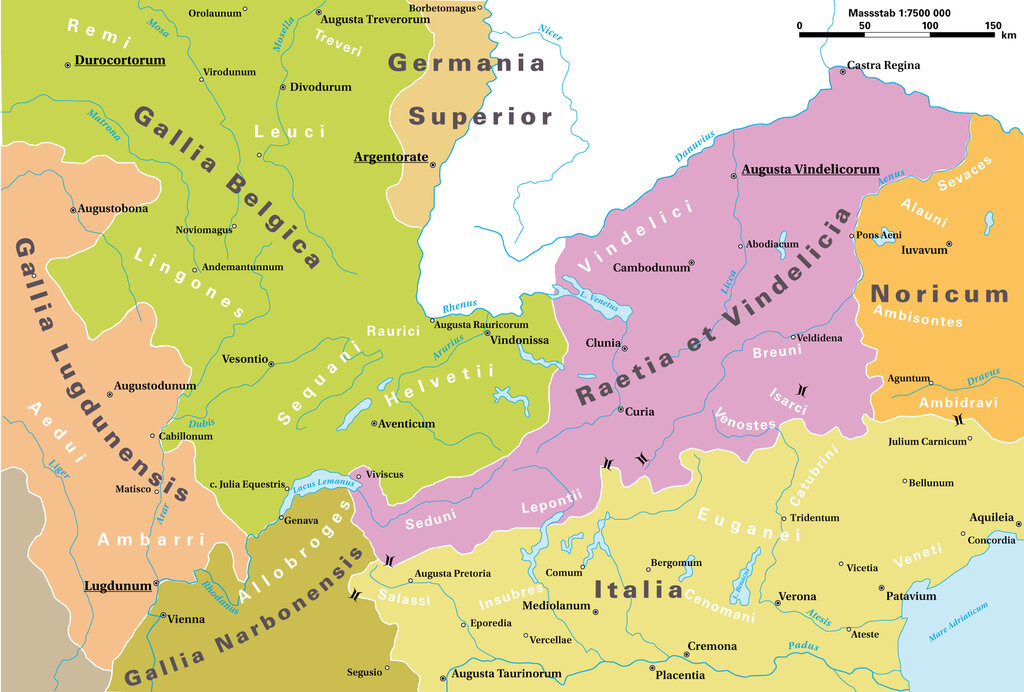
With the conquest complete, Gaul was absorbed into the Roman world. The Romans were masters of integration. They established new cities, built roads, aqueducts, and amphitheaters, and introduced their legal and administrative systems. The region was divided into several provinces, tying it firmly to the empire's economic and political life.
This process, known as Romanization, profoundly changed Gallic culture. Over generations, the local Celtic languages were gradually replaced by Latin. This wasn't always a forced change; speaking Latin and adopting Roman customs became a path to social advancement and citizenship.
Over time, the spoken Latin in Gaul gradually evolved into a distinct dialect known as Vulgar Latin.
A new Gallo-Roman culture emerged, blending Celtic traditions with Roman influences. Gallic gods were often equated with Roman ones, and local artistic styles mixed with Roman aesthetics. For nearly 500 years, Gaul was one of the wealthiest and most stable provinces of the Roman Empire, laying a deep foundation for the eventual emergence of France.
Time to review what you've learned about ancient Gaul.
Before the Roman conquest, what best describes the political landscape of Gaul?
Who was the Gallic chieftain who famously united several tribes to resist Julius Caesar's invasion?
The Roman conquest was a pivotal moment, transforming the Celtic world of Gaul and setting the stage for centuries of history to come.