A Journey Through French History
Ancient Gaul
The Land of the Gauls
Before there was France, there was Gaul. This vast region, stretching from the Pyrenees to the Rhine River, wasn't a single kingdom but a patchwork of territories inhabited by numerous Celtic tribes. Groups like the Arverni, the Aedui, and the Belgae each had their own customs and leaders. They were bound by a shared language and culture but were often rivals, a fact that would later play a crucial role in their history.
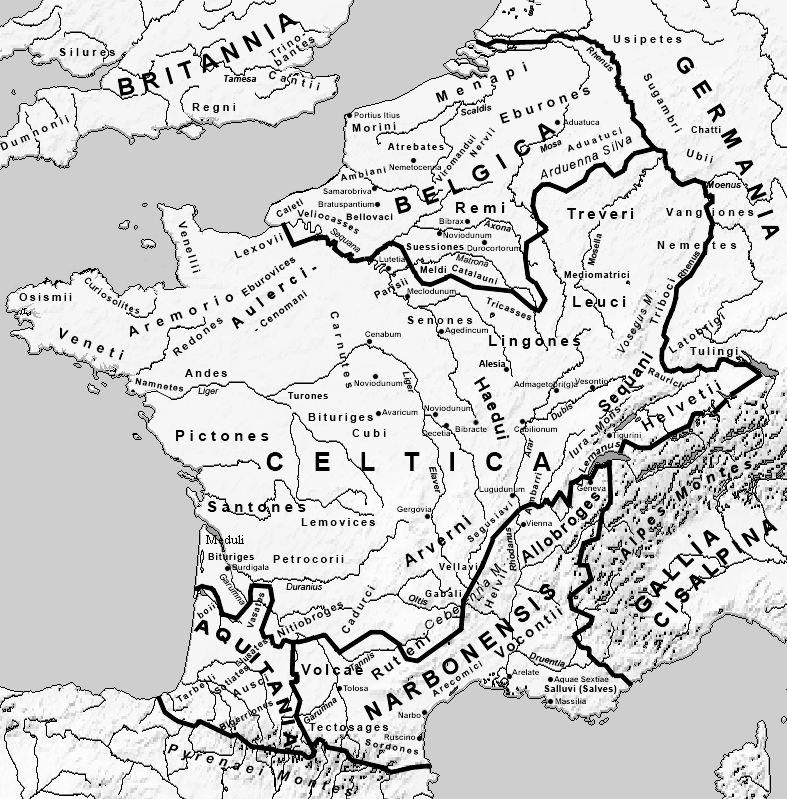
Gallic society was organized in a hierarchy. At the top were the druids, who served as priests, judges, and scholars, preserving the tribes' oral traditions. Below them were the warriors, a respected class that included chieftains and nobles. The majority of people were commoners, working as farmers and artisans. Their political structure was decentralized, with each tribe governed by its own chieftain or council, making a unified defense against outsiders difficult.
Life and Beliefs
The Gauls were skilled craftspeople, renowned for their intricate metalwork, especially in gold and iron. They lived in fortified settlements called oppida and practiced agriculture, raising livestock and growing grains. Their spiritual world was rich and complex. They worshipped a pantheon of gods and goddesses tied to nature, such as Cernunnos, the horned god of the wild. The druids led religious ceremonies, which sometimes included sacrifices, and taught the concept of reincarnation.
Fierce warriors, skilled artisans, and deeply spiritual, the Gauls lived in a world guided by nature, tribal loyalty, and the wisdom of their druids.
The Romans Arrive
In the 1st century BCE, this world was turned upside down. The ambitious Roman general, Julius Caesar, saw Gaul as an opportunity for glory and wealth. Using tribal rivalries to his advantage, he launched a series of military campaigns known as the Gallic Wars, which began in 58 BCE.
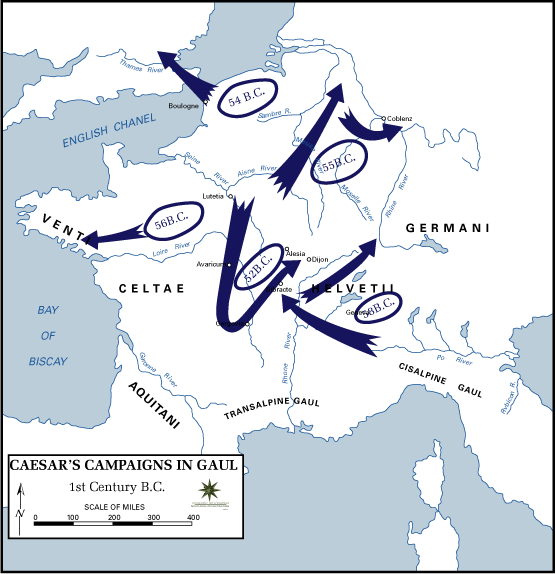
For nearly a decade, Caesar's legions marched across Gaul, systematically subduing one tribe after another. The Gauls fought back fiercely. Under the leadership of the chieftain Vercingetorix, they even managed to unite temporarily and score some victories against the Romans. However, the conflict reached its climax in 52 BCE at the Siege of Alesia. Despite a valiant effort, the Gallic forces were defeated, and Vercingetorix was forced to surrender. The war was over.
In 58 BC, Julius Caesar launched his campaign to conquer Gaul, integrating the region into the Roman Empire.
Gaul Becomes Roman
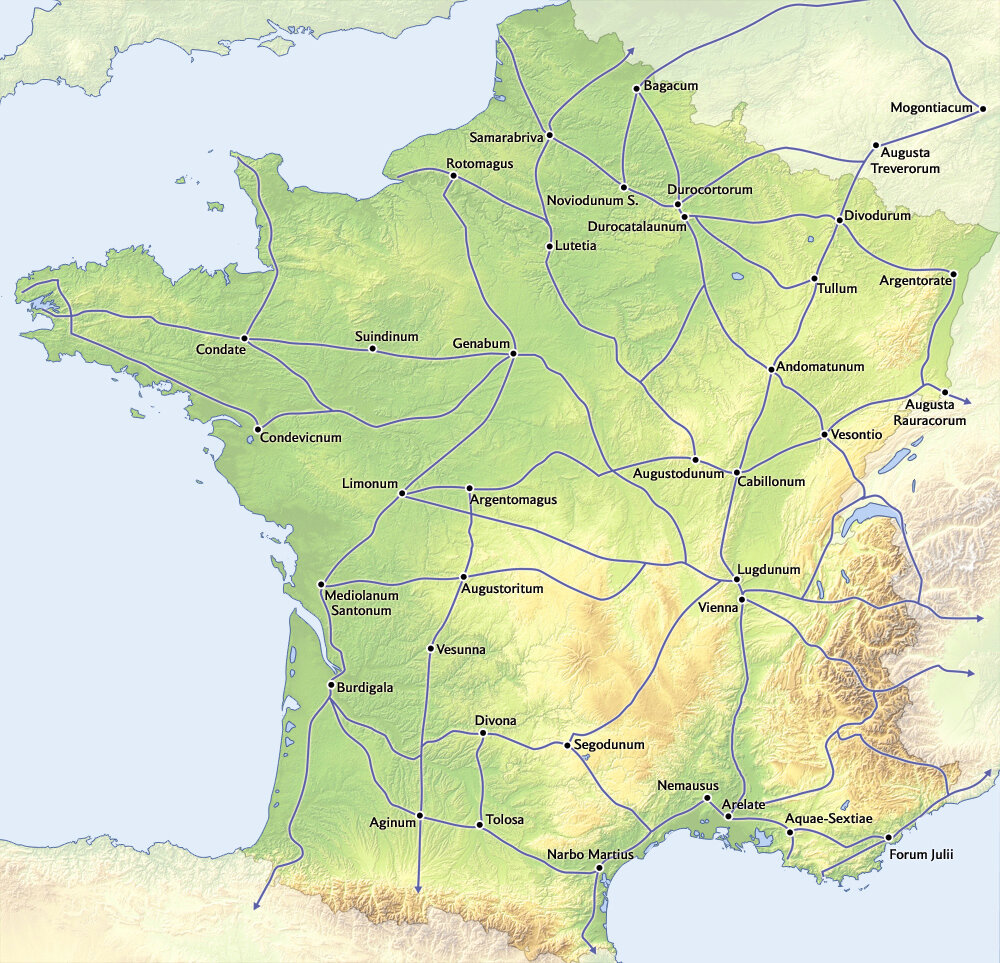
With the conquest complete, Gaul was annexed as a province of Rome. This began a period of profound transformation known as Romanization. The Romans were brilliant engineers and administrators. They built roads, aqueducts, and cities, connecting the region and improving daily life. Roman law and governance replaced the old tribal systems, creating a more unified and stable society.
Perhaps the most lasting change was linguistic. Latin, the language of the conquerors, became the tongue of administration, trade, and education. Over centuries, it blended with local Celtic dialects, eventually evolving into Vulgar Latin, the direct ancestor of the French language.
Even though the Roman Empire eventually split and the West fell, their ideas about law, architecture, and language (Latin became the root for languages like Spanish and French!) shaped almost all of Europe and influenced the world we live in now.
But Romanization wasn't a complete erasure of Gallic culture. Instead, a unique Gallo-Roman identity emerged. Celtic deities were often merged with Roman gods, and local traditions continued alongside new Roman customs. This fusion of cultures laid the foundation for the region that would one day become France.
Time to review what you've learned about ancient Gaul.
Ready for a quiz?
What was the political structure of Gaul before the Roman conquest?
Who were the druids in Gallic society?
The conquest and Romanization of Gaul was a pivotal moment, shaping the language, culture, and geography of France for millennia to come.