A Journey Through Chilean History
Pre-Columbian Societies
The First Peoples of Chile
Long before Spanish ships appeared on the horizon, the land we now call Chile was home to a diverse array of peoples. From the hyper-arid northern deserts to the frigid southern tip, indigenous cultures thrived for millennia, each adapting to its unique environment. These weren't simple, monolithic societies; they were complex communities with rich traditions, sophisticated social structures, and deep connections to the land.
The Chinchorro and the Oldest Mummies
On the coast of the Atacama Desert, one of the driest places on Earth, lived a fishing and gathering people known as the Chinchorro. Around 7,000 years ago, they developed a startling and profound cultural practice: the artificial mummification of their dead. This makes their mummies the oldest in the world, predating those of ancient Egypt by more than two millennia.
Unlike the Egyptians, who reserved mummification for pharaohs and the elite, the Chinchorro mummified everyone: men, women, children, and even fetuses. It was a deeply democratic way of honoring the deceased and keeping them part of the community.
The process was intricate. The body's internal organs were removed, and the skin was carefully peeled back. The artisans would then dry the cavity, reinforce the skeleton with sticks, and stuff the body with reeds, clay, and animal hair to restore its form. The skin was reattached, and the face was covered with a clay mask, often with an open mouth and eyes. The finished mummy was then painted, typically black or red. These figures weren't buried and forgotten; they were likely kept in homes and brought out for ceremonies, serving as a tangible link between the living and the dead.
The Mapuche People of the Land
Further south, in the fertile central valleys, lived the Mapuche, whose name means "People of the Land" in their language, Mapudungun. They were the largest and most influential indigenous group in the region, known for their fierce independence and remarkable ability to resist outside forces.
Mapuche
noun
The largest indigenous group in Chile, known for their strong cultural identity and historical resistance to colonization.
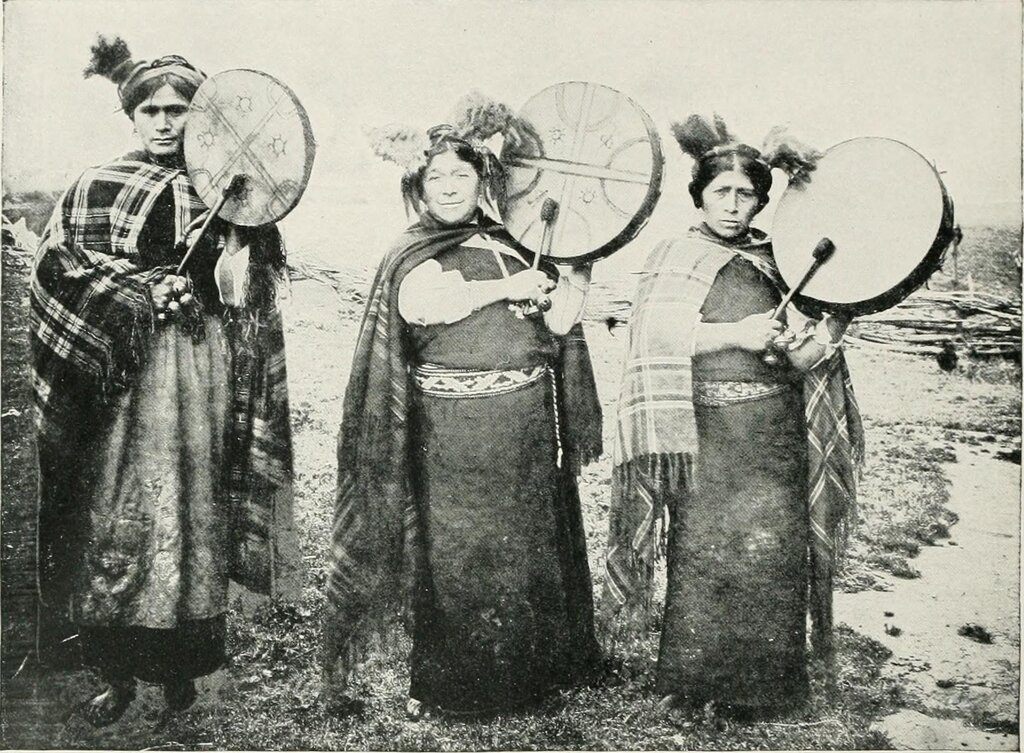
Mapuche society was organized around extended family groups called lof. Several lof would form larger alliances, especially in times of war, led by a chief or toki. Their economy was a mix of agriculture—cultivating potatoes, maize, and beans—and hunting native animals like the guanaco. They were skilled weavers and artisans, with a rich spiritual life centered on the balance of the natural world. Medicine women, known as machi, played a crucial role in both healing and spiritual ceremonies.
A Land of Many Cultures
The Chinchorro and Mapuche were not alone. The diverse geography of Chile gave rise to many distinct cultures. In the high-altitude Altiplano of the north, the Aymara herded llamas and alpacas. Along the coast, the Chango people used inflated sea-lion-skin rafts to hunt and fish in the Pacific.
In the far south, in the archipelago of Tierra del Fuego, lived the Yaghan and Selk'nam. These groups were incredibly resilient, adapting to the harsh, cold climate as nomadic hunter-gatherers.
Each of these societies developed unique technologies, social rules, and belief systems tailored to their environment. This mosaic of cultures formed the deep historical foundation of Chile long before the first European sails were ever spotted off its shores.