A Journey Through Canterbury's Past
Early Settlements
Before the Romans
Long before Canterbury was a city, it was a place people passed through and sometimes settled. Evidence from the Stone Age shows that early humans hunted in the area. These Paleolithic people left behind stone tools, like hand axes, scattered across the landscape. They were nomads, following herds of animals and gathering plants.
Later, during the Iron Age, a Celtic tribe known as the Cantiaci, or "people of Kent," inhabited the region. They weren't city-builders in the modern sense. Instead, they lived in smaller farming settlements. They chose the spot for the same reason people always had: it was a convenient place to cross the River Stour.
A Roman Town Appears
In 43 AD, the Romans invaded Britain. They quickly recognized the strategic importance of the crossing over the Stour. They established a new town there and called it Durovernum Cantiacorum, which means "stronghold of the Cantiaci by the alder swamp." This name respected the local tribe, a common Roman practice when founding towns in conquered territories.
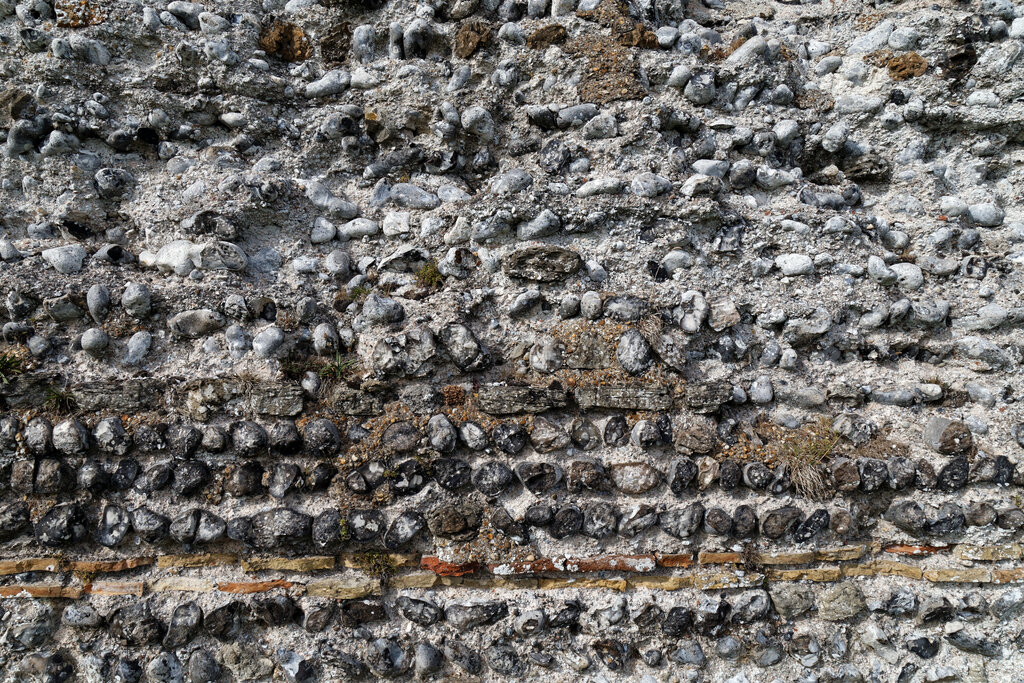
Durovernum became a vital administrative center for the Romans in Kent. It was laid out in a typical Roman grid pattern, with streets crossing at right angles. The main road, now known as Watling Street, ran right through the town, connecting it to the port of Richborough on the coast and, ultimately, to London and the rest of Roman Britain.
Life in Durovernum would have been recognizably Roman. There was a forum, which served as a marketplace and public square. Citizens could visit public baths and worship Roman gods at various temples. One of the most impressive structures was a large theatre, which could have seated thousands of people for plays and public events.
As the Roman Empire evolved, so did its beliefs. Christianity began to spread and likely reached Durovernum by the 3rd or 4th century. While concrete evidence from this period is scarce, a small Christian community probably existed within the city walls before the Romans departed.
The Saxons Arrive
By the early 5th century, the Roman Empire was crumbling. Roman legions were withdrawn from Britain to defend other parts of the empire, leaving the province vulnerable. The Roman-style city of Durovernum fell into decline. Buildings decayed, and the organized urban life that had defined the town for nearly 400 years faded away.
Into this vacuum came new settlers from mainland Europe: the Angles, Saxons, and Jutes. These Germanic tribes arrived in Kent and established a new kingdom. The old Roman town, though partially in ruins, became the capital of this new Kingdom of Kent.
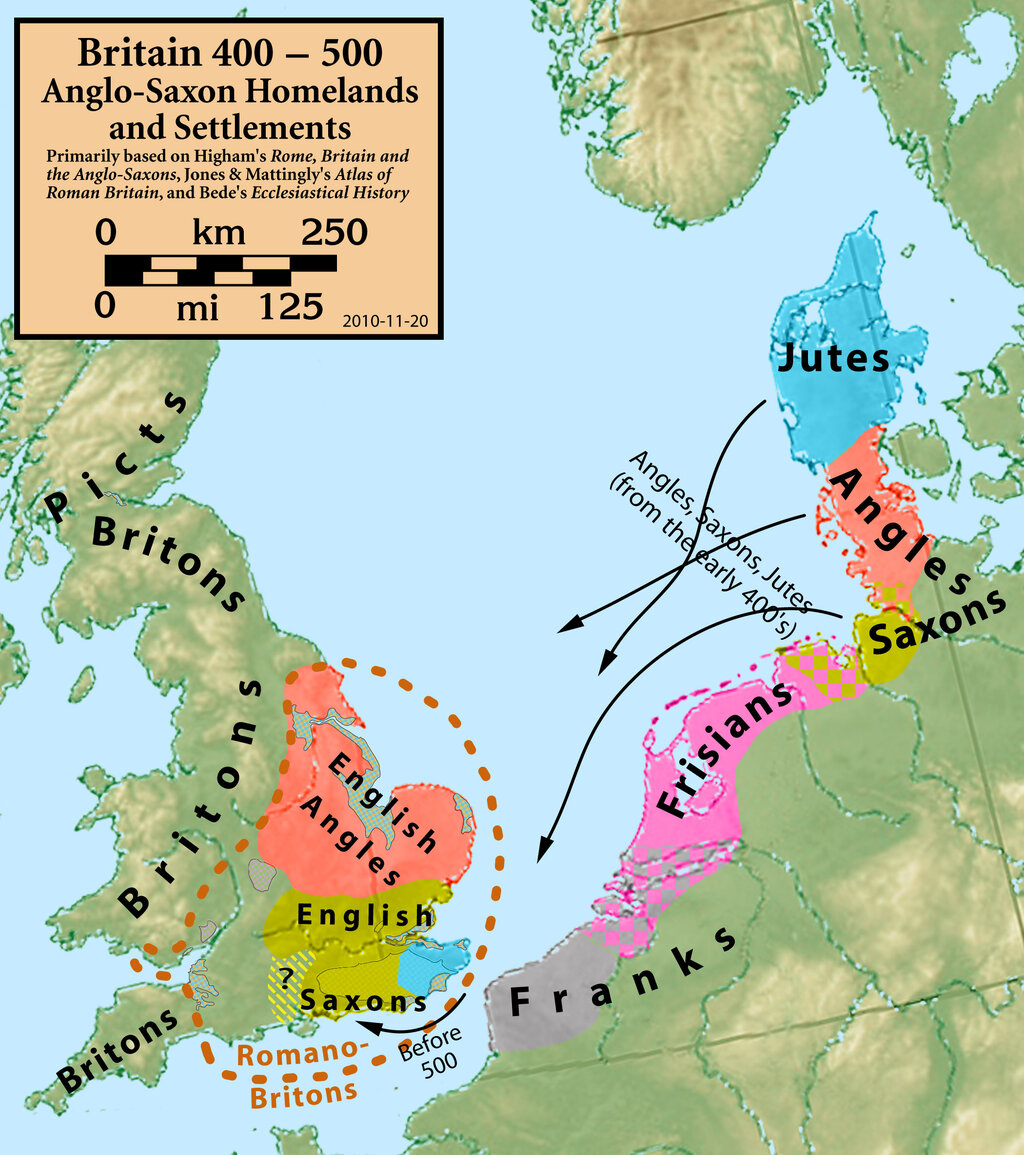
The Anglo-Saxons had their own name for the town: Cantwaraburh, meaning "the stronghold of the men of Kent." Life was different under Saxon rule. The new inhabitants were not city-dwellers like the Romans. They built with wood, not stone, and likely lived in and amongst the decaying Roman structures.
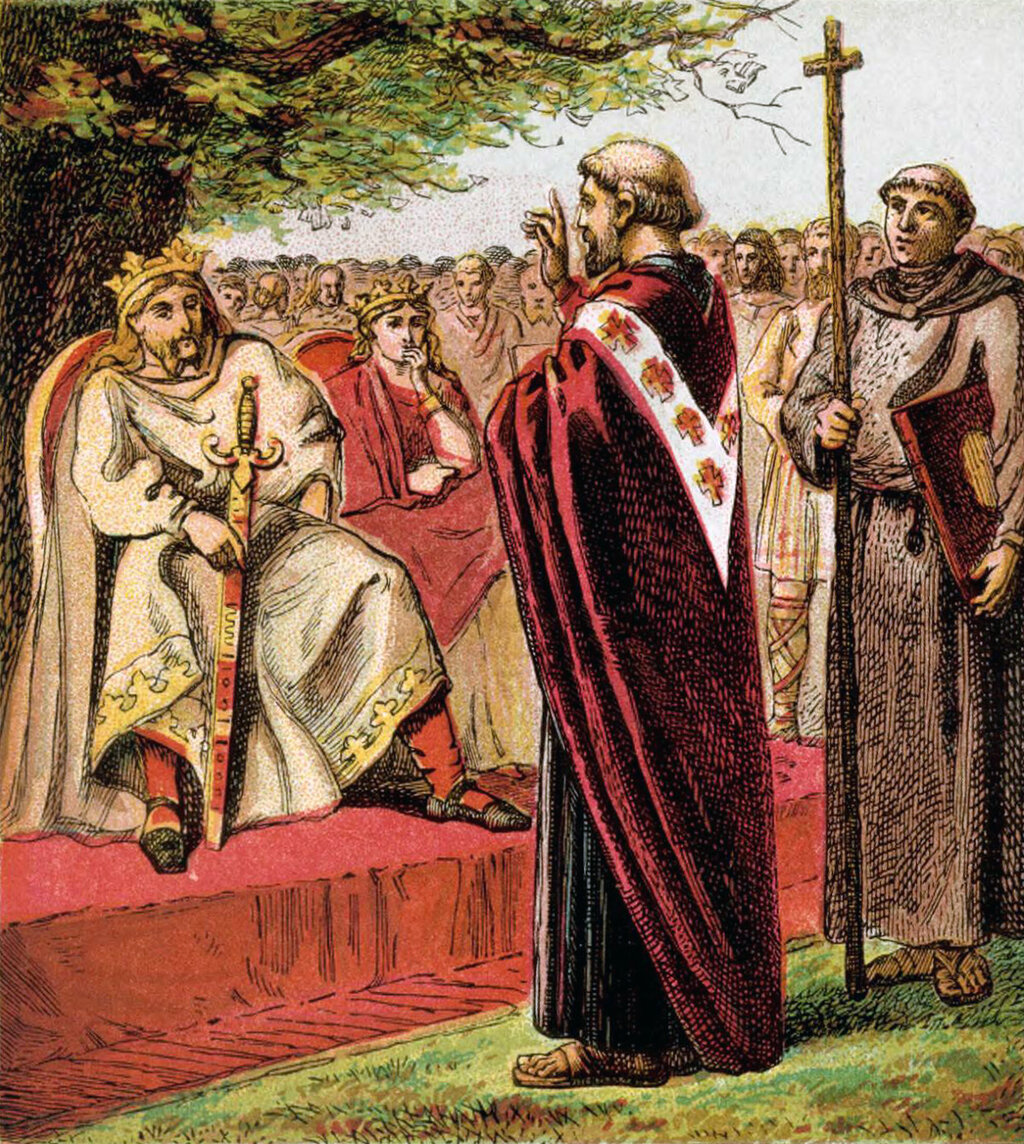
In 597 AD, a pivotal event occurred. Pope Gregory the Great sent a monk named Augustine to England to convert the Anglo-Saxons to Christianity. He landed in Kent and was received by its king, Æthelberht. The king converted to Christianity, and Augustine established his base in Cantwaraburh, becoming the first Archbishop of Canterbury. This act cemented the city's role not just as a political capital, but as the spiritual heart of England, a status it still holds today.
Let's check what you've learned about Canterbury's origins.
What was the Roman name for Canterbury?
What was the primary reason the location of modern-day Canterbury was consistently chosen for settlement, from the Iron Age to the Roman era?
From a simple river crossing to a Roman administrative center and then the capital of an Anglo-Saxon kingdom, Canterbury's early history laid the foundation for the famous city it would become.