A Journey Through Brazilian History
Pre-Colonial Societies
The First Peoples
Long before Brazil was a country, the land was home to millions of people. Estimates vary, but upwards of 3 million individuals lived in a vast area teeming with life. These weren't a single, unified group. Instead, hundreds of distinct societies flourished, each with its own language, customs, and understanding of the world. They were spread across diverse landscapes, from the dense Amazon rainforest to the sprawling savannahs and the Atlantic coast.
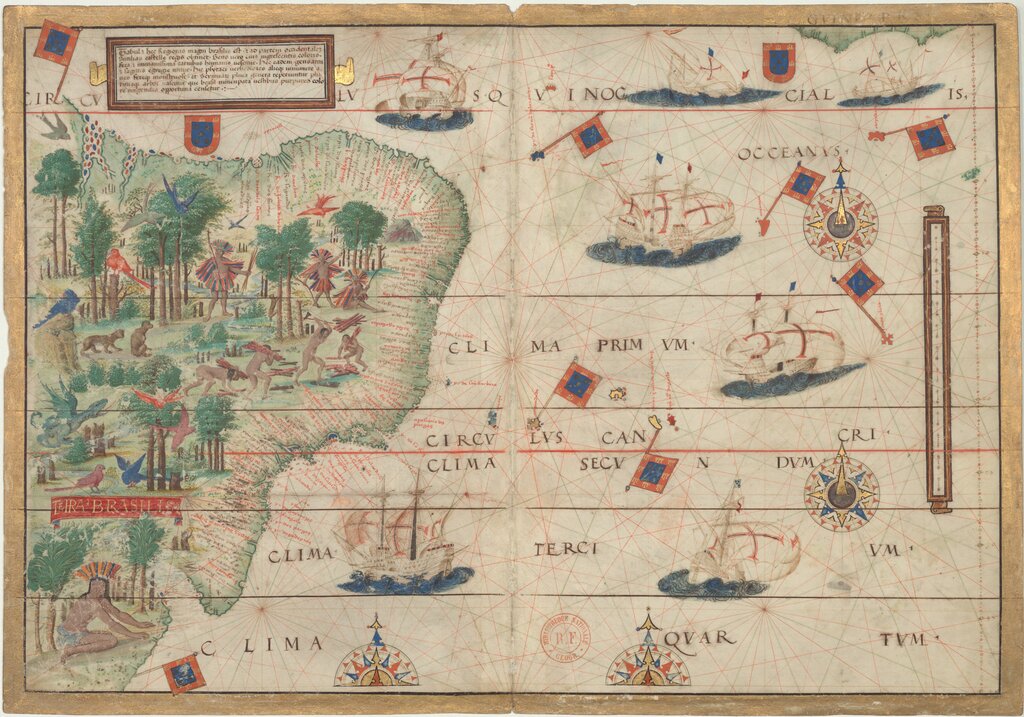
Among this incredible diversity, two major language families stood out: the Tupi and the Guaraní. The Tupi-speaking peoples dominated the extensive coastline, from the Amazon delta in the north to the south. The Guaraní peoples were more concentrated in the south, in what is today southern Brazil, Paraguay, and parts of Argentina. Though they spoke related languages and shared some cultural traits, they were composed of many different, independent groups.
A Life Woven from the Forest
Indigenous societies built their lives in deep connection with the environment. They were masters of their ecosystems, relying on a mix of farming, hunting, fishing, and gathering. Agriculture often involved a technique called slash-and-burn, where a small patch of forest was cleared and burned. The ash fertilized the soil for a few years, allowing them to grow staple crops.
The most important of these was cassava, or mandioca. This hardy root vegetable was a primary source of calories and could be processed into flour. They also cultivated maize, sweet potatoes, beans, and peanuts. This farming was supplemented by hunting local animals and fishing in the continent's abundant rivers.
Life wasn't about conquering nature, but living within its rhythms. The forest was a home, a provider, and a sacred space.
Social life was organized around kinship and community. Many groups lived in large communal houses called malocas, which could hold an entire extended family. The idea of private land ownership didn't exist; instead, communities shared resources. Leadership fell to chiefs, or caciques, who guided their people through persuasion and respect rather than force. Shamans held significant spiritual authority, acting as healers and intermediaries with the spirit world.
Lasting Echoes
The legacy of Brazil's first peoples is deeply embedded in the country's culture today. You can hear it in the language, see it in the food, and feel it in the national identity. Many place names across Brazil, including famous ones like Ipanema and Guanabara Bay, come from Tupi.
| Tupi Word | Meaning | Modern Place |
|---|---|---|
| Ipanema | Bad water | Ipanema Beach, Rio de Janeiro |
| Pindorama | Land of the palm trees | An early indigenous name for Brazil |
| Guanabara | Arm of the sea | Guanabara Bay, Rio de Janeiro |
Brazilian cuisine is filled with indigenous ingredients. The use of cassava in dishes like pão de queijo (cheese bread) and farofa (toasted cassava flour) is a direct inheritance. Fruits native to the Amazon, such as açaí and cupuaçu, are now popular worldwide.
Beyond words and food, indigenous culture has shaped folklore, spirituality, and a deep-seated connection to the natural world that remains a part of the Brazilian spirit.
What was the primary staple crop for many of Brazil's indigenous peoples before colonization?
The Tupi-speaking peoples primarily inhabited which region of what is now Brazil?
These rich and complex societies formed the foundation of Brazil's story, a story that would change dramatically in the centuries to come.