A Journey Through Art History
Prehistoric Art
The First Canvases
Long before cities, written language, or even farming, people felt the need to create. Deep inside caves and on exposed rock faces, our distant ancestors left behind the first traces of human art. These creations, dating back tens of thousands of years, offer a silent glimpse into their world.
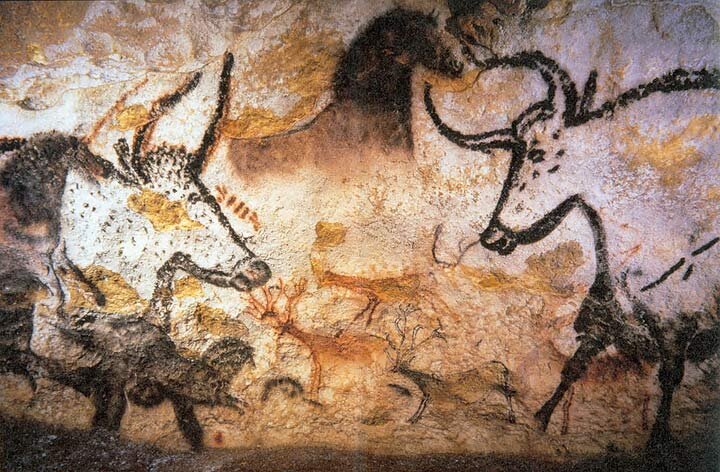
This early art primarily takes two forms. Cave paintings, or pictographs, were made by applying pigments to rock surfaces. Petroglyphs, on the other hand, were created by carving, scratching, or pecking into the rock itself. Common subjects across the globe include large animals like bison, horses, and mammoths, as well as abstract geometric signs and stencils of human hands.
These weren't just doodles. The locations, often in dark, hard-to-reach parts of caves, suggest these images held deep importance.
But why did they make them? We can't know for sure, but scholars have several theories. Some believe the art was part of hunting rituals, meant to capture the spirit of an animal to ensure a successful hunt. Others suggest they were created by shamans during religious ceremonies or to record myths and stories for the community. The consistent patterns and themes suggest a shared system of beliefs and symbols.
Tools of the Artist
Prehistoric artists worked with what nature provided. They ground minerals into powders to create pigments. Red, yellow, and brown came from ochre (a type of iron-rich clay), while black was made from charcoal or manganese dioxide.
Painted some 17,000 years ago in local pigments mixed with animal fats and plant juices applied (it is thought) with moss, animal fur, and by blowing through reed tubes, the paintings depict abstract images and a range of Palaeolithic animals and people in vivid detail.
These powdered pigments were mixed with a binder, like water, saliva, or animal fat, to make them stick to the cave walls. Artists used their fingers, twigs, or brushes made of animal hair to apply the paint. For a spray-painted effect, they would blow pigment through a hollow bone or reed, a technique often used to create the iconic hand stencils.
Art on a Massive Scale
As societies transitioned from hunting and gathering to farming during the Neolithic period, a new form of monumental art emerged: megalithic structures. These are constructions made of massive stones, built without the use of mortar or modern machinery.
Famous examples include Stonehenge in England, with its massive stone circles, and the alignments of Carnac in France, where thousands of stones stand in long lines. Like the cave paintings, their exact purpose is a mystery. They likely served as ceremonial or religious sites, tombs for important individuals, or even as giant calendars to track the seasons and celestial events.
Building these required immense social organization and cooperation, showing a major shift in how early human societies functioned.
Let's test your knowledge of humanity's earliest art forms.
What is the primary difference between a pictograph and a petroglyph?
Prehistoric artists used natural materials to create pigments. What was the source of black pigment?
From the first marks on a cave wall to the construction of giant stone circles, prehistoric art tracks the dawn of human creativity and cooperation. It reminds us that the desire to create, to symbolize, and to build things of meaning and permanence is a fundamental part of the human story.