A History of Venezuelan Politics
Colonial Foundations
Arrival on the Pearl Coast
When Christopher Columbus sailed along the coast of modern-day Venezuela in 1498, he was struck by its beauty, calling it a “land of grace.” The stilt houses built by the indigenous people over the water reminded his fellow explorers of Venice, giving the region its name: Venezuela, or “Little Venice.”
Unlike in Mexico or Peru, the Spanish didn't find vast, centralized empires ripe for conquest. Instead, their initial interest was drawn to the rich pearl beds off the coast of Cubagua and Margarita islands. This sparked a brutal but short-lived economic boom focused on extracting pearls using enslaved indigenous labor. The search for gold and other resources also drove early expeditions inland, but the real wealth of Venezuela would prove to be agricultural.
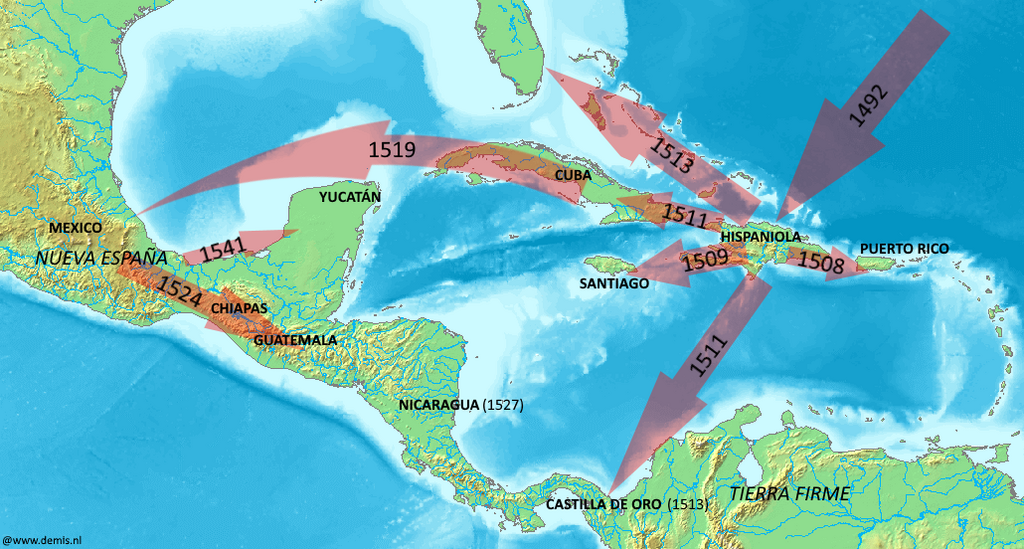
This initial period was marked by fierce resistance. Groups like the Caribs and Arawaks, who had inhabited these lands for centuries, fought back against the invaders. Their knowledge of the terrain made conquest difficult and prolonged the conflict for decades. The Spanish established scattered, fortified settlements, with Cumaná, founded in 1515, becoming the first permanent European settlement in mainland South America.
Building a Colonial Society
As the dream of quick riches from pearls and gold faded, the Spanish shifted their focus to building a lasting agricultural colony. They established large estates called haciendas and hatos (ranches) to cultivate crops like cocoa and tobacco and to raise cattle. This system required a vast labor force.
The Spanish crown implemented the encomienda system, which granted Spanish colonists the right to demand labor and tribute from indigenous communities. In theory, the encomendero was supposed to protect and Christianize the indigenous people. In reality, it was often a system of forced labor and exploitation. As the indigenous population declined due to disease and overwork, the Spanish began importing enslaved people from Africa to work on the plantations, particularly in the coastal cocoa-growing regions.
This created a rigid social hierarchy based on race and origin. Peninsulares (Spaniards born in Spain) held the top positions, followed by Criollos (people of Spanish descent born in the Americas). Below them were mestizos (mixed European and indigenous), mulattos (mixed European and African), and at the bottom, enslaved Africans and indigenous people.
The colony was governed through a complex bureaucracy that answered to the King of Spain. For much of its history, Venezuela was a relatively marginal part of the Spanish Empire, administered from distant capitals like Santo Domingo or Bogotá.
It wasn't until 1777 that the provinces making up modern Venezuela were unified into a single administrative unit, the Captaincy General of Venezuela. This move gave the region more autonomy and helped forge a distinct identity among the local Criollo elite, who managed local affairs through town councils known as cabildos. These seeds of local governance and a unique Venezuelan identity would become critical in the decades to follow.
A Lasting Legacy
Three centuries of Spanish rule left an indelible mark. The Spanish language and Catholicism became dominant cultural forces, often imposed over indigenous traditions.
The colonial economy was designed for extraction. Venezuela's resources, primarily agricultural products like cocoa, were sent to Spain, enriching the mother country while limiting the colony's own economic development. This created a pattern of dependency that would persist long after independence.
Bolívar proposed the final overthrow of the shackles of imperialism and colonialism, which were based on exploitation and class privileges.
The rigid social structure, based on race and place of birth, bred deep resentment, especially among the ambitious Criollo class. They had wealth and local influence but were barred from the highest echelons of power. This frustration, combined with the economic restrictions and a growing sense of a separate Venezuelan identity, set the stage for the dramatic events of the early 19th century.
Let's review the key concepts from Venezuela's colonial period.
What feature of the Venezuelan coast inspired Spanish explorers to name the region "Little Venice"?
What was the primary economic focus for the Spanish during the initial period of colonization in Venezuela?
These colonial foundations—the social tensions, economic structures, and emerging political identity—were the bedrock upon which the struggle for independence would be built.