A History of Tahiti
Polynesian Settlement
The Great Voyage
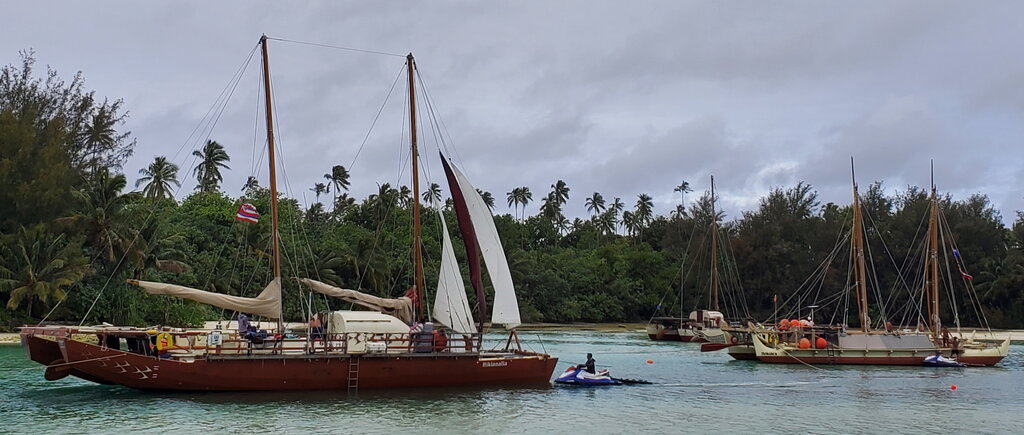
Long before Europeans dreamed of crossing the Atlantic, Polynesian navigators were mastering the Pacific. Theirs was a deliberate, multi-generational expansion across the largest ocean on Earth. Setting out from Southeast Asia thousands of years ago, these explorers used sophisticated double-hulled canoes, or va'a, to push eastward into the unknown.
By about 1500 BCE, a distinct cultural group known as the Lapita had reached the islands of Melanesia. For centuries, they honed their skills in Samoa and Tonga. Then, around 2,000 years ago, a new wave of exploration began, carrying them into the vast, uncharted waters of the central and eastern Pacific. Using only the stars, sun, winds, and ocean swells as their guides, they discovered and settled nearly every habitable island in a triangle stretching from Hawai'i to Easter Island to New Zealand. Tahiti was one of the jewels they found along the way.
Making Landfall in Tahiti
Archaeological evidence suggests that the first Polynesians arrived in Tahiti and the surrounding Society Islands around the 9th or 10th century CE. They didn't arrive empty-handed. Their canoes carried the essentials for a new life: edible plants like taro and yams, and animals such as pigs, dogs, and chickens.
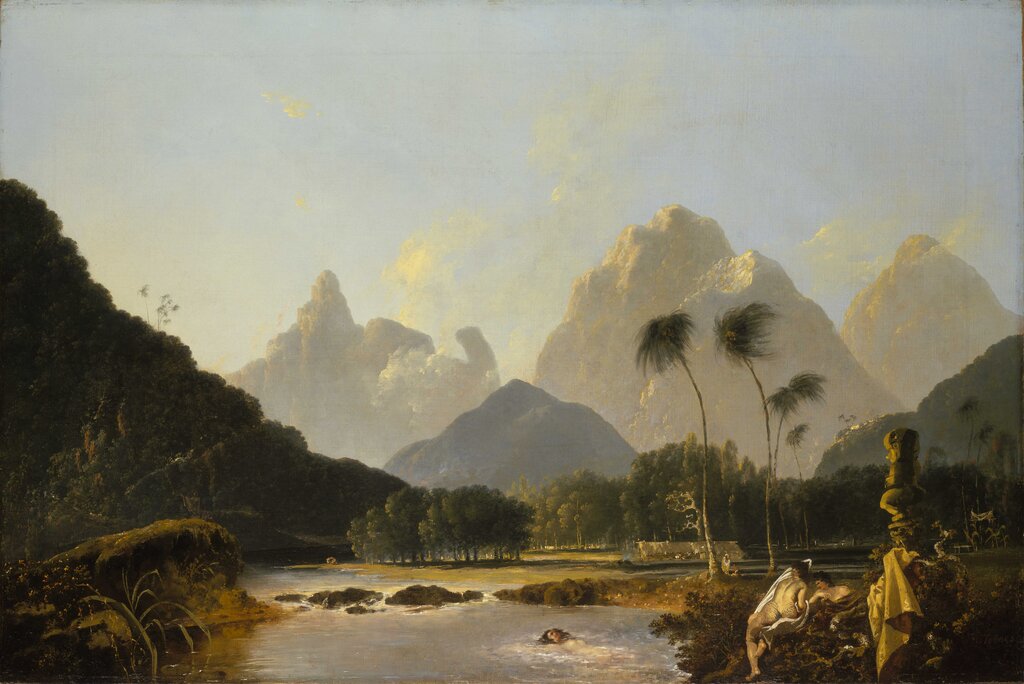
They found a volcanic island with lush valleys, fresh water, and a rich marine environment. Early settlements were concentrated along the coast, where communities could harvest from the sea and cultivate the fertile lowlands. These first Tahitians were masters of their environment, quickly adapting their agricultural practices to the new island.
Building a Society
Early Tahitian society was highly organized and hierarchical. At the top were the ari'i, the paramount chiefs who could trace their lineage back to the gods. Below them were lesser chiefs and then the common people, who were primarily farmers and fishers. Society was structured into chieftainships, independent territories ruled by an ari'i family.
Status and power were tied to the concept of mana, a spiritual force or prestige that could be inherited, gained through great deeds, or lost through failure. This belief system reinforced the social order and the authority of the chiefs.
A person's mana and lineage determined their place in society, from the highest chief to the lowest commoner.
Religion was woven into every aspect of life. The most visible expression of this was the construction of marae, sacred ceremonial centers that served as the heart of each community.
marae
noun
An open, sacred space used for religious and social ceremonies in Polynesian societies.
These structures were typically rectangular courtyards paved with stone, with a raised stone platform, or ahu, at one end where offerings were made and important figures were buried. Marae were not just places of worship; they were political and social hubs where chiefs were invested, battles were planned, and community feasts were held. The size and complexity of a marae reflected the power and mana of the chief who controlled it.
Through keen environmental observations, celestial cues, and oceanic patterns, Polynesian navigators mastered their vast Pacific routes.
This deep connection to their origins and the wider world was maintained through incredible maritime skill. Tahitian navigators were part of a long tradition of wayfinding, passing down intricate knowledge of star paths, ocean currents, and the flight patterns of birds. These skills allowed them to maintain contact between islands and carry on a legacy of exploration that remains one of the greatest feats of human migration.
Ready to test your knowledge?
According to archaeological evidence, around when did the first Polynesians arrive in Tahiti?
In early Tahitian society, what was the title for the paramount chiefs who were believed to have descended from the gods?
The arrival of Polynesians in Tahiti marked the beginning of a vibrant and complex culture, built on a foundation of expert navigation, social order, and a deep spiritual connection to the land and sea.