A History of Modern Nepal
Unification of Nepal
A Kingdom Forged
In the mid-18th century, the land we now know as Nepal was a patchwork of dozens of small, competing principalities. These city-states, known as the Baise and Chaubisi Rajya, constantly vied for power and resources. From his small kingdom of Gorkha, a young king named Prithvi Narayan Shah watched this disunity and envisioned something different: a single, strong, and unified nation.
His ambition was not just about territorial expansion. He saw the growing influence of the British East India Company in India and believed that a fragmented Nepal would be easily conquered. Unity, for him, was a matter of survival. He famously described his future kingdom as a "beautiful garden of all four castes and thirty-six sub-castes," a vision for a multi-ethnic state where all people had a place.
The Gorkhali Campaigns
Prithvi Narayan Shah's military strategy was as patient as it was clever. He didn't rush into all-out war. Instead, he spent years building a disciplined army, the Gorkhalis, loyal to his cause. His primary target was the wealthy and fertile Kathmandu Valley, which was ruled by three separate Malla kings in Kathmandu, Patan, and Bhaktapur.
Rather than a direct assault, Shah first imposed a complete blockade on the valley. He captured strategic hills and trade routes, cutting off supplies and weakening the Malla kingdoms from the outside. This economic warfare slowly strangled his opponents, making his eventual military moves far more effective.
As the blockade tightened, the Malla king of Kathmandu, Jaya Prakash Malla, grew desperate and asked the British East India Company for help. The Company, seeing an opportunity to expand its own influence, sent a force under Captain George Kinloch. The two armies met at Sindhuli in 1767. The Gorkhali soldiers, familiar with the terrain and highly motivated, ambushed the British-led troops. The resulting Gorkhali victory was decisive. It not only boosted their morale but also sent a clear message: the unification of Nepal would not be interrupted by foreign powers.
With the British threat neutralized, Shah turned his full attention back to the valley. On September 25, 1768, during the vibrant festival of Indra Jatra, his troops infiltrated Kathmandu. The city's inhabitants and soldiers were celebrating, caught completely by surprise. Prithvi Narayan Shah marched to the royal palace and sat on the throne, a symbolic act that declared him king. The city fell with barely any bloodshed, a testament to his tactical timing.
A New Nation's Heart
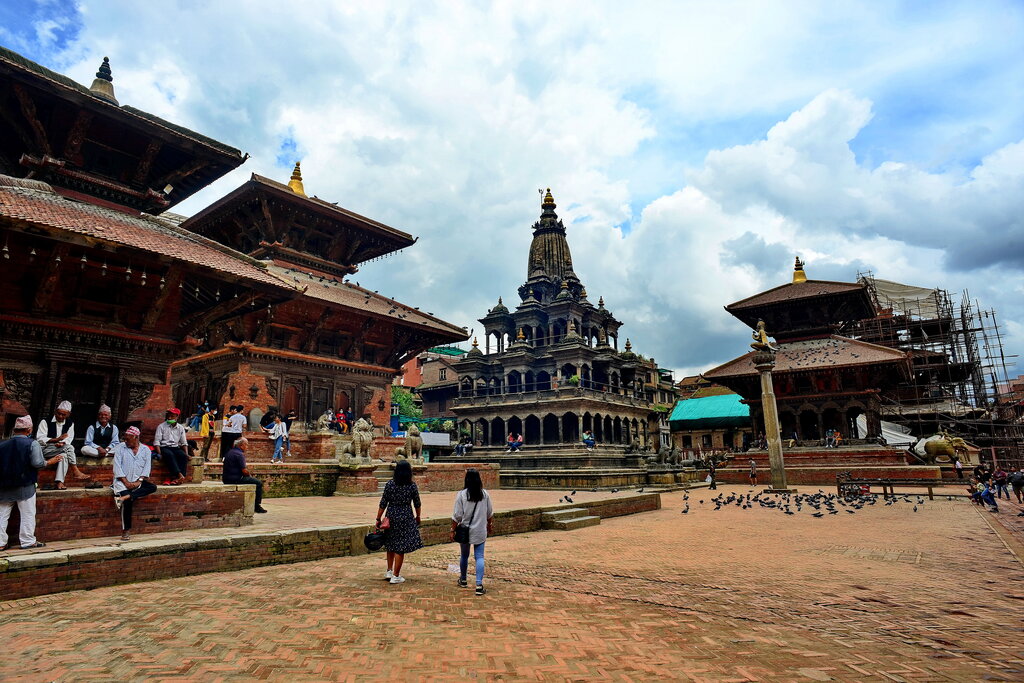
Following the conquest of Kathmandu, the other Malla kingdoms of Patan and Bhaktapur fell soon after. The capture of the Kathmandu Valley was the turning point in the unification campaign. It provided Shah with a strategic and economic base from which he could expand his kingdom in all directions.
The integration of these advanced Newar kingdoms was crucial. The Malla states brought with them a rich culture, sophisticated architecture, and established trade networks. By making Kathmandu his new capital, Prithvi Narayan Shah merged the martial prowess of the Gorkhalis with the cultural and economic strength of the valley, laying the true foundation for the modern nation of Nepal.
The conquest of the Kathmandu Valley was not just an addition of territory; it was the creation of a new national capital and the heart of a unified Nepal.
Time to check what you've learned about this pivotal period in Nepali history.
What was Prithvi Narayan Shah's primary motivation for unifying the many small principalities into a single nation of Nepal?
What was the key strategy Prithvi Narayan Shah used to weaken the Malla kingdoms in the Kathmandu Valley before his military assault?
Prithvi Narayan Shah's vision and military success transformed a region of warring states into a single, unified country, changing the course of its history forever.