A Day in the Life of an Accountant
Accounting Fundamentals
The Core Equation
At the heart of all accounting is a single, powerful idea: the accounting equation. It’s the bedrock that ensures every financial record is logical and balanced. It might look like simple math, but it provides a complete picture of a company's financial position.
Let's break down what each part means. Think of it like buying a house.
Asset
noun
A resource with economic value that a company owns or controls with the expectation that it will provide a future benefit.
Assets are everything the company owns that has value. This includes physical things like cash, inventory, and equipment, as well as non-physical things like patents.
Liability
noun
A company's financial debt or obligations that arise during the course of its business operations.
Liabilities are what the company owes to others. This could be a loan from a bank, bills from suppliers, or wages owed to employees.
Equity
noun
The value of the assets remaining in a business after all liabilities have been deducted. It represents the owner's stake.
Equity is the owner's claim on the assets. It's what would be left over for the owners if the company sold all its assets and paid off all its debts. It’s the residual value.
This equation must always, without exception, be in balance. For every transaction, both sides of the equation must remain equal.
Keeping the Books Balanced
How do accountants ensure the equation always balances? They use a system called double-entry bookkeeping. It's been the standard for centuries for a reason: it’s simple and robust.
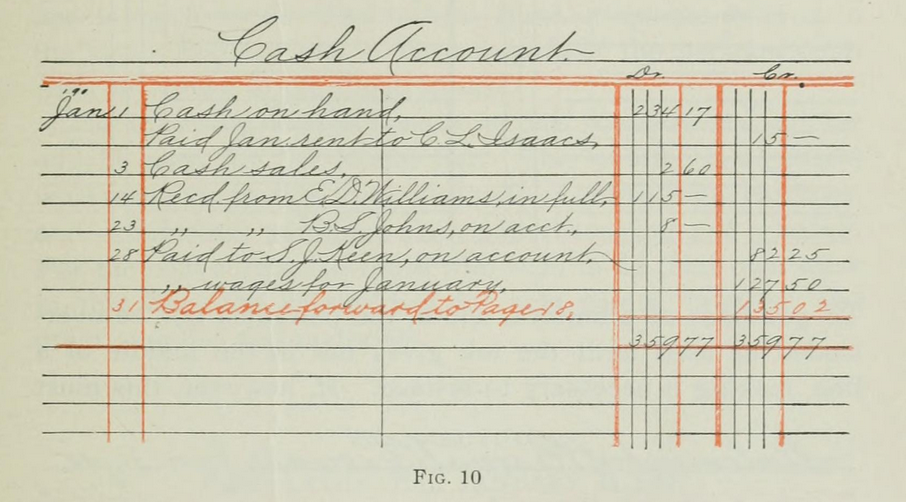
The core rule is that every transaction affects at least two accounts. One account receives a debit, and another receives an equal and opposite credit. These aren't moral judgments of "good" or "bad." They simply describe the two sides of a transaction.
Imagine a small bakery. Let's see how two common transactions affect its accounting equation.
Transaction 1: The bakery buys a new oven for 💲5,000 cash.
Here, one asset (Cash) is exchanged for another (Equipment). The total amount of assets doesn't change.
| Account | Debit | Credit |
|---|---|---|
| Equipment (Asset) | $5,000 | |
| Cash (Asset) | $5,000 |
The accounting equation remains balanced. Assets increased by $5,000 in equipment and decreased by $5,000 in cash, for a net change of zero.
Transaction 2: The bakery takes out a 💲10,000 loan from a bank to expand.
In this case, the bakery gets cash, which increases its assets. But it also takes on a debt, which increases its liabilities.
| Account | Debit | Credit |
|---|---|---|
| Cash (Asset) | $10,000 | |
| Loans Payable (Liability) | $10,000 |
The equation stays in balance: Assets are up by $10,000, and Liabilities are also up by $10,000.
Telling the Financial Story
The whole point of tracking transactions is to create financial statements. These are standardized reports that tell the story of a company's performance and health. There are three primary statements.
Examine the three core financial statements systematically:
1. The Balance Sheet This statement is a direct reflection of the accounting equation. It shows what a company owns (Assets) and what it owes (Liabilities and Equity) at a single point in time, like a snapshot photo of its financial position.
2. The Income Statement Also known as the Profit and Loss (P&L) statement, this report shows how profitable a company was over a period of time (like a quarter or a year). It summarizes revenues and subtracts expenses to arrive at the bottom line: net income.
3. The Cash Flow Statement This statement tracks the movement of cash. It reports how much cash came in and went out over a period, broken down into three activities: operating, investing, and financing. A company can be profitable on its income statement but still run out of cash, which is why this statement is so critical.

These three statements work together to provide a complete picture. The net income from the income statement, for example, impacts the equity on the balance sheet. Understanding these foundational concepts is the first step toward making sense of any business's finances.
Ready to check your understanding?
Which of the following represents the fundamental accounting equation?
If a company buys a new delivery truck for $30,000 by paying cash, how does this affect the company's total assets?
Mastering these core principles—the accounting equation, double-entry bookkeeping, and the main financial statements—provides the framework for all accounting practices.