80/20 Sales Mastery for Music Lessons
Understanding the Pareto Principle
The 80/20 Rule
What if you could get most of your results from just a fraction of your effort? It sounds too good to be true, but it's the core idea behind a powerful concept in business and productivity: the Pareto Principle.
The 80/20 rule—also known as the Pareto Principle—suggests that 80% of your results come from just 20% of your efforts.
This isn't a strict mathematical law, but a general observation about the world. It suggests that in many situations, a small number of causes are responsible for a large percentage of the effects.
Pareto Principle
noun
A principle stating that for many outcomes, roughly 80% of consequences come from 20% of the causes.
The principle is named after Italian economist Vilfredo Pareto. In 1906, he noticed that about 80% of the land in Italy was owned by just 20% of the population. He later observed a similar pattern with the peas in his garden: roughly 20% of the peapods produced 80% of the peas. This skewed distribution shows up everywhere once you start looking for it.
The Rule in Action
The 80/20 rule isn't just about land ownership or garden vegetables. It applies across many different fields.
| Industry | 20% of Causes | 80% of Results |
|---|---|---|
| Software | 20% of reported bugs | 80% of system crashes |
| Business | 20% of products | 80% of total sales |
| Time Management | 20% of your tasks | 80% of your progress |
| Website Traffic | 20% of your pages | 80% of your visitors |
Think about the clothes you wear. You probably wear your favorite 20% of items about 80% of the time. Or consider your phone. You likely use just a handful of your apps most of the time.
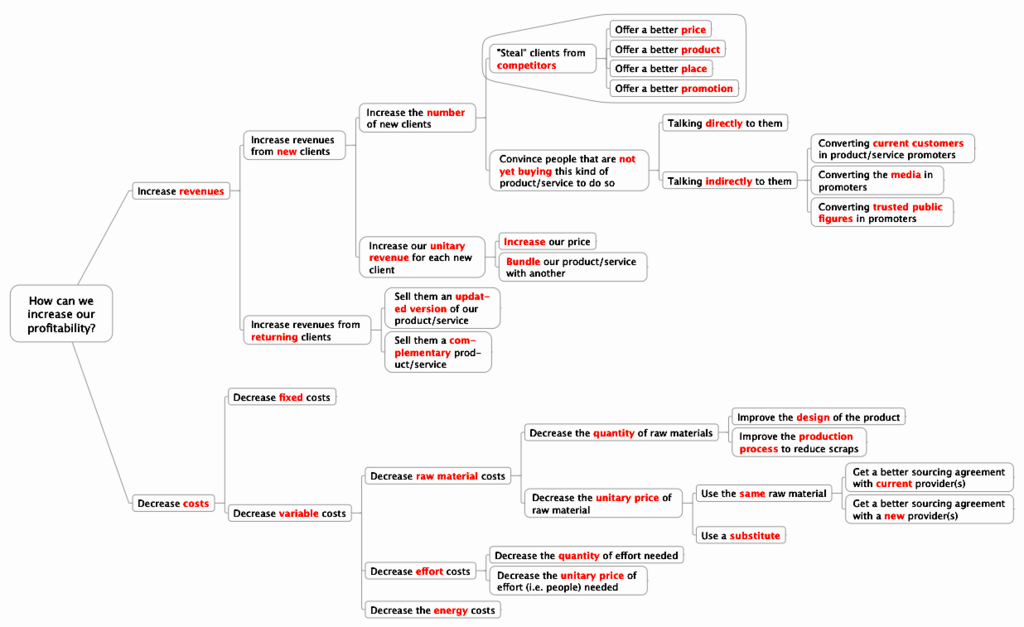
Finding Your 20 Percent
Applying the Pareto Principle is about identifying and focusing on that critical 20%. In a sales context, it means finding the high-impact activities that generate the most revenue and conversions.
For example, you might find that:
- 20% of your lead sources (like referrals or specific ad campaigns) generate 80% of your sign-ups.
- 20% of your sales team's activities (like personalized follow-ups) lead to 80% of their closed deals.
- 20% of your customer base generates 80% of your total revenue.
The goal isn't to work less. It's to work smarter by focusing your energy where it matters most. By identifying the "vital few" activities, you can stop spending valuable time on the "trivial many" that produce minimal results. This allows you to amplify your successes and achieve your goals more efficiently.
The key takeaway is to find your most effective strategies and double down on them. What actions are truly moving the needle?
Before you check your knowledge, let's review the key term from this section.
Ready to see what you've learned? Take this short quiz.
What is the core idea of the Pareto Principle?
A business finds that 20% of its customers generate 80% of its revenue. According to the Pareto Principle, these customers are known as the '_____'.
Understanding this principle is the first step toward optimizing your sales process. By knowing that not all efforts are created equal, you can start to identify what's truly driving your success.