5th Grade Science Essentials
Introduction to Matter
What Is Matter?
Look around you. The chair you're sitting on, the water you drink, and the air you breathe are all made of matter. Simply put, matter is anything that has mass and takes up space.
But what are mass and volume? Mass is a measure of how much "stuff" is in an object. A bowling ball has more mass than a balloon. Volume is the amount of space an object occupies. The bowling ball takes up less space than a giant, inflated balloon, so it has less volume.
Everything you can touch and feel is matter. It all has mass and volume.
The Three Main States
Matter usually exists in one of three states: solid, liquid, or gas. The main difference between them is how they hold their shape and how much space they fill.
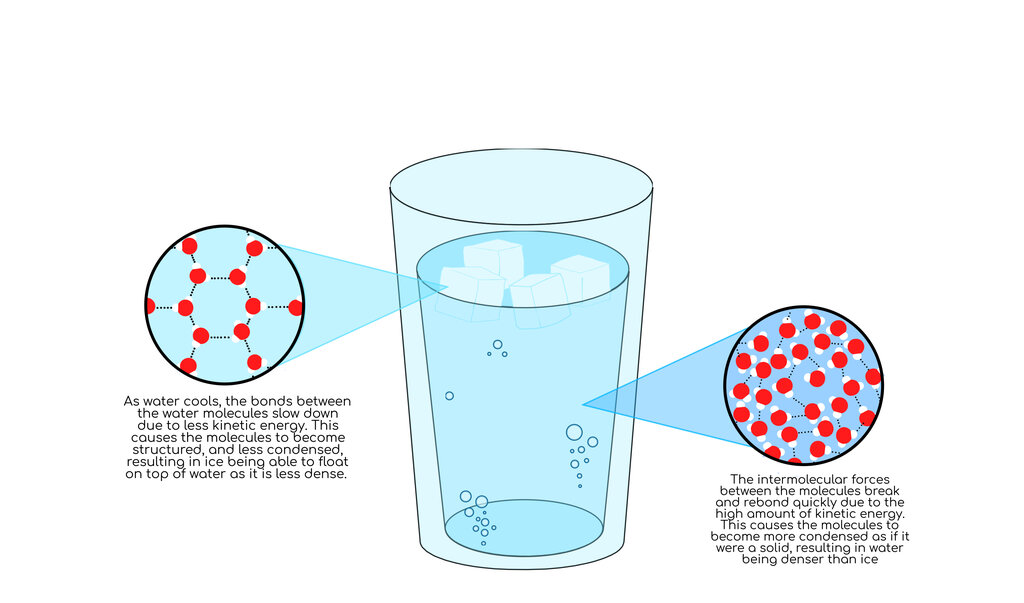
A solid keeps its own shape and has a fixed volume. A book, for instance, stays book-shaped whether it's on a shelf or in your bag. Its volume doesn't change either.
A liquid has a fixed volume, but it doesn't have a fixed shape. It flows and takes the shape of whatever container it's in. Pour a liter of water from a bottle into a bowl, and you still have a liter of water, but now it has the shape of the bowl.
A gas has no fixed shape and no fixed volume. It will spread out to fill any container you put it in. The air in a room fills the entire room. If you open a bottle of perfume, the scent (which is a gas) will soon spread throughout the space.
| State | Shape | Volume |
|---|---|---|
| Solid | Definite | Definite |
| Liquid | Takes shape of container | Definite |
| Gas | Fills entire container | Fills entire container |
Changing States
Matter isn't stuck in one state forever. With a change in temperature or pressure, it can transform from one state to another. These are physical changes, meaning the substance itself doesn't change, just its form.
Here are the most common state changes:
- Melting: When a solid turns into a liquid. Think of an ice cube turning into a puddle of water on a warm day.
- Freezing: This is the reverse of melting, when a liquid turns into a solid. Water in an ice tray turns to solid ice in the freezer.
- Evaporation: When a liquid turns into a gas. A puddle of rainwater disappears on a sunny day because the water evaporates into the air.
- Condensation: The opposite of evaporation, when a gas turns back into a liquid. You see this when water droplets, or dew, form on grass overnight, or when the bathroom mirror fogs up after a hot shower.
Understanding these basic properties of matter is the first step into the world of physical science. It helps explain countless things we observe in our daily lives, from cooking an egg to watching the clouds form in the sky.
Ready to check your understanding?
Which of the following best defines matter?
A substance has a fixed volume but takes the shape of its container. Which state of matter is it in?
Great work! You've just covered the building blocks of the physical world.