5th Grade Earth and Space Science
Solar System
Our Cosmic Neighborhood
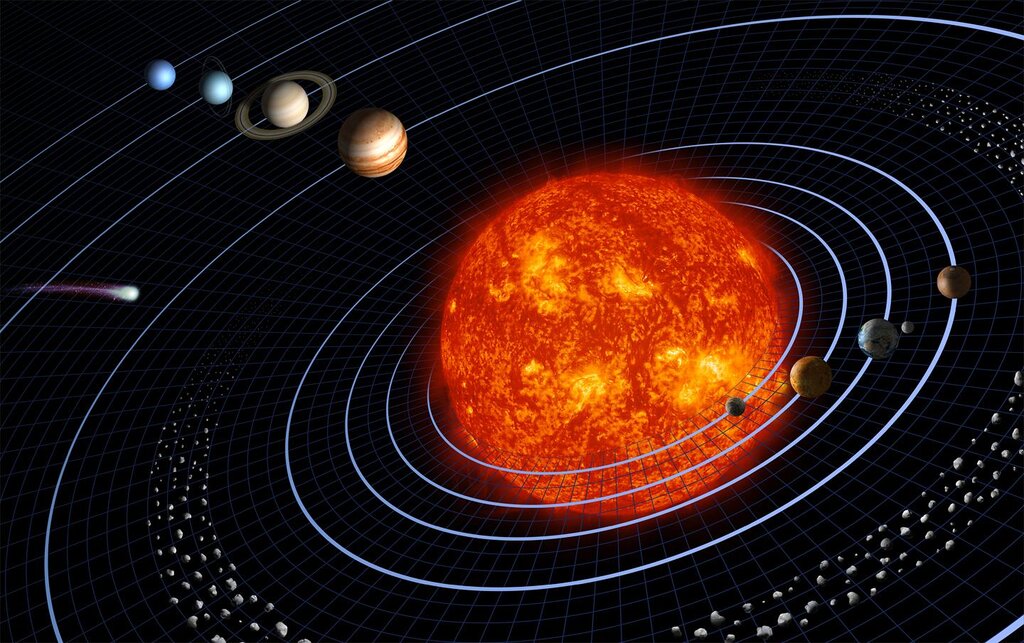
The solar system is our home in the vast universe. It's a collection of a star, planets, moons, and countless smaller objects, all held together by a powerful, invisible force. At the very center of it all is our star, the Sun.
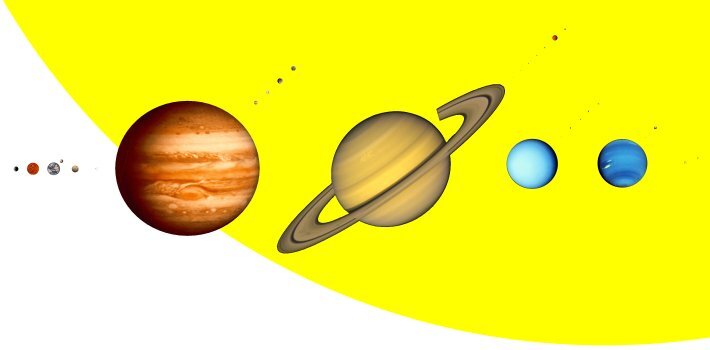
The Sun isn't a planet. It's a star, a massive ball of incredibly hot gas that generates its own light and heat. It contains more than 99% of all the material in the entire solar system. This immense mass creates a powerful gravitational pull, keeping everything from the largest planet to the smallest speck of dust in orbit around it.
Meet the Planets
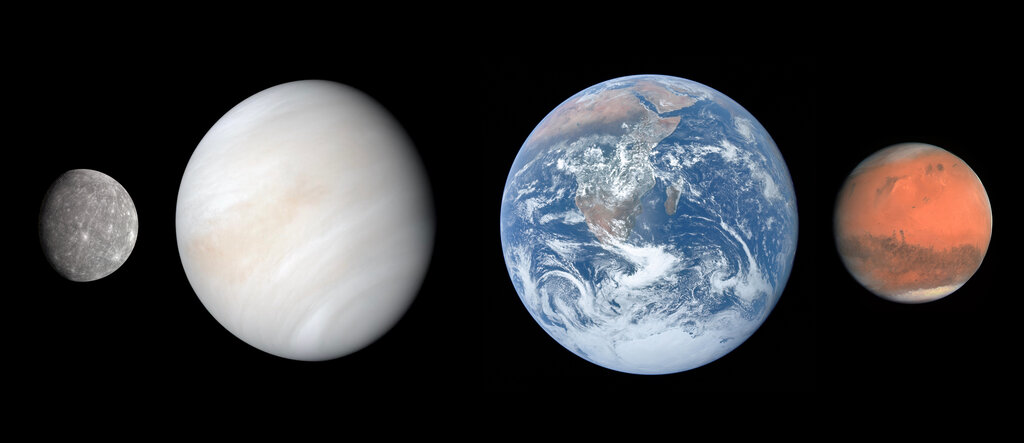
Orbiting the Sun are eight planets. Each one travels along its own path, or orbit, and they come in two main types. The four planets closest to the Sun are the terrestrial, or rocky, planets. They are smaller and made mostly of rock and metal.
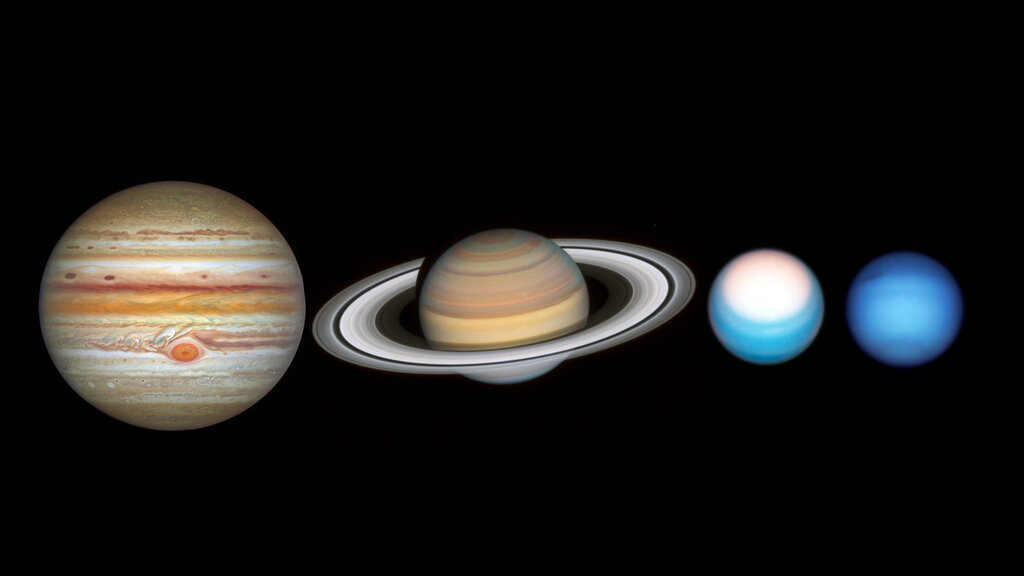
Farthest from the Sun are the gas and ice giants. These planets are enormous and are composed mainly of gases like hydrogen and helium, and icy materials.
| Category | Planets |
|---|---|
| Terrestrial Planets | Mercury, Venus, Earth, Mars |
| Gas & Ice Giants | Jupiter, Saturn, Uranus, Neptune |
Mercury is the smallest planet and the closest to the Sun. Venus is the hottest planet, with a thick, toxic atmosphere that traps heat. Earth, our home, is the only planet known to have liquid water on its surface and support life. Mars is the “Red Planet,” known for its rusty color and thin atmosphere.
Beyond Mars lies the giant of our solar system, Jupiter. It's so big that all the other planets could fit inside it. Saturn is famous for its spectacular rings, made of ice and rock. Uranus and Neptune are the ice giants, blue worlds that are the farthest and coldest of all the planets.
What Holds It All Together?
Gravity is the glue of the solar system. It’s the same force that keeps you on the ground, but on a much grander scale. Every object with mass exerts a gravitational pull on every other object. The more massive an object is, the stronger its pull.
The Sun's massive size gives it an incredibly strong gravitational pull. This pull is what keeps the planets in a constant state of falling towards the Sun. But because the planets are also moving sideways at very high speeds, they don't crash into it. Instead, they fall around it, tracing a curved path we call an orbit.
An orbit is the balance between an object's forward motion and the gravitational pull from a larger object.
This same principle applies to moons, which are natural satellites that orbit planets. Earth has one moon, but some planets like Jupiter and Saturn have dozens. Each moon is held in orbit by its planet's gravity.
Other Travelers
Besides the planets and their moons, the solar system is filled with other objects. Between Mars and Jupiter lies the main asteroid belt, a region filled with millions of rocky objects called asteroids. These are leftovers from the formation of the solar system.
Asteroid
noun
A small, rocky object that orbits the Sun, usually found in the asteroid belt.
Farther out are comets, which are like cosmic snowballs made of ice, rock, and dust. When a comet's orbit brings it close to the Sun, the ice heats up and turns into gas, creating a glowing head and a long, beautiful tail that always points away from the Sun.
Now, let's check what you've learned about our cosmic neighborhood.
What is the primary force responsible for keeping the planets in orbit around the Sun?
Which of these statements best describes the Sun?
Our solar system is a dynamic and fascinating place, from the fiery Sun at its center to the icy worlds at its edge. Understanding its structure and the forces that govern it helps us understand our own planet's place in the universe.