5G RAN RF Engineering Mastery
Introduction to RF Engineering
The Wireless Rainbow
Radio waves might seem mysterious, but they're part of something you experience every day: the electromagnetic spectrum. Think of it as a massive, invisible rainbow. The light we see is just a tiny sliver of this rainbow. Radio waves, microwaves, X-rays, and gamma rays are other colors in this same spectrum.
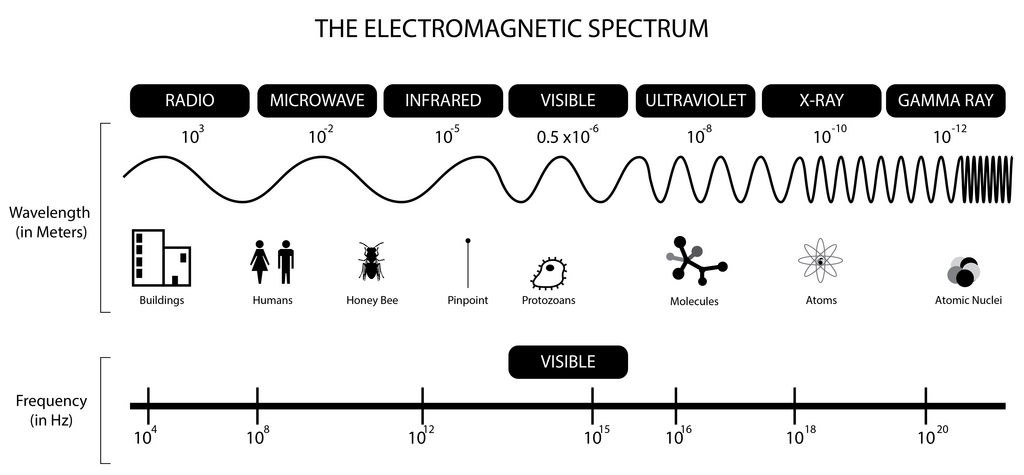
Each type of wave in the spectrum is defined by its frequency and wavelength. Frequency is how many wave cycles pass a point per second, measured in Hertz (Hz). Wavelength is the distance between two consecutive peaks of the wave.
They have an inverse relationship: the higher the frequency, the shorter the wavelength. This relationship is governed by the speed of light, , a constant value. The formula is , where (lambda) is wavelength and (nu) is frequency.
Radio Frequency (RF) refers to the portion of this spectrum that we've harnessed for communication, from your car radio to your smartphone.
How Signals Get Around
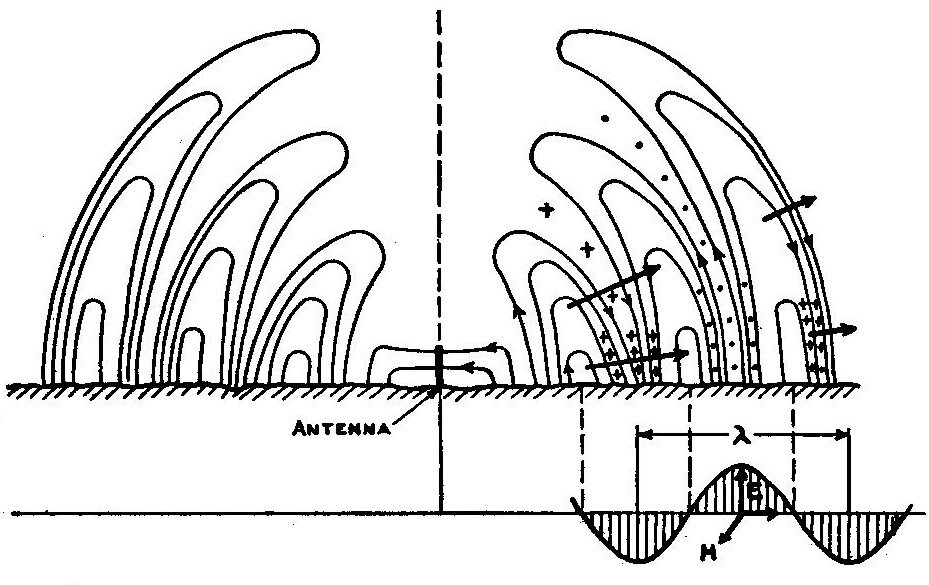
RF signals travel through the air as self-propagating waves of electric and magnetic energy. When an electric current changes rapidly in a wire, it creates oscillating electric and magnetic fields that radiate outwards from the source, like ripples from a stone dropped in a pond. These fields are perpendicular to each other and to the direction the wave is traveling.
These waves don't have a perfectly clear path. They can be reflected by surfaces like buildings, absorbed by materials like concrete, and diffracted (bent) around obstacles. The signal you receive is often a combination of the direct signal and multiple reflected signals. Engineers must account for these propagation effects to ensure reliable communication.
The Basic Toolkit
To send and receive these signals, we need special hardware. RF systems are built from a few core components that manipulate the waves.
Antenna
noun
A device that converts electrical signals into electromagnetic waves (for transmitting) and vice versa (for receiving).
Antennas are the bridge between the wired and wireless worlds. Their size and shape are directly related to the wavelength of the signal they are designed to handle. A simple rule of thumb is that an antenna is often most efficient when its length is about half the wavelength of the signal.
This is why the antenna for an AM radio station (with very long wavelengths) is a massive tower, while the Wi-Fi antennas in your router (with very short wavelengths) are small enough to fit inside the plastic casing.
Once a signal is received by an antenna, it's usually very weak. It has traveled a long distance and lost much of its energy. Before it can be processed, it needs a boost.
Amplifier
noun
An electronic device that increases the power of a signal. In RF systems, they boost weak incoming signals or strengthen outgoing signals for transmission.
Finally, with so many signals flying through the air, a receiver needs a way to isolate the one it actually wants to listen to. It needs to tune into a specific frequency and ignore all the others.
Filter
noun
A circuit that allows signals at certain frequencies to pass through while blocking others. This is essential for selecting the desired channel or signal.
Together, these three components—antenna, amplifier, and filter—form the fundamental building blocks of almost every wireless system. They are the essential tools for plucking a specific signal out of the air, boosting its strength, and making it useful.