3rd Grade Math Mastery
Multiplication and Division
What is Multiplication?
Imagine you have 4 bags of apples, and each bag has 3 apples inside. How many apples do you have in total? You could count them one by one, or you could add them up: .
Multiplication is a shortcut for this kind of repeated addition. Instead of adding 3 four times, we can say we have 4 groups of 3. We write this as:
We read this as "four times three equals twelve." The answer, 12, is called the product.
Another way to picture multiplication is by using an array. An array is a neat arrangement of objects in rows and columns. For our apple problem, we can make an array with 4 rows and 3 columns.
Whether you see it as groups of apples or rows of dots, the answer is the same. Multiplication helps us count large numbers of items quickly and easily.
Meet Division
Now, let's flip things around. What if you start with 12 apples and want to share them equally among 4 friends? This is where division comes in.
Division is about splitting a number into equal groups. It helps us answer questions like "how many in each group?" or "how many groups can we make?" We can write this problem as:
We read this as "twelve divided by four equals three." This means each friend gets 3 apples.
You can also think of division as repeated subtraction. How many times can you take away a group of 4 from 12?
You subtracted 4 three times. So, . Notice how multiplication and division are connected? They are inverse operations, meaning they undo each other.
I love teaching this strategy because it helps the students understand the connection between multiplication and division as inverse operations.
Handy Multiplication Tricks
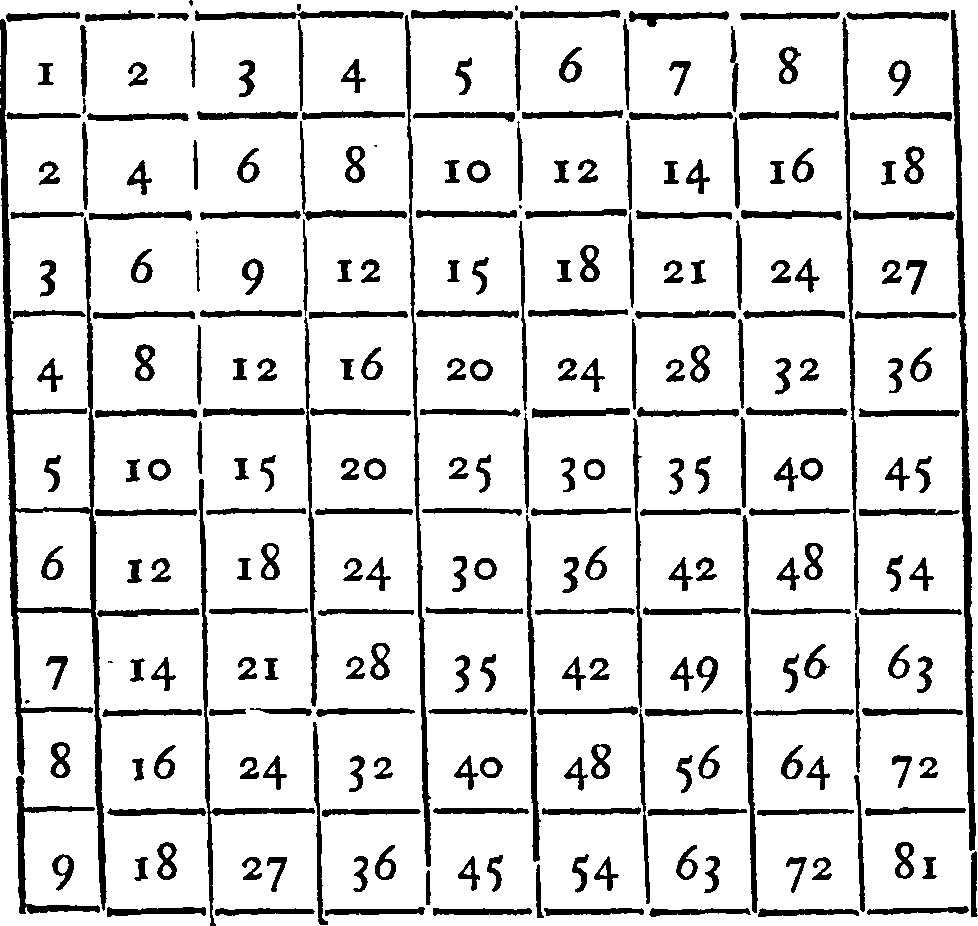
Memorizing multiplication facts makes math much faster. But you don't have to learn them all at once. There are some cool properties that can help.
The Commutative Property of multiplication says that you can switch the order of the numbers and still get the same answer. Just like $2+5$ is the same as $5+2$, the same is true for multiplication.
This trick means you only have to learn about half of the multiplication table! If you know , you already know .
The Associative Property helps when you multiply three or more numbers. It says you can group the numbers in any way without changing the answer. The parentheses show you which part to multiply first.
This is really helpful for breaking down bigger problems into smaller, easier steps.
Putting It All Together
Let's try a word problem. A baker is putting 24 cupcakes into boxes. Each box holds 6 cupcakes. How many boxes does the baker need?
First, figure out what the question is asking. We need to find out how many groups of 6 we can make from 24. This sounds like a division problem.
To solve this, you can think of the related multiplication fact. What number times 6 equals 24? If you know your multiplication facts, you'll know that . So, the baker needs 4 boxes.
Word problems are puzzles. Read carefully to decide if you need to multiply to find a total or divide to share things out.
Practice is the key to becoming a multiplication and division expert. The more you use these skills, the easier they will become.
Now, let's test your knowledge with a few questions.
Multiplication is a shortcut for repeated addition. Which addition problem is the same as ?
What question does the problem help you answer?
Great work! Keep practicing these concepts, and soon you'll be solving multiplication and division problems like a pro.