3D Print Product Sourcing for Automated Business
3D Printing Basics
From Idea to Object
At its core, 3D printing is the process of building a three-dimensional object from a digital file. Instead of carving a shape out of a block of material, 3D printing adds material layer by layer until the object is complete. This is why it's also known as additive manufacturing.
A Quick History
The story begins in the 1980s. In 1984, an engineer named Chuck Hull invented a process called stereolithography. He patented it and co-founded a company, 3D Systems, to commercialize the technology. For many years, 3D printing was an expensive tool used almost exclusively by large companies for creating prototypes quickly. It was called "rapid prototyping."
As patents expired in the late 2000s, new companies emerged, and innovation exploded. Prices dropped, and smaller, more accessible printers became available. Suddenly, what was once a niche industrial tool started appearing in workshops, schools, and even homes.
How It Works: Common Methods
There isn't just one way to 3D print. Different technologies work with different materials to achieve specific results. Let's look at three of the most common methods.
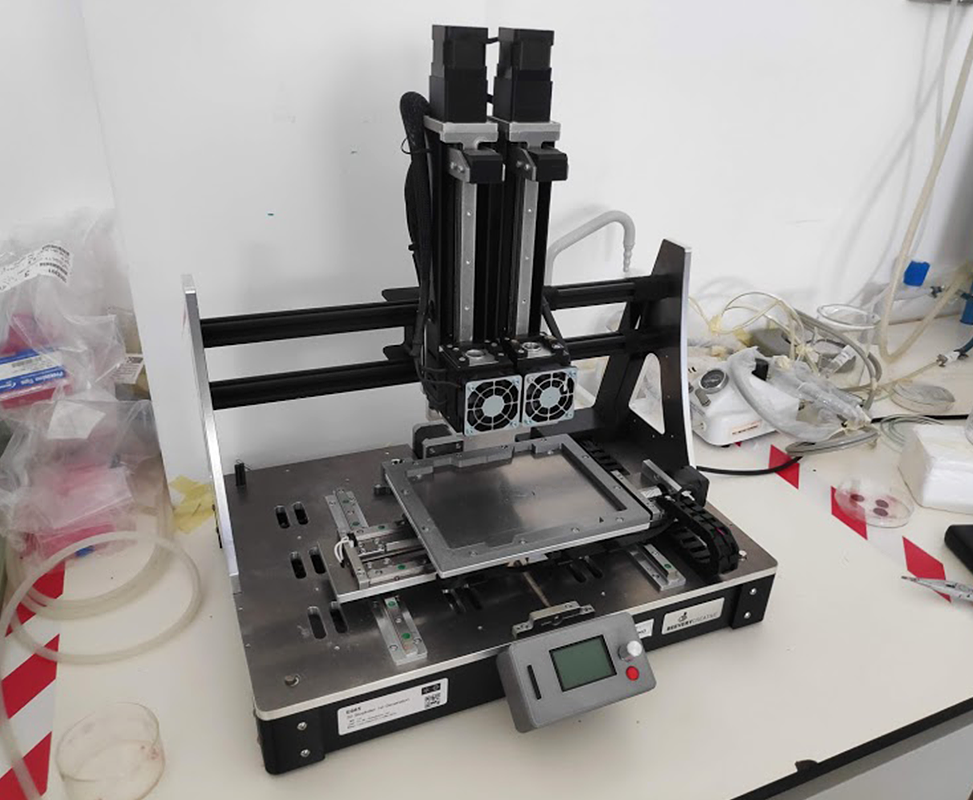
Fused Deposition Modeling (FDM) is the most widely known type of 3D printing. It works like a sophisticated hot glue gun. A spool of plastic filament is fed into a heated nozzle, which melts the plastic and deposits it in thin layers on a build platform. Each layer fuses to the one below it, gradually building the object from the ground up.

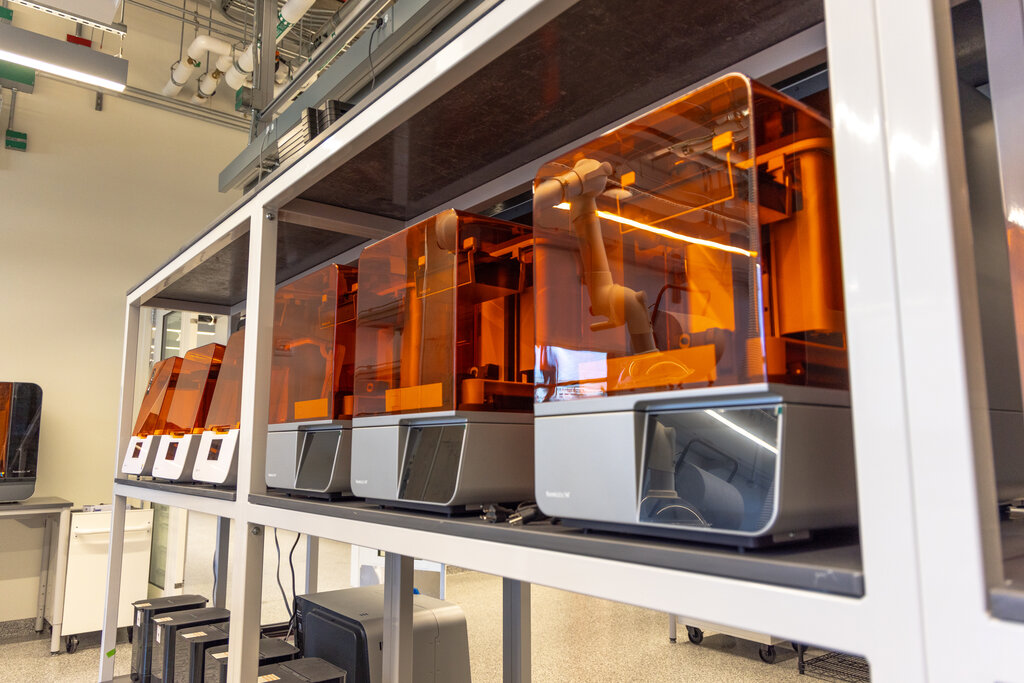
Stereolithography (SLA) was the very first 3D printing technology. Instead of plastic filament, SLA uses a vat of liquid photopolymer resin. A UV laser traces a pattern on the surface of the resin, causing it to harden, or cure. The build platform then moves down slightly, and the laser draws the next layer. This process is known for creating objects with very fine details and smooth surfaces.
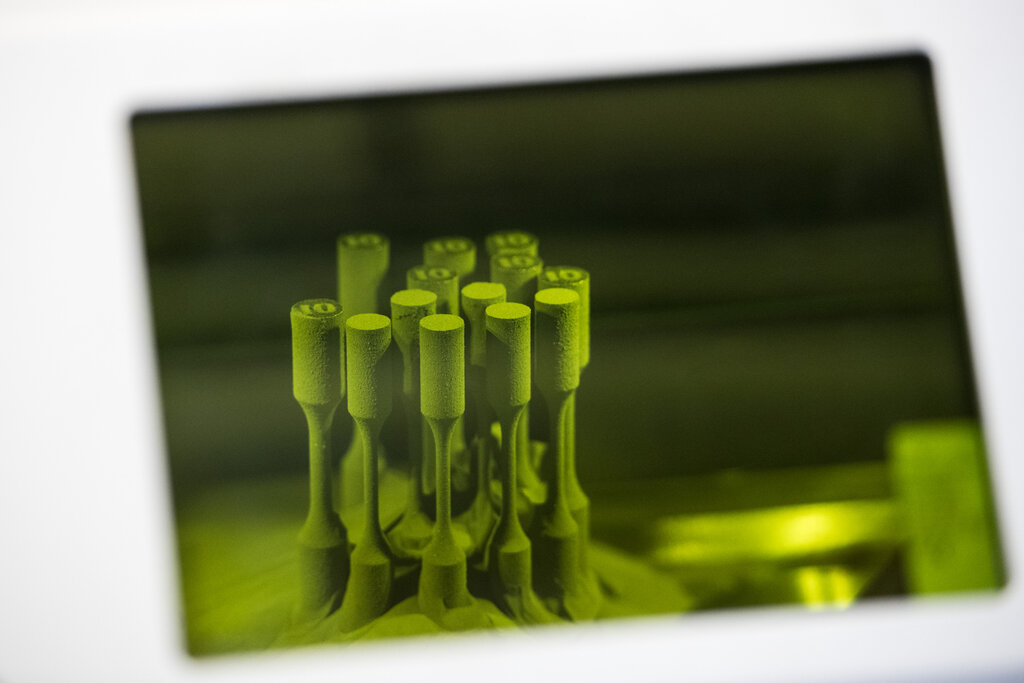
Selective Laser Sintering (SLS) uses a high-powered laser to fuse small particles of polymer powder. A thin layer of powder is spread across the build area, and the laser sinters the powder into a solid cross-section of the object. The platform then lowers, another layer of powder is added, and the process repeats. Because the unsintered powder supports the object during printing, SLS can create complex, interlocking parts without the need for dedicated support structures.
| Technology | How It Works | Common Materials | Best For |
|---|---|---|---|
| FDM | Melts and extrudes plastic filament | Plastics (PLA, ABS, PETG) | Rapid prototyping, hobbyist prints |
| SLA | Cures liquid resin with a UV laser | Photopolymer Resins | High-detail models, jewelry molds |
| SLS | Fuses powder with a laser | Nylon, other polymers | Complex geometries, functional parts |
Applications and Impact
3D printing is more than just a novelty; it's transforming entire industries.
In healthcare, doctors use 3D printing to create custom surgical guides that help them perform complex operations with greater precision. Dentists print custom crowns, bridges, and aligners right in their offices. It's also used to make patient-specific prosthetic limbs that are more comfortable and functional.
The automotive and aerospace industries rely on 3D printing for creating prototypes of new parts. This allows them to test designs much faster than with traditional manufacturing. They also print lightweight, complex parts that would be impossible to make any other way, improving fuel efficiency and performance. Some companies even use it to print spare parts on demand, reducing the need for large inventories.
Pros and Cons
Like any technology, 3D printing has its strengths and weaknesses.
One of the biggest advantages is the ability to create complex and customized designs. Traditional manufacturing is often limited by what molds and machines can do, but 3D printing can produce intricate, hollow, or interlocking shapes with ease. It's also fast for creating one-off prototypes and small batches, which speeds up the design process significantly.
However, there are limitations. For mass production, 3D printing is often slower and more expensive per unit than methods like injection molding. The range of materials is still more limited than in traditional manufacturing, and the structural properties of printed parts might not always match those made by conventional means. Finally, the surface finish of some 3D prints, particularly from FDM machines, can be rough and require post-processing to smooth out.
What is another name for the process of 3D printing, reflecting its method of building objects?
Which 3D printing technology uses a high-powered laser to fuse small particles of polymer powder together?
Understanding these fundamentals is the first step in seeing where 3D printing can be applied to solve real-world problems.