10th Grade Chemistry Essentials
Atomic Structure
The Building Blocks of Matter
Everything you see, touch, and breathe is made of atoms. For a long time, people thought atoms were the smallest possible things, tiny, indivisible spheres. The word atom even comes from the Greek atomos, which means "uncuttable." But we now know that atoms themselves are made of even smaller pieces called subatomic particles.
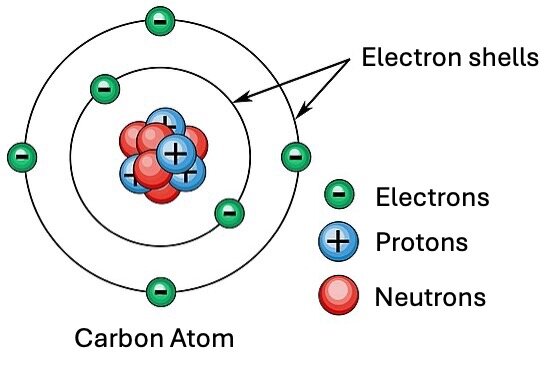
The three main subatomic particles are protons, neutrons, and electrons. Protons have a positive electric charge, while electrons have a negative charge. Neutrons, as their name suggests, are neutral and have no charge at all.
| Particle | Charge | Location in Atom |
|---|---|---|
| Proton | Positive (+) | Nucleus |
| Neutron | Neutral (0) | Nucleus |
| Electron | Negative (-) | Outside Nucleus |
At the center of every atom is a dense core called the nucleus. This is where the protons and neutrons are packed together. Because protons are positive, the nucleus has an overall positive charge. The much lighter electrons move around the nucleus, attracted by the positive charge of the protons. The number of electrons in a neutral atom is always equal to the number of protons, so their charges cancel each other out.
How We Figured It Out
Our understanding of the atom wasn't a single discovery but a series of breakthroughs over time. Each new model built upon the last, refining our picture of this fundamental unit of matter.
In the early 1800s, John Dalton proposed that atoms were simple, solid spheres. He imagined that atoms of different elements had different masses and properties, but he still thought of them as the smallest, most basic particles.
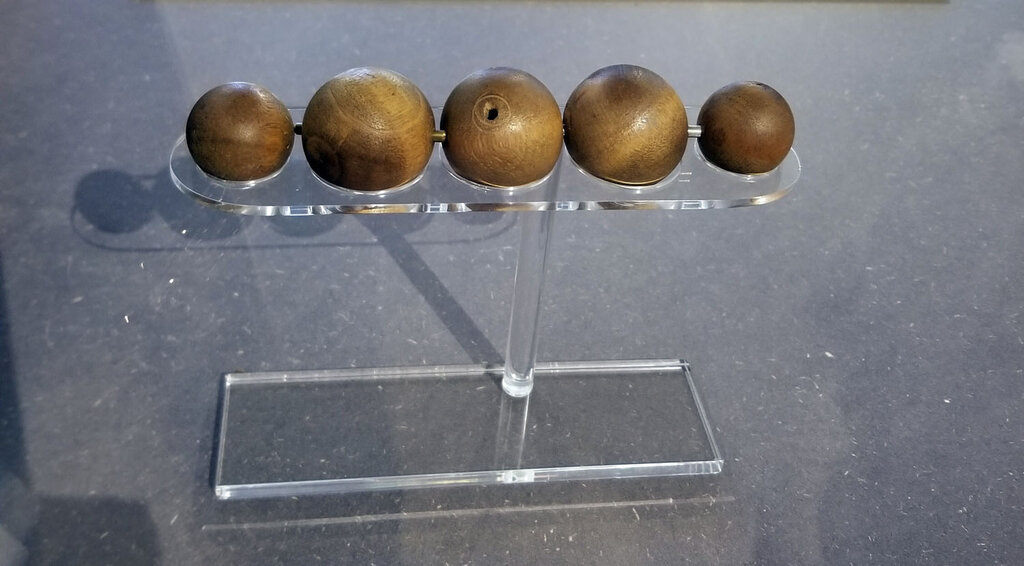
That changed in 1897 when J.J. Thomson discovered the electron. Since atoms are neutral, he knew there must be a positive charge to balance the negative electrons. He suggested the "plum pudding" model, where negative electrons were scattered within a sphere of positive charge, like plums in a pudding.
Then came Ernest Rutherford's famous gold foil experiment. He shot tiny, positively charged particles at a very thin sheet of gold. Most particles passed right through, but a few were deflected at large angles, and some even bounced straight back. This was a shock. Rutherford concluded that the atom must be mostly empty space, with its positive charge concentrated in a tiny, dense center: the nucleus. This led to the nuclear model, with electrons orbiting the nucleus like planets around the sun.
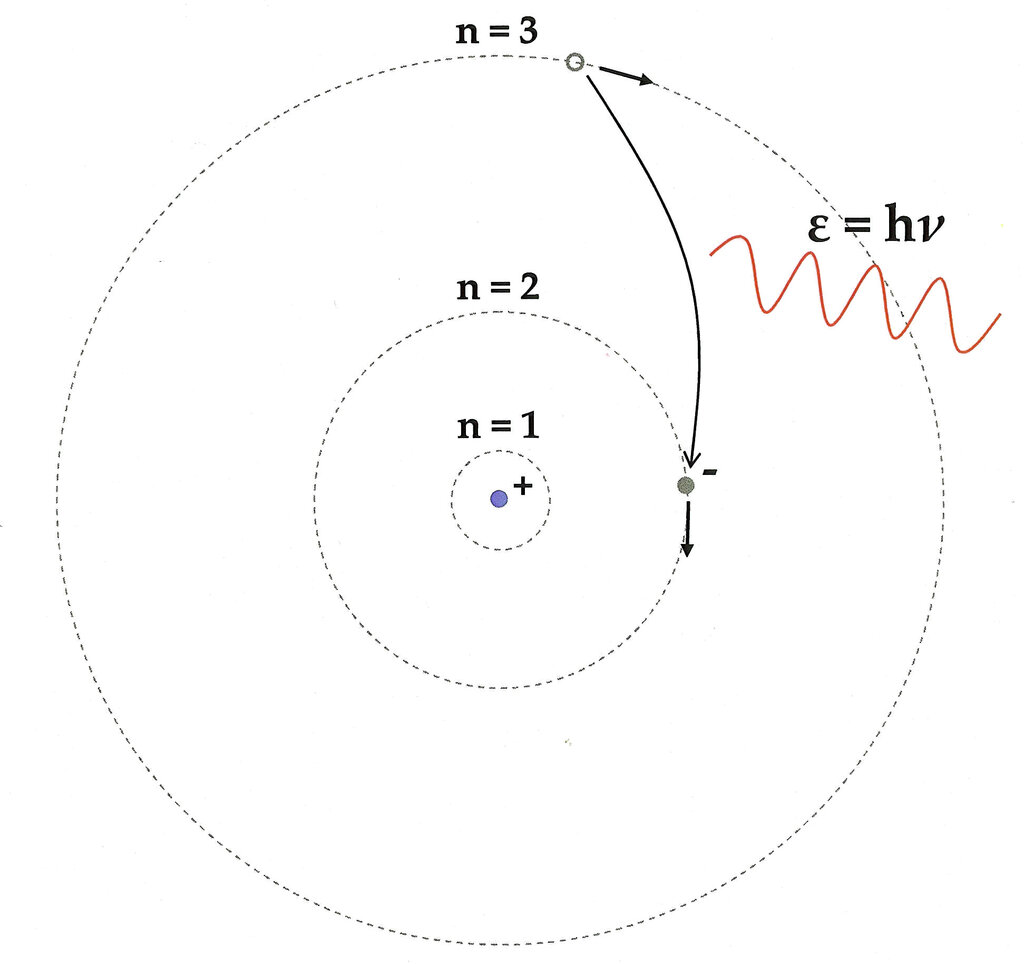
Niels Bohr refined this model by proposing that electrons could only exist in specific, fixed energy levels or shells. An electron could jump from one level to another by absorbing or releasing a specific amount of energy, but it couldn't exist in between.
The modern view is the quantum mechanical model. It discards the idea of fixed orbits. Instead, it describes regions of space around the nucleus where an electron is most likely to be found. These regions are called orbitals and have distinct shapes. This model is based on probability and describes the wave-like behavior of electrons.
An Atom's Identity
What makes an atom of gold different from an atom of oxygen? It's all about the number of protons. The identity of an element is determined solely by the number of protons in its nucleus.
Atomic Number
noun
The number of protons in the nucleus of an atom. It is unique to each element.
While the number of protons is fixed for an element, the number of neutrons can vary. This brings us to another important value.
Mass Number
noun
The total number of protons and neutrons in an atom's nucleus.
Atoms of the same element that have different numbers of neutrons are called isotopes. For example, all carbon atoms have 6 protons. But some have 6 neutrons (Carbon-12), some have 7 (Carbon-13), and some have 8 (Carbon-14). They are all still carbon, but they have different masses.
Carbon-12 is stable, but Carbon-14 is radioactive and is famously used in carbon dating to determine the age of ancient organic materials.
Arranging Electrons
Electrons don't just swarm around the nucleus randomly. They occupy specific energy levels, often visualized as shells. Each shell can only hold a certain number of electrons.
The shell closest to the nucleus has the lowest energy and can hold up to 2 electrons. The second shell can hold up to 8 electrons, the third can hold up to 18, and so on. Electrons fill the lowest energy shells first before moving to higher ones. This arrangement is called the electron configuration.
The electron configuration determines an atom's chemical behavior. Specifically, the electrons in the outermost shell, called valence electrons, are the ones involved in forming bonds with other atoms. An atom with a full outer shell, like Neon, is very stable and doesn't readily react with other elements.
This fundamental structure of protons, neutrons, and electrons, and the way those electrons are arranged, is the foundation for all of chemistry.
Time to test your knowledge.
What are the respective electrical charges of a proton, a neutron, and an electron?
Which scientist's gold foil experiment led to the conclusion that an atom is mostly empty space with a tiny, dense, positively charged nucleus?
Understanding these basic components and models gives us a powerful framework for exploring how matter behaves and interacts.