1 Corinthians 10:11-13 Sermon and Study Outline
Historical Context
The Crossroads of the Roman World
To understand the advice Paul gives in his letters, we first need to visit the city he was writing to. In the 1st century, Corinth was a bustling, wealthy, and thoroughly Roman city. It was strategically located on a narrow strip of land connecting mainland Greece to its southern peninsula. This location gave it control over two major seaports, making it a critical hub for trade and travel between Italy and Asia.
Imagine a city humming with commerce. Merchants, sailors, and travelers from all corners of the empire crowded its streets. This brought immense wealth and a dizzying mix of cultures, languages, and ideas. But Corinth also had a reputation. The term "to Corinthianize" was slang for living a life of drunken and immoral excess. It was a place where you could find anything and anyone.
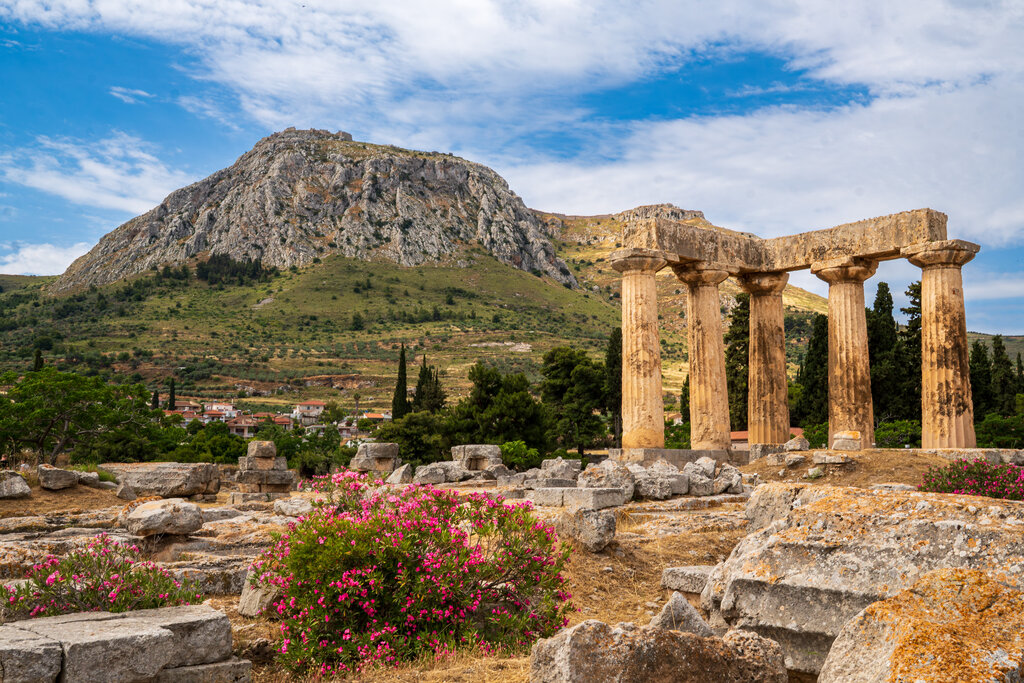
The religious landscape was just as diverse. Temples to Greek and Roman gods dotted the city. The imperial cult, which required citizens to worship the Roman emperor, was prominent. Mystery religions from the East offered secret paths to salvation. On the Acrocorinth, the steep hill overlooking the city, stood the famous temple to Aphrodite, the goddess of love. While its earlier reputation for temple prostitution may have been exaggerated by Paul's time, the city's culture was undeniably saturated with pagan worship and sexual immorality.
A New Community in a Complex City
It was into this environment that the apostle Paul arrived on his second missionary journey. He stayed for a year and a half, working as a tentmaker and preaching. The church he founded was a cross-section of Corinthian society itself. It included Jews and non-Jews, slaves and slave-owners, the poor and the wealthy.
This diversity was both a strength and a source of friction. People from vastly different backgrounds were now supposed to live as one family. This wasn't easy. The social hierarchies of the Roman world didn't just disappear when people walked into a house church.
Life in first-century Corinth was a dynamic mix of wealth and poverty, tradition and innovation, faith and indulgence.
A Culture Clash
The Corinthian Christians faced immense pressure from the world around them. Their new faith put them at odds with the culture on almost every front. This led to serious problems within the church, which Paul addresses directly in his letter.
Here were some of the key challenges:
-
Idolatry: Was it okay to eat meat that had been sacrificed to a pagan god? This was a practical daily question, since most meat sold in the market had been. Social events and business dinners were often held in temples.
-
Immorality: The city's permissive attitude toward sex was seeping into the church. Paul had to confront issues that were shocking even by pagan standards.
-
Divisions: The church was splitting into factions, with people declaring their loyalty to different Christian leaders like Paul, Apollos, or Peter. This reflected the Roman culture of aligning with powerful patrons.
-
Social Status: Wealthier members were shaming poorer ones during the Lord's Supper, a shared meal that was meant to signify unity. They ate their fine food while others went hungry.
Paul's first letter to the Corinthians isn't a book of abstract theology. It's an urgent, practical, and deeply personal letter to a specific group of people struggling to live out their faith in a challenging environment. Understanding their world is the first step to understanding his words.