理发入门
理发工具与设备
The Stylist's Toolkit
Every great artist needs the right tools, and a hairstylist is no different. The quality of your scissors, combs, and clippers directly impacts the quality of your work. They are extensions of your hands, translating your vision into a finished style. Investing in good equipment not only makes your job easier but also ensures a better result for your client and a longer life for your tools.
Invest in Quality Tools: Quality scissors are a hairstylist's best friend.
Let's break down the essential tools of the trade, what they do, and how to care for them.
Cutting Tools: Scissors and Razors
Scissors, often called shears, are the most fundamental tool for any stylist. There are several types, each designed for a specific purpose.
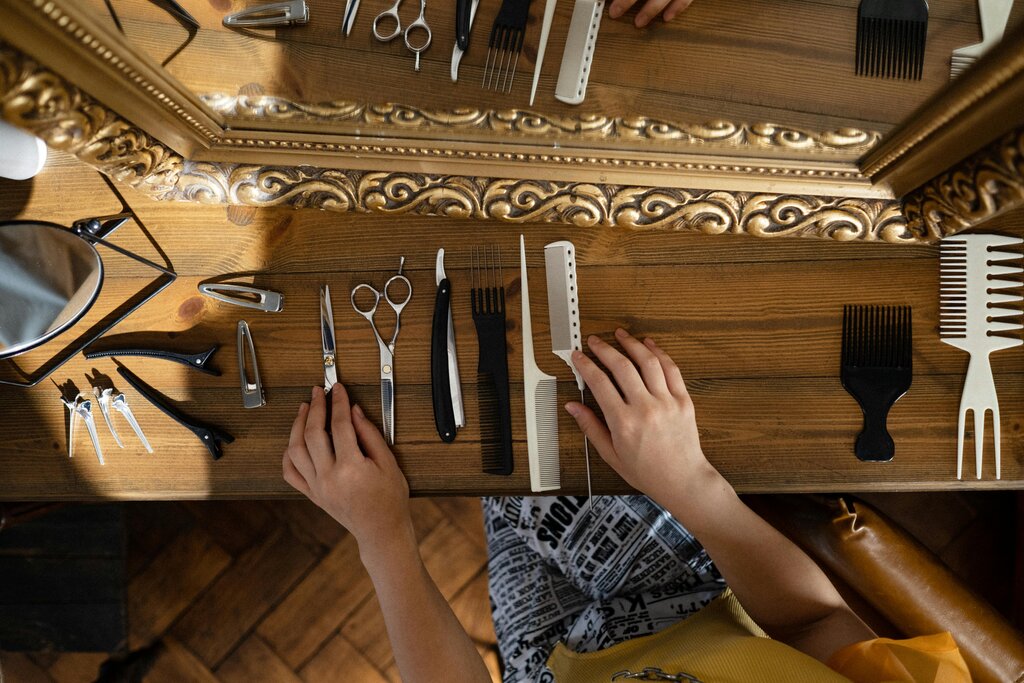
- Straight Shears: These are your workhorses. Used for the bulk of cutting, from creating blunt lines to point cutting. They come in various lengths, typically from 4.5 to 8 inches. The length you choose depends on personal preference and the cutting techniques you use most often.
- Thinning/Texturizing Shears: These have teeth on one or both blades. They're used to remove bulk from the hair without losing length, creating softer edges and adding texture.
Razors are another key tool for creating texture and soft lines. A straight-edge razor can be used to create wispy layers and remove weight, offering a different finish than scissors. Electric clippers are essential for short hairstyles, fades, and cleaning up necklines. They come with various guard attachments that allow you to control the exact length of the hair you're cutting.
When using a razor, always ensure the hair is wet. Using a razor on dry hair can cause damage and split ends.
Combs and Brushes
Combs and brushes are not just for detangling; they are crucial for sectioning, lifting, and controlling the hair during a cut or style.
- Cutting Comb: This is the most common comb you'll use. It has both fine and wide teeth, making it versatile for creating tension and distributing hair evenly.
- Wide-Tooth Comb: Perfect for detangling wet hair without causing breakage. Its teeth glide through knots easily.
- Rat-Tail Comb: The long, thin handle (the "tail") is used for creating precise partings and sectioning the hair. The fine teeth are great for smoothing and refining.
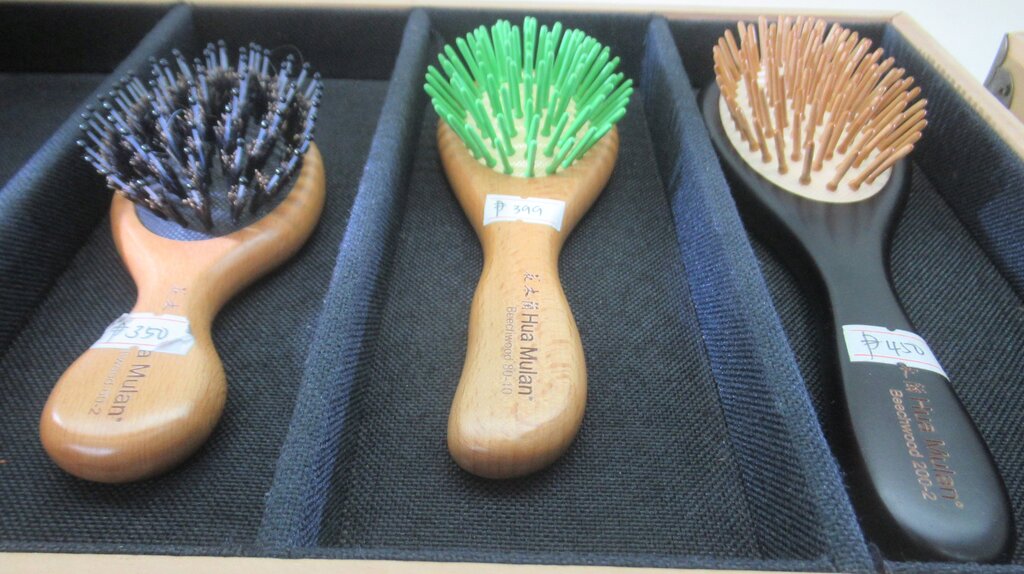
- Styling Brushes: Round brushes are used with a blow dryer to create volume and curls. Paddle brushes are best for smoothing large sections of hair, leaving it straight and sleek.
Styling and Maintenance
A powerful, professional-grade hair dryer is non-negotiable. Look for one with multiple heat and speed settings to adapt to different hair types. The 'cool shot' button is a key feature; a blast of cold air at the end of blow-drying sets the style, closes the hair cuticle, and adds shine.
Attachments are also important. A concentrator nozzle focuses the airflow, which is essential for precision styling and smoothing. A diffuser spreads the airflow over a wider area, which helps to dry curly hair gently without creating frizz.
Proper care of your tools is essential for both hygiene and longevity. After each client, all tools must be cleaned and sanitized.
- Scissors and Razors: Wipe them clean of hair and product residue. Disinfect with a proper solution and oil the pivot point regularly to keep the action smooth.
- Combs and Brushes: Remove all hair after each use. Wash them regularly with soap and water, then submerge them in a disinfectant solution according to the manufacturer's directions.
- Clippers: Brush out loose hairs from the blades and apply blade oil daily to keep them running smoothly and prevent rust.
Clean tools not only perform better and last longer but also prevent the spread of bacteria and skin conditions between clients. Your professionalism is reflected in the care you take with your equipment.
Ready to test your knowledge? Take this short quiz to see how well you know your hairstyling tools.
Which tool is specifically designed to remove bulk from hair without significantly reducing its length?
To create very precise, clean partings in the hair, the best tool to use is a ______.
Mastering these basic tools is the first step toward building your skills as a stylist. With the right equipment and proper care, you'll be well on your way.