تعلم اللغة الألمانية
الأبجدية والنطق
The German Alphabet
Getting started with German is simpler than you might think. The alphabet is almost identical to the English one, with just a few extra characters. The key difference is pronunciation. Once you learn the consistent sounds for each letter, you can pronounce almost any German word you see.
| Letter | Pronunciation Guide |
|---|---|
| A a | Like the 'a' in 'father' |
| B b | Like the 'b' in 'bed' |
| C c | Like 'ts' before ä, e, i; like 'k' otherwise |
| D d | Like the 'd' in 'day' |
| E e | Like the 'e' in 'pet' or 'ay' in 'way' |
| F f | Like the 'f' in 'fun' |
| G g | Like the 'g' in 'go' |
| H h | Like the 'h' in 'hat' |
| I i | Like the 'ee' in 'see' |
| J j | Like the 'y' in 'yes' |
| K k | Like the 'k' in 'kite' |
| L l | Like the 'l' in 'love' |
| M m | Like the 'm' in 'mom' |
| N n | Like the 'n' in 'no' |
| O o | Like the 'o' in 'open' |
| P p | Like the 'p' in 'pen' |
| Q q | Like 'kv' (always followed by u) |
| R r | A guttural sound from the back of the throat |
| S s | Like the 'z' in 'zoo' before a vowel; like 's' in 'see' otherwise |
| T t | Like the 't' in 'top' |
| U u | Like the 'oo' in 'moon' |
| V v | Like the 'f' in 'fun' |
| W w | Like the 'v' in 'van' |
| X x | Like 'ks' in 'box' |
| Y y | Like the German 'ü' (more on this soon) |
| Z z | Like 'ts' in 'cats' |
Notice how many letters sound just like they do in English. The tricky ones are often the vowels and a few consonants like J, V, W, and Z. Let's focus on those and the letters you won't find in the English alphabet.
Unique German Sounds
German has four special characters that you'll need to master: three vowels with dots above them, called "Umlauts," and one special consonant.
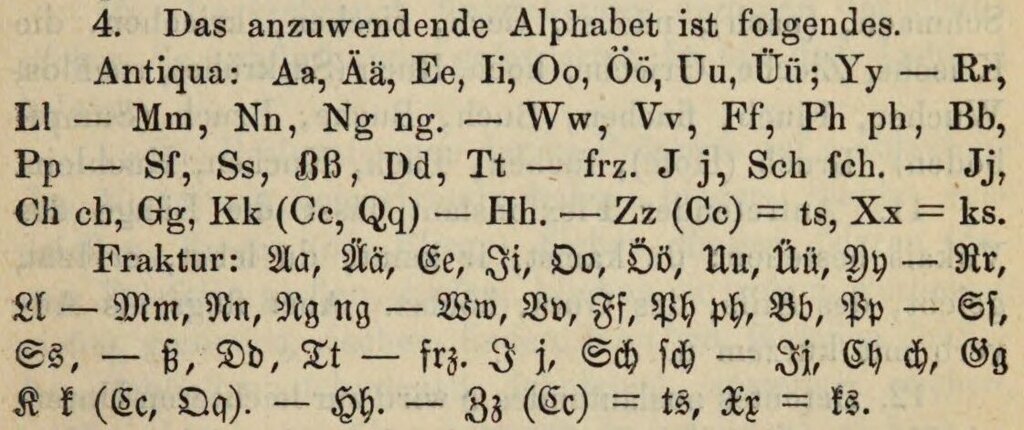
The Umlauts are Ä/ä, Ö/ö, and Ü/ü. These aren't just decorated letters; they represent completely different sounds.
Ä/ä sounds like the 'e' in "bed." It's an open, short sound.
Apples
Ö/ö has no direct English equivalent. To make this sound, form your lips as if you're about to say "oh," but instead, try to say "eh."
Oil
Ü/ü is also new for English speakers. Form your lips into a tight circle like you're saying "ooh," but say "ee" instead.
over/above
Finally, there's the ß, called an "Eszett" or "scharfes S" (sharp s). It simply makes a sharp 'ss' sound, like in the word "hiss." You'll typically find it after a long vowel.
Street
If you don't have these characters on your keyboard, you can type them by adding an 'e' after the base vowel: ae (for ä), oe (for ö), and ue (for ü). The ß can be replaced with 'ss'.
Key Letter Combinations
Just like in English, some letter combinations in German create unique sounds. Here are a few of the most common ones to listen for.
| Combination | Sound | Example |
|---|---|---|
| ch | After a, o, u: a rough, throaty sound like in Scottish "loch". After other vowels: a soft, airy sound like the 'h' in "huge". | Buch (book), Ich (I) |
| ie | A long 'ee' sound, like in "see". | wie (how) |
| ei | Sounds like the English word "eye". | drei (three) |
| eu | Sounds like the 'oy' in "toy". | neun (nine) |
| sch | Makes a 'sh' sound, like in "shoe". | Schule (school) |
| st / sp | At the start of a word, it's pronounced 'sht' or 'shp'. | Stadt (city), sprechen (to speak) |
Learning these combinations is a huge step. It allows you to decode words much faster and sound more natural when you speak.
Start with the Basics: Familiarize yourself with the German alphabet, pronunciation, and essential greetings.
Now let's put it all together. How do you feel about trying a few simple words and phrases? Read them aloud, focusing on the sounds we've just covered.
Ready to test your knowledge? This quiz will help you check your understanding of the German alphabet and its unique sounds.
What are the German vowels with dots above them called?
The German letter 'Ä' sounds most like the 'e' in which English word?
Great work. Mastering pronunciation takes practice, but it's the foundation for clear communication. Keep listening to native speakers and practicing these sounds.