Zigbee Wireless Protocol Explained
Introduction to Wireless Communication
Sending Signals Through the Air
At its heart, wireless communication is about sending energy through space. Think of dropping a pebble into a still pond. Ripples spread out from the center, carrying energy across the water's surface. Wireless devices do something similar, but instead of water ripples, they create invisible waves of energy called electromagnetic waves.
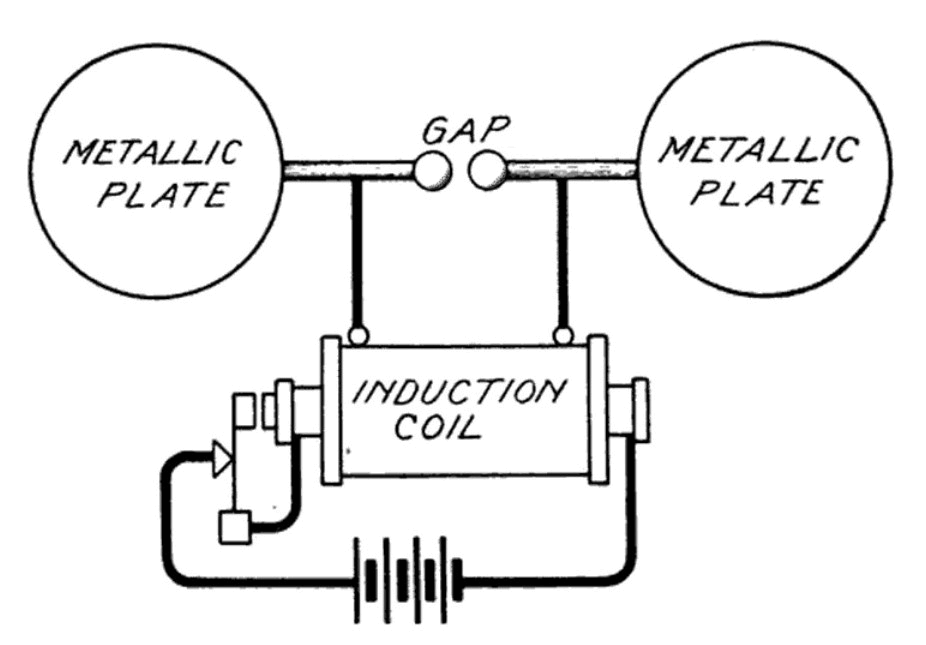
These waves are created by a transmitter, which makes electrons wiggle back and forth very quickly in a piece of metal, usually an antenna. This wiggling action sends out electromagnetic energy, much like wiggling your hand in water creates waves. This energy travels outward at the speed of light.
On the other end, a receiver has its own antenna. When the electromagnetic waves from the transmitter wash over the receiver's antenna, they cause the electrons inside it to wiggle in the same pattern. The receiver detects this wiggling and converts it back into useful information, like a voice on the radio or data on your phone.
Every wave has two key properties: frequency and wavelength. Frequency is how many wave crests pass a point each second, measured in Hertz (Hz). Wavelength is the distance between two consecutive crests. They are inversely related: the higher the frequency, the shorter the wavelength.
Encoding Information on Waves
A simple, unchanging wave, called a carrier wave, doesn't actually carry any information. It's like a blank piece of paper. To send a message, we need to alter, or modulate, this carrier wave in a specific way that the receiver can understand. It’s similar to how you change the volume and pitch of your voice to convey meaning beyond just making a sound.
There are three basic ways to modulate a wave to encode information.
Amplitude Modulation (AM): This involves changing the amplitude, or height, of the carrier wave. A louder part of a voice message might correspond to a taller wave, and a quieter part to a shorter one.
Frequency Modulation (FM): Here, the amplitude stays constant, but the frequency of the carrier wave changes. A higher-pitched sound might be encoded by slightly increasing the wave's frequency, making the crests closer together.
Phase Modulation (PM): This is a bit more subtle. It involves changing the starting point of the wave's cycle. While less intuitive, it's a powerful method used in many digital communication systems like Wi-Fi.
Modern digital systems use these basic principles to encode ones and zeros, often by combining modulation techniques to pack more data into the signal.
A Crowded Spectrum
Radio waves are just one small part of a much broader range of electromagnetic energy called the electromagnetic spectrum. This spectrum includes everything from the very low-frequency waves used for submarine communication to microwaves, infrared, visible light, ultraviolet, X-rays, and high-energy gamma rays.
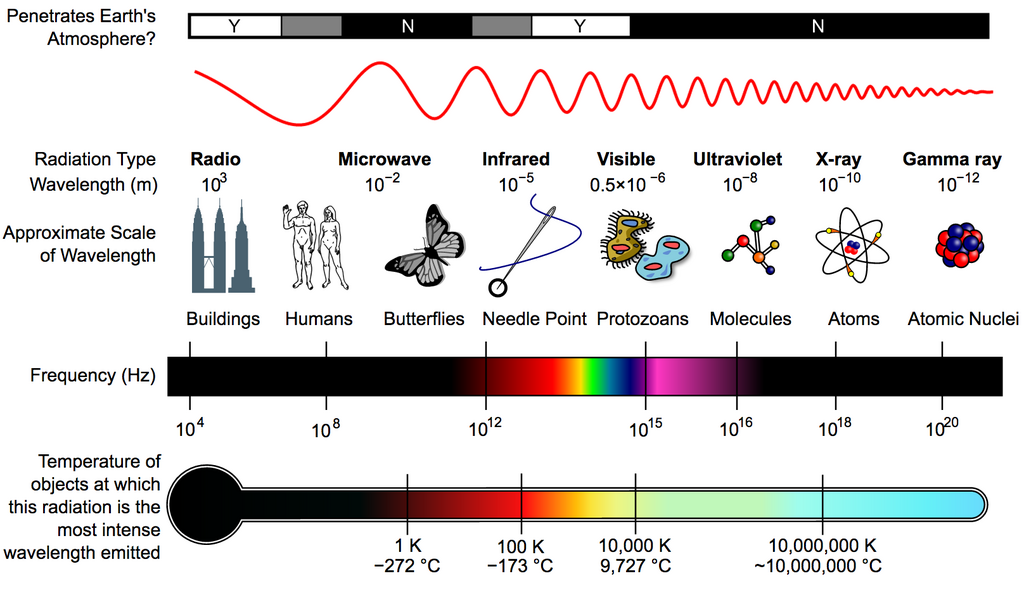
Because so many devices need to communicate wirelessly, the radio frequency portion of the spectrum is a valuable and limited resource. To prevent signals from interfering with each other—imagine everyone in a city shouting at once—governments and international bodies regulate its use. They assign specific frequency bands to different applications.
For example, AM radio stations broadcast between 535 and 1,705 kilohertz (kHz), while FM stations use a band between 88 and 108 megahertz (MHz). Your Wi-Fi router likely operates in the 2.4 or 5 gigahertz (GHz) bands, and your cellphone uses several other bands to communicate with cell towers.
This organized approach ensures that an airplane's navigation system doesn't get disrupted by a baby monitor, and your Bluetooth headphones don't interfere with a satellite's communication link.
The Rules of Communication
Beyond the physics of waves and frequencies, wireless devices need a shared set of rules to communicate effectively. These rules are called protocols. A protocol is like a language and a set of etiquette rules combined. It defines how data is formatted, how devices take turns speaking, how errors are handled, and how to join or leave a network.
There are many different wireless protocols, each designed for a specific purpose.
Some common protocols include Wi-Fi (for high-speed local networking), Bluetooth (for connecting devices over short distances), and Cellular (like 4G or 5G, for mobile communication over long distances).
Each protocol makes different tradeoffs between data speed, range, power consumption, and cost. A protocol designed for streaming high-definition video (like Wi-Fi 6) has very different requirements from one designed for a tiny battery-powered sensor that only needs to send a small temperature reading once an hour. Understanding these protocols is key to building reliable wireless systems.
What fundamental principle allows wireless devices to communicate over a distance without physical connections?
If the frequency of an electromagnetic wave increases, what happens to its wavelength?