Zephyr RTOS and Golioth IoT Integration
Introduction to Zephyr RTOS
What Is Zephyr?
Zephyr is an open-source Real-Time Operating System, or RTOS. It's built specifically for small, resource-constrained devices like the sensors, wearables, and other connected gadgets that make up the Internet of Things (IoT).
RTOS
noun
A Real-Time Operating System (RTOS) is an OS designed to serve real-time applications that process data as it comes in, typically without buffer delays. It manages the hardware resources of a computer and hosts applications that run on the computer.
Unlike the operating system on your laptop, an RTOS is built for speed and predictability. For an IoT device, responding to an event within a specific timeframe isn't just a nice-to-have; it's critical. Zephyr provides the tools to build these kinds of time-sensitive applications while being small enough to run on hardware with very little memory.
Zephyr's Architecture
Zephyr has a highly configurable, layered architecture. At its core is a microkernel, which handles the most basic tasks like scheduling and managing threads. Built on top of that are various OS services, device drivers, and protocol stacks. The application itself sits at the very top.
This structure has a huge advantage: modularity. You only include the components your application needs. If your device doesn't need a file system, you can leave it out. This keeps the final software image small and efficient, which is crucial when you only have kilobytes of memory to work with.
Zephyr's build system automatically includes only the necessary code for the features you enable, a process called 'compile-time configuration'.
Key Features
Zephyr packs a lot of functionality into a small footprint. Here are some of its standout features:
| Feature | Description |
|---|---|
| Scalability | Can run on tiny 8-bit microcontrollers up to powerful 64-bit processors. |
| Portability | Supports a wide range of hardware architectures, including ARM, x86, RISC-V, and more. |
| Rich Driver Support | Includes a large collection of device drivers for sensors, displays, and communication interfaces. |
| Power Management | Provides fine-grained control over power consumption, essential for battery-powered IoT devices. |
| Security | Offers features to protect against common threats, including memory protection and secure boot. |
Another powerful feature is its hardware abstraction. Zephyr provides a consistent set of APIs (Application Programming Interfaces) for interacting with hardware. This means you can write your application code once and run it on different boards with minimal changes. You don't need to worry about the low-level details of how a specific chip's GPIO pins or UART ports work.
// This C code toggles an LED on any Zephyr-supported board
// without changing the code itself.

#include <zephyr/kernel.h>
#include <zephyr/drivers/gpio.h>

// Define the LED node from the device tree
#define LED0_NODE DT_ALIAS(led0)

// Set up the GPIO device spec
static const struct gpio_dt_spec led = GPIO_DT_SPEC_GET(LED0_NODE, gpios);

void main(void)
{
  // Check if the LED device is ready
  if (!device_is_ready(led.port)) {
    return;
  }

  // Configure the GPIO pin as an output
  gpio_pin_configure_dt(&led, GPIO_OUTPUT_ACTIVE);

  while (1) {
    // Toggle the LED pin
    gpio_pin_toggle_dt(&led);
    // Wait for 1 second
    k_msleep(1000);
  }
}
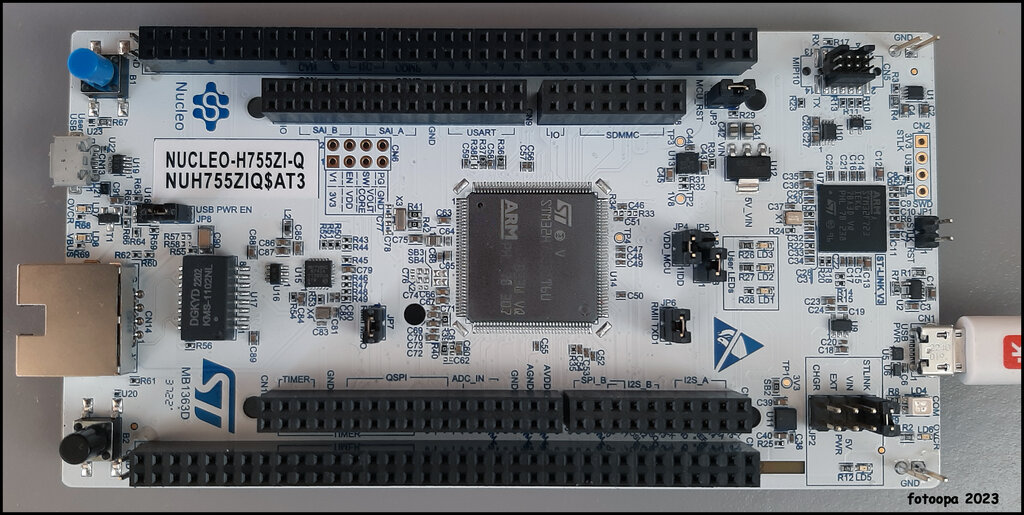
This abstraction layer separates your application logic from the hardware specifics, making development faster and your code more portable across different projects and platforms.
Ready to check your understanding?
What is the primary characteristic of a Real-Time Operating System (RTOS) like Zephyr?
How does Zephyr's modular, layered architecture benefit developers of resource-constrained devices?
Zephyr's combination of scalability, portability, and rich features makes it a powerful choice for building the next generation of connected devices.